THE Government has called for united global action to embed sustainability across the built environment, as the country positions itself as a regional leader in low-carbon development.
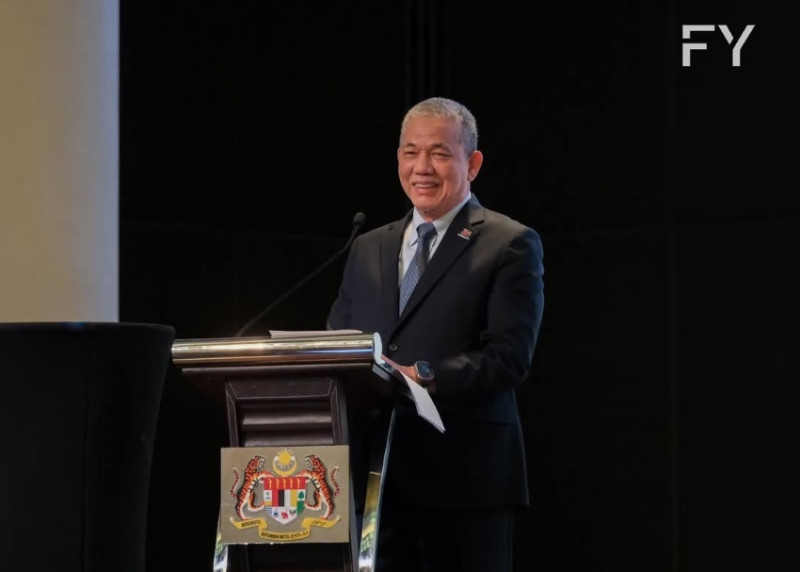
Speaking at the International Green Build Conference (IGBC) 2025, Deputy Prime Minister II and Minister of Energy Transition and Water Transformation, Datuk Seri Fadillah Yusof, declared: “Today’s discussions represent a vital convergence of ideas and actionable solutions that will shape our journey towards a low-carbon, resource-efficient, and climate-resilient future.”
This year’s conference, themed ‘Adaptation Through Sustainable Innovation’, was co-organised by GreenRE and the REHDA Institute and attended by delegates from across ASEAN, the United Kingdom, China, and Singapore.
Legislation to Drive Change
Central to Malaysia’s climate strategy is the Energy Efficiency and Conservation Act (EECA) 2024, which provides a comprehensive legal framework to promote efficient energy use across all sectors.
“The Act covers both electrical and thermal energy, and is central to achieving Malaysia’s net-zero carbon emissions target by 2050,” Fadillah told attendees. He added that the government will soon introduce the National Energy Efficiency Action Plan 2026–2035 (NEEAP 2.0) to drive energy savings and reduce emissions nationwide.
Complementing the EECA, the GreenRE Energy Certificate was also spotlighted for enabling measurable energy benchmarking, carbon tracking, and renewable integration in construction.
Sustainable Buildings as Economic Infrastructure
“The built environment is central to this transformation,” said Fadillah. “PETRA is committed to working with GreenRE, REHDA, industry partners, and financial institutions to unlock investment and policy support for climate-resilient practices.”
To date, GreenRE has certified over 400 million square feet of green building space across almost 800 projects in Malaysia and abroad, positioning the country as an emerging hub for sustainable development.
Boosting Renewables, Exploring Nuclear
Fadillah reiterated Malaysia’s target under the National Energy Transition Roadmap (NETR) to achieve 70% renewable energy capacity by 2050, through solar, biomass, biogas and hydrogen technologies.
He also revealed that PETRA is conducting a feasibility study on nuclear energy, including Small Modular Reactors (SMRs), to assess their viability as a stable energy source for areas where renewable deployment may be limited. The study will include a thorough assessment of waste management requirements.
Fadillah urged all stakeholders to invest in innovation, collaborate across borders, and invest in talent through training and research initiatives led by institutions such as REHDA.
“I commend the organising committee for championing sustainability through IGBC,” he said. “Let us seize this opportunity to drive transformative change in the built environment and contribute to a greener, more sustainable world for generations to come.”
A closed-door industry session was also scheduled later in the day to connect students, lecturers, and private sector leaders for dialogue, internships, and talent development in sustainability. - August 19, 2025