THE Government has prohibited the export of raw logs, directing timber resources exclusively towards domestic processing in a move aimed at stabilising local supply and curbing deforestation.
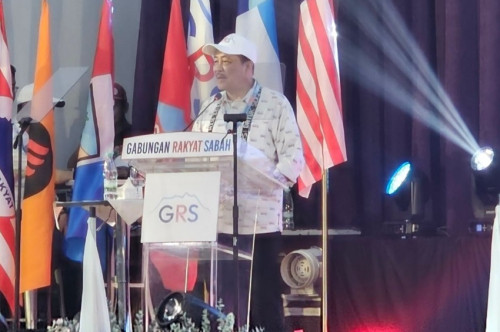
Minister of Plantation and Commodities Datuk Seri Johari Abdul Ghani, who is also acting in the capacity of Minister of Natural Resources and Environmental Sustainability, said the policy aligns with the government’s sustainability commitments and long-term economic interests.
“The government does not allow the export of raw logs. They must be used for processing and domestic consumption,” he said during Minister’s Question Time in the Dewan Rakyat.
“In the timber industry, Malaysia is among the world’s major exporters of wood-based furniture, with exports valued at RM22.3 billion as of 2024,” he added.
Johari explained that the government’s decision to subsidise loans for replanting timber plantations stems from this restriction on log exports.
“That is why we replant timber plantations—covering 147,000 hectares. The government partly finances loans for these efforts because the timber is not allowed to be exported as raw logs, but must be processed locally,” he said, responding to a supplementary question from Tan Hong Pin (PH-Bakri) on limiting timber exports to ensure domestic supply.
Johari clarified that while the export of raw logs is restricted, the importation of timber for processing into furniture or construction materials is permitted, provided the source countries practise sustainable forestry.
“If we import from countries with unsustainable practices—where they cut trees, carry out deforestation, and sell the logs—our furniture may not be accepted under the sustainable category,” he said.
“So, do we allow log imports? Yes, but they must come from countries that export to us for processing into furniture or construction materials and from sustainable sources.”
He emphasised that raw Malaysian timber must not be exported.
The Minister also reiterated that Malaysia’s forested areas currently span 54.3 per cent of its total land area, exceeding the 50 per cent national threshold and reflecting compliance with commitments made under the United Nations agreements signed in 1992.
“We are still within the set threshold, but we must manage our plantations and forests properly. We must not carry out deforestation,” he said.
“In the context of agriculture and plantations—for example, palm oil—we have already established policies that prohibit deforestation for oil palm cultivation,” he added, addressing concerns raised by Datuk Dr Ku Abd Rahman Ku Ismail (PN-Kubang Pasu) about agricultural encroachment into forested land.
Johari said the Timber Plantation Industry (ITP) programme is being developed to cultivate timber species on a large scale to supply raw materials for the country’s wood-based industries.
The Ministry is in the process of drafting an implementation mechanism and framework for the ITP, including comprehensive guidelines for stakeholders.
“The strategy includes addressing the shortage of timber, increasing raw material supply, and ensuring the involvement of the private sector and local communities,” he said.
“There is regulatory support in obtaining financing, land, technical knowledge, harvesting and managing forest plantations through cooperation between federal and state governments.”
Although no ITP projects have commenced yet, the government has offered soft loans since 2007, leading to the development of approximately 147,000 hectares and loan approvals for 88 companies.
He also highlighted the government’s initiative to establish forest plantations within Permanent Forest Reserves (HSK) to ensure a continuous timber supply and to rehabilitate degraded or underproductive areas.
“Establishing forest plantations within HSK areas is not considered deforestation because it does not involve permanently converting forest areas to non-forest land use,” he said.
As of 30 June, a total of 259,654.85 hectares within HSK in Peninsular Malaysia had been allocated for forest plantations, with 175,331.75 hectares already replanted. - August 26, 2025