THE government has reaffirmed its commitment to addressing financial leakages from federal contracts, stating that the forthcoming Government Procurement Bill 2025 (RUU PK 2025) will introduce stronger governance mechanisms and legal penalties to curb misuse of public funds.
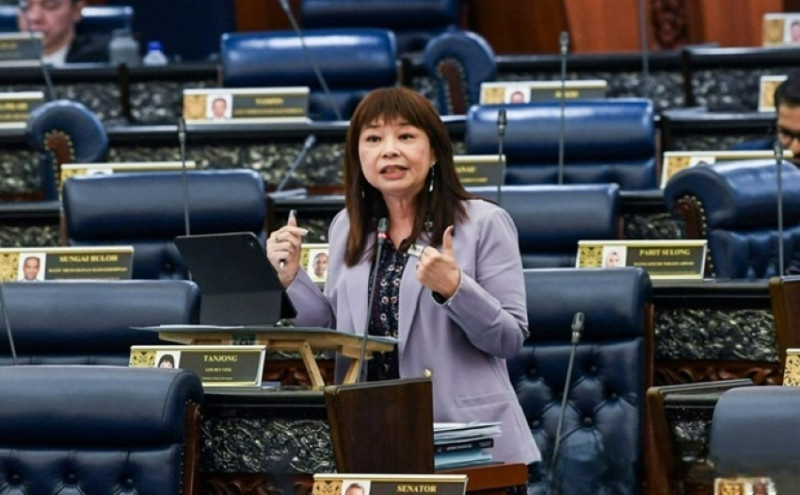
Responding in Parliament to a question from Pasir Gudang MP Hassan Abdul Karim, Deputy Finance Minister Lim Hui Ying said the MADANI government has discontinued the practice of awarding standard public projects—such as roads, schools, and hospitals—through direct negotiation. Instead, it is prioritising open tender processes to ensure transparency and value for money.
“The MADANI government continually updates and improves existing regulations to enhance good governance in government procurement. We are committed to enforcing open tenders to avoid leakages in government contracts,” Hui Ying stated.
This approach, it added, is consistent with the Treasury Circular (PP) Government Procurement (PK) 2.1: Methods of Government Procurement, aligning Malaysia with international standards.
The Deputy Minister added its oversight mechanisms, including scheduled compliance visits, surprise inspections via “flying squads”, and training programmes for procurement officers.
“To reinforce transparency, every ministry is required to fully monitor its projects under the Ministerial Development Action Committee (JTPK), enforced through Directive No. 1 of 2018,” it said.
She emphasised that current procurement procedures are administrative in nature, governed by circulars and regulations. However, once passed by Parliament, the Procurement Act 2025 will establish these processes under binding law.
“The Procurement Act 2025 will bolster governance with legislative authority, enabling punitive action for any proven misconduct,” Hui Ying said.
Among the key provisions, Clause 35 of the Bill prohibits the transfer of contract awards without prior approval from the relevant controlling officer. Violations could result in a fine of not less than three times the value of the contract or RM1 million, whichever is higher, or imprisonment of up to five years—or both.
The ministry added that the Bill was drafted in line with the National Anti-Corruption Strategy (NACS), led by the Malaysian Anti-Corruption Commission (MACC), and aims to uphold principles of accountability, transparency, open competition, and fairness.
“With the enactment of the Procurement Act 2025 and the penalties introduced, the Ministry of Finance is confident this will have a positive impact in tackling financial leakages from government contracts amounting to billions of ringgit,” it said.
To a separate question raised in the Dewan Rakyat on Thursday, the Ministry of Finance has assured that the revised and expanded Sales and Service Tax (SST), along with digital tax enforcement, is expected to have minimal impact on lower- and middle-income households, particularly in rural areas, due to targeted exemptions and control mechanisms.
To a query from Sik MP Ahmad Tarmizi Sulaiman, the Deputy Minister explained that early impact assessments indicated the effects on B40 and M40 groups would be "low and manageable".
“This is because taxation has been implemented in a targeted manner,” she said.
Among the measures cited were the exemption of basic necessities such as staple food items, medicines, books, and machinery for agriculture and livestock from sales tax.
The increased SST rates of 5% or 10% apply only to discretionary items and not to essential goods.
It also confirmed that core services used by the public—such as basic banking and residential construction or rental—are not subject to service tax. Service tax is instead levied on selected commercial services and on services typically consumed by high-income groups, such as private school fees exceeding RM60,000 annually. Private healthcare and tertiary education services are taxed only when provided to non-citizens.
In addition, exemptions are in place for specific services and business entities to prevent cascading taxation effects, while high registration thresholds have been set for new service categories.
These include RM1 million annually for rental and fee-based financial services, and RM1.5 million for private construction and healthcare services.
“To protect consumers from unfair price hikes, enforcement agencies actively monitor the prices of goods and services,” she added, stressing that the expanded SST framework is designed to strengthen government revenue without overburdening the public.
The increased revenue will be channelled back to the rakyat through various short- and long-term programmes under government policy frameworks.
These include ongoing aid schemes such as the Sumbangan Asas Rahmah (SARA), Sumbangan Tunai Rahmah (STR), subsidised cooking oil under the Cooking Oil Stabilisation Scheme (COSS), and initiatives like Payung RAHMAH and Jualan RAHMAH held across all state constituencies.
On digital tax, Hui Ying clarified that it is not a new levy, countering the MP’s assertion. “Digital service tax has been in place since 1 January 2020, imposed on providers offering services online or via electronic networks.”
She added that the tax’s implementation is unrelated to the SST expansion effective from 1 July 2025, as both taxes serve different objectives and operate under distinct frameworks. - August 28, 2025