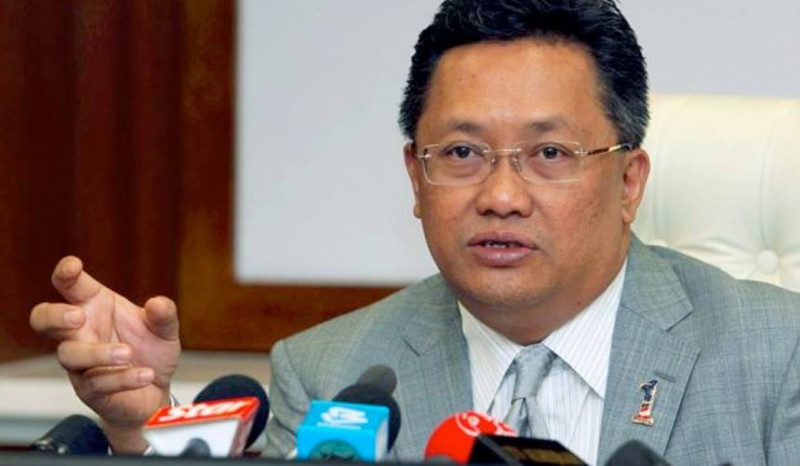
FORMER federal minister Datuk Abdul Rahman Dahlan has called for a speedy approach to arrest the brain drain in the medical profession - particularly among doctors and nurses in view of the uptick in the pinching of talent.
The Sabah Umno leader said the healthcare sector is one area which the country cannot afford to lose skilled personnel, as it boils down to saving lives and providing a degree in the quality of life, especially to those suffering from chronic ailments.
The exodus of Malaysian trained doctors and nurses to foreign countries especially Singapore of late, has caused worry and stirred debates.
Parliamentarians as well as the Malaysian Medical Association (MMA) have raised the alarm, signalling a national crisis in the making which needs to be urgently tackled by the federal government.
"As former federal minister in charge of Economic Planning Unit, I am aware the brain drain from these two disciplines has been happening for some time now, but recent developments have brought this issue to the forefront of public consciousness," said Rahman.
He said there are many reasons why Malaysia is facing an acute shortage of medical and nursing talent, with poor working conditions, bullying and unattractive salary packages cited by critics.

Aggressive poaching
Rahman said that some are self-inflicted while some are due to the aggressive “poaching” by foreign countries.
While the authorities have taken some positive steps to resolve the brain drain of medical professionals' brain drain, there are urgent calls from various stakeholders lately, including from lawmakers and the MMA, for the government to act expeditiously
Among the suggestions, are to revert to the previous employable system of permanent placements in the healthcare facilities form hospitals to clinics instead of a contract system which makes doctors insecure.
There are also proposals to increase on - call allowances, to establish clear career pathways for specialisation, and rectifying the disparity in regional incentive payments which discourage doctors from accepting transfers to Sabah and Sarawak.
Rahman also suggested that the ministry needs to address "poaching" of Malaysian talent by other countries, especially neighbouring Singapore.
While countries like Britain and those in the Middle East have also stepped up their recruitment of medical professionals, one country stands out as the most aggressive.
"I am talking about our neighbour to the south, Singapore," said Rahman.
Singapore for many years have been tapping on our inexpensive but capable human capital, including doctors and nurses, by weaponising their great strength - deep pockets.
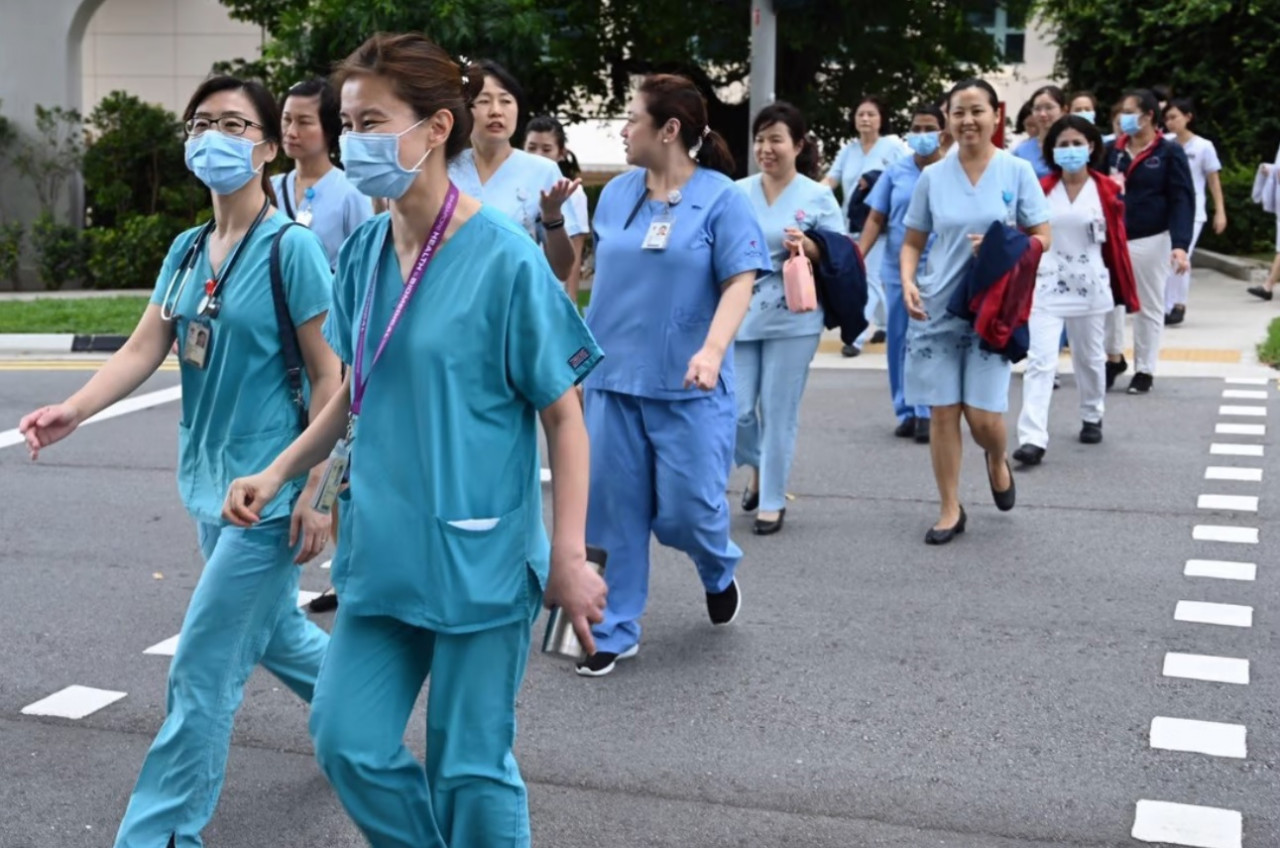
Recently, Singapore hospitals have resorted to conducting walk-in interviews in the heart of Kuala Lumpur.
"This is unprecedented," said Rahman.
"Previously, out of deference to Malaysian sensitivities, they only organised quiet, targeted and selective interviews for pre-identified Malaysian candidates. Even then, those interviews were done in Singapore," remarked Rahman.
"Now, it’s aggressive marketing campaigns just like what Singaporean developers are doing in search of Malaysian buyers for their new condominium projects."
Compensation
Rahman also proposed that the city state pay compensation to Malaysia for the medical talent they had recruited, which were trained by public universities.
"Singapore is the wealthiest member state of ASEAN. Because of its financial strength, Singapore is able to offer better perks, higher remuneration and allowances."
The manner Singapore has enticed Malaysian talent is sadly “capitalism without soul,” especially in the of context of ASEAN regionalism.
Malaysia has allocated a huge amount of money from their limited resources to subsidise the costs of producing highly trained doctors and other professionals in the public universities.
"The government is willing to do that even at the expense of spending comparatively less on much needed infrastructure development in rural areas. This is a critical mission for the Malaysian government as it tries to provide decent and affordable healthcare for its citizens throughout the country."
Unfortunately, this national agenda is being upended because of the exodus of medical professionals in search of better employment and work - life balance.
"Most Malaysians feel frustrated and perplexed especially when they feel Singapore, as an important ASEAN member state, is showing lack of empathy for Malaysia’s predicament."
Malaysia, through its government-to-government (G2G) policy, should negotiate that Singapore compensates the country for the full amount of subsidies Malaysia had spent on educating and training doctors and nurses in public institutes.
"That money can be utilised to improve healthcare to Malaysians, particularly in underserved areas. That is the only fair thing to do," asserted Rahman.
Alternatively, if Singapore wants to have doctors and nurses from Malaysia without paying the one-off compensation, the government can then impose an additional levy (not to be confused with existing tax on income), calculated monthly or yearly and based on their contracts & income drawn in Singapore.
"I must emphasise that the compensation should be borne by the Singaporean employers, not the Malaysian employees. With strict enforcement on compliance, this then levels the field for a more equitable “willing buyer willing seller” scenario."
This shouldn’t be seen as a punishment on those who seek employment outside the country (in these sectors), but rather as a compensatory mechanism after having been trained locally at the expense of the Malaysian taxpayers, he said.

On a broader perspective, this issue exposes a need for ASEAN to address issues of shortages of professionals in various industries across the region.
Malaysia is increasingly being recognised as a destination for quality but cheaper education which explains the demand for our doctors and nurses in Singapore.
As a long-term goal, Malaysia, as current chair of ASEAN, can spearhead the creation of a talent pool of industry professionals, from which member nations can draw upon via a G2G understanding that can ultimately have symbiotic economic benefits for participating nations.
Such an initiative could be funded by ASEAN as a whole and if adopted, it can help mitigate the shortage of talent within the region, added Rahman. - September 10, 2025.