_Ghandiji_Sekinchan_tamil_schools_vernacular_schools__Sairien_17.jpg)

KUALA LUMPUR – Issues involving the welfare of Tamil schools have long been a subject of debate among Indians in the country who speak the language.
Politically, Tamil schools have been a bedrock for canvassing by political parties to win over Indians in the run-up to elections.
In recent times, the battle has seen politicians from both sides of the divide – namely MIC, and Indian elected representatives from multiracial outfits such as PKR and DAP – wrestle over one another’s contributions and criticisms.
Promises and manifestos have been carved out by both sides to ensure Tamil schools’ development and operations are on a par with their Chinese counterparts.
To the Indian community, Chinese schools are often seen as a benchmark, as they are usually well developed and funded by the Chinese community and politicians, with some having the ability to self-sustain, to a certain extent, using revenues from hall rentals.
As the change of government at both the state and federal levels occurred between 2008 and 2020, the fortunes of Tamil schools, which had begun to improve due to the community’s demands and political pressure, could see a reversal following the Perikatan Nasional administration’s recent announcement that the budget for them next year will be slashed by 40%.
Previously allocated RM50 million annually by both the Pakatan Harapan and Barisan Nasional governments, only RM29.98 million has been set aside by PN to cover these schools’ administrative costs in 2021.

MIC’s perspective
Former deputy education minister Datuk P. Kamalanathan, who served in the ministry from 2013 to 2018, said the RM50 million allocation for Tamil schools was the standard during his tenure.
“In fact, there was even a special allocation of RM100 million under a special package introduced by former prime minister Datuk Seri Najib Razak in 2012 and 2013 for the purpose of school relocation and subsequent development.”
The RM50 million is usually utilised for the schools’ maintenance and upgrading.
Kamalanathan said to ensure the allocation was fully utilised in time, schools in need of the funds would be identified and listed by August, before the annual Budget’s tabling in October, by an independent team he had set up in the ministry.
“In addition to the team, I also created a pathway for school representatives to meet me and submit their request for funds. These requests would then be processed and listed according to priority, and cross-checked with existing applications.
“Once the required processes go through approvals by the education minister followed by the finance minister, and the passing of the Budget, the money is utilised almost immediately, as the ministry knows where and how it is going to be spent.”
However, he said, the RM50 million is never enough because there will always be schools that need repairs due to damage caused by storms, floods and landslides.
“This is solved with the approval for extra allocation by the ministry itself when an application is made. Therefore, the tendency is for Tamil schools to receive more than RM50 million in allocation.”
Asked to comment on the smaller sum this time around, he acknowledged that the Covid-19 pandemic and ensuing economic uncertainty likely contributed to the Finance Ministry’s decision.
“However, the decision could also be prompted by the lack of expenditure by the PH government, despite the RM50 million allocated to Tamil schools.”

Differing expenditure
Checks on two separate answers in Parliament’s special chamber with regard to Tamil school expenditure revealed that it is less than RM50 million.
The number and expenditure of schools as stated by both deputy education ministers varied.
On December 1, Deputy Education Minister II Muslimin Yahaya, in response to V. Sivakumar’s (PH-Batu Gajah) query on Tamil school allocation, said the government spent only RM38.62 million on 308 Tamil schools up to November 25, with RM7.79 million allocated to 130 government Tamil schools and RM30.83 million to 178 government-aided Tamil schools.
However, Deputy Education Minister I Datuk Mah Hang Soon, in his reply to Cha Kee Chin (PH-Rasah) on December 7, said the government spent RM46.41 million on 339 Tamil schools, with RM7.66 million allocated to 118 government Tamil schools and RM38.75 million to 221 government-aided Tamil schools.
The Vibes is pursuing the Education Ministry for an explanation.
Pressing needs
At present, 26 Tamil schools of the 527 nationwide have fewer than 10 students.
Kamalanathan said the situation is due to most of these schools being located in estates, and many Indians have since moved to urban areas in search of better prospects.
“The relocation of Tamil schools remains a big priority to ensure that student numbers and allocations increase in tandem,” he said, adding that there are at least 60 to 70 schools recommended for relocation.
While the special allocation in 2012 and 2013 was meant for this purpose, he admitted that little progress has been made.
Checks showed that only two schools, namely SJK (T) Ladang Holyrood in Taiping, Perak, and SJK (T) Ladang Nyior in Kluang, Johor, have started operations following their relocation.
In Selangor, only SJK (T) Ladang Bukit Ijok in Kuala Selangor is on schedule to be relocated to Pekan Sg Pelek, Sepang, by next June.
Plans to relocate SJK (T) Ladang Minyak from Bestari Jaya to Serendah have been postponed due to land-related issues.
There are no relocation proposals for 23 Tamil schools currently.
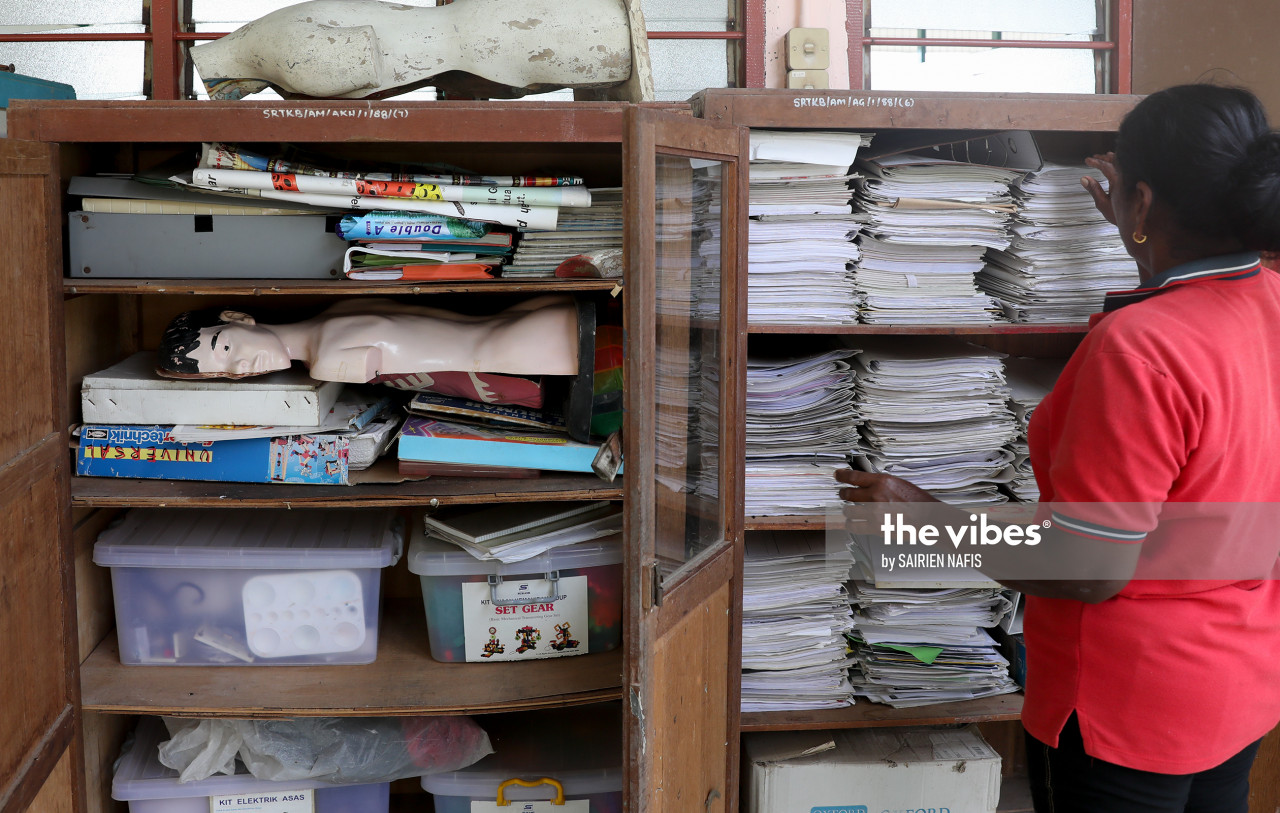
These issues prompted Kamalanathan to question the PH government on the monies spent during its 22 months in power.
“I have the spending records of the BN government between 2013 and 2017. I cannot speculate on how PH spent the monies during their stint, but based on these parliamentary replies, it seems that they did not spend enough money to justify the same allocation for next year by the new government.”
He said another pressing need is to make available preschool classes in all Tamil schools, something that he personally worked on when he was in office.
“In 2017, Najib announced RM10 million specifically for preschool classes in Tamil schools. So, we managed to have 50 preschool classes in over 30 Tamil schools.
“However, nothing was heard or done afterwards during the two years of the PH government.”
Despite the smaller allocation for next year, Kamalanathan remains upbeat about the future of Tamil schools under the PN administration.
“Do take into account that Prime Minister Tan Sri Muhyiddin Yassin was education minister, one of the three I had the opportunity to serve under. As such, he is very much aware of Tamil schools’ issues, and he will be able to look out for their welfare from time to time.
“At MIC, both our president and deputy president, as well as myself, are in constant contact with the education minister (Mohd Radzi Md Jidin) and the ministry on various issues involving Tamil schools, and we will ensure that their welfare and allocation are always taken care of.” – The Vibes, December 28, 2020
In Part 2, The Vibes talks to a PH representative about Tamil school issues and expenditure when the pact was in power