KUALA LUMPUR – The Malaysian health sector has seen major paradigm shifts throughout 2020, owing to the Covid-19 pandemic that has culminated in a tumultuous year.
The gravity of the situation sank in when the government imposed the movement control order (MCO) on March 18, putting the entire country on partial lockdown.
With infections fluctuating between double to triple figures daily at the time, the government introduced a raft of standard operating procedures (SOPs) that affected Malaysians from all walks of life.
This includes, among other changes prescribed under the "new normal", the ways people visit both public and private healthcare providers.
Health advocate Dr Arvinder-Singh HS said that many patients have pivoted from visiting public clinics and hospitals to visiting private practices for treatment of regular illnesses, such as cough and colds, instead, which was among the notable changes seen throughout the year.
He also noted that while the current rate of infections is several times that of the initial months of the pandemic, the present relaxing of restrictions reflects what the country has learned about Covid-19.
“We (healthcare providers) realise how little we knew at the time. We gradually learned how (maintaining) a livelihood is equally as important as controlling the virus,” he told The Vibes recently.
“We have seen this year how public health has taken importance during this pandemic. This pandemic has also shown how we always need new blood.”
The year has revealed that public healthcare not only depends on medical workers, but preventative measures in people’s daily lives.
“Another change is the way society has taken ownership over the fact that they cannot depend solely on medical workers to control an outbreak; it is about the way the community responds to it. And this is a big piece of the pie.”
Weighing in on major changes that occurred this year, Dr Arvinder breaks down three key areas – public health, primary care, and clinical research – which have seen or need further recalibration in delivering health services in challenging times.
From a policy, financial, and management standpoint, Dr Arvinder pointed to the long-standing notion that the country has an oversupply of doctors and health workers.
Within the first few days of the lockdown, Prime Minister Tan Sri Muhyiddin Yassin announced an additional RM500 million for the Health Ministry to purchase ventilators, intensive care unit equipment, and personal protective equipment (PPE) for medical workers, with an additional RM100 million budget to hire 2,000 contract staff.
“In the past, we thought we had enough doctors, but this pandemic indicated otherwise. The distribution of medical practitioners is also unequal between Peninsular Malaysia and Sabah and Sarawak,” he said.
“There have always been problems in terms of staffing shortages.”
Furthermore, once the dust settles over Covid-19, Dr Arvinder predicts that many of the hired contractual staff will not have their terms renewed or extended, which will not bode well for the sector and the country in the event of another pandemic.
“They will have moved on to other jobs and sectors. And by that time, it would be hard to chase after them to come back (to the Health Ministry).”
Dr Arvinder also said the pandemic is a clarion call for more public-private healthcare collaborations, as advocated by former health minister Datuk Seri Dr Dzulkefly Ahmad.
“Partnerships can be cross-border, and although we may not be able to travel at the moment, we have to open doors to learn from other countries,” he said.
For example, he said, Singapore has seen tens of thousands of Covid-19 infections, but recorded fewer than 30 deaths. He also said that other countries, such as those in Africa, have dealt with highly infectious diseases such as ebola, and Malaysia can tap into their ways of containing outbreaks.
He also noted that the pandemic has highlighted the disparity between the availability of health infrastructure in the peninsula and Sabah and Sarawak.
In the peninsula, he said, a government medical facility can be found within 15km of most areas, but the distance is multiple that amount in Sabah and Sarawak.
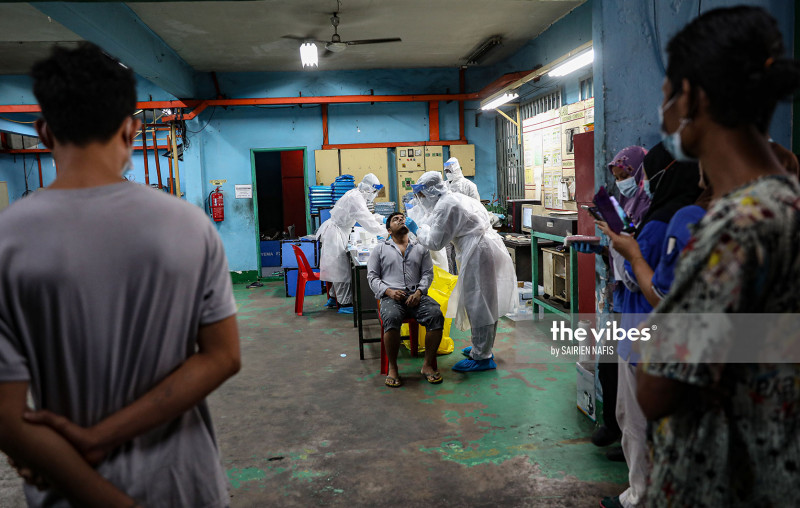
The spike in Covid-19 cases among foreign migrants, he added, is also an indication as to how non-Malaysians are invariably a part of the public health system.
Preventative medicine has a big role to play in combating the pandemic as most related deaths – now hovering close to 500 in the country – are linked to non-communicable diseases (NCDs) such as diabetes, dyslipidaemia and hypertension.
On the daily, Health Director-General Tan Sri Dr Noor Hisham Abdullah has highlighted comorbidities related to each Covid-19 death during his press conferences.
Dr Dzulkefly has also stressed the need to better manage NCDs, which Dr Arvinder says has seen cases of complications shoot through the roof recently due to the changing habits of patients obtaining primary care, mostly for outpatient treatment at both local and private facilities.
“There is a lot of stigma against hospital and healthcare workers’ overexposure to Covid-19, which leads to more postponements of check-ups and surgeries,” Dr Arvider said.
“Many (NCD patients) default on treatment because they are scared to go to hospitals, and this makes things worse for diabetics, who come in later with foot ulcers and face the risk of losing a toe or limb.”
Dr Arvinder has also called on visitors to health facilities to look past the stigma and practise preventative measures such as wearing masks, social distancing, and refraining from touching surfaces.
On a lighter note, Dr Arvinder said that although the pandemic has seen a drop in visits by patients to government clinics, the new SOPs have made crowd management at these facilities more efficient.
Some of the measures implemented are making appointments, scheduling treatment for patients, and preparing medication at pharmacies.
However, Dr Arvinder pointed out that 300 private general practitioners have closed their clinics due to the pandemic, based off a conservative estimate.
“They (GPs) faced issues of having fewer patients and couldn’t make ends meet. They are also worried about credit as they have to pay for their overheads, especially medicine, staff salaries, and utility bills.
“Because government healthcare provides free services, people think that private healthcare should be the same. But at the end of the day, we must understand that a certain amount of primary healthcare involves out-of-pocket charges.”
Besides the physiological aspects of primary care, mental health has also been brought to the fore during this pandemic.
Dr Arvinder said the number of patients seeking help for mental health issues has almost tripled since the beginning of the pandemic, with many facing depression and anxiety over job losses and other pressures.
“Other than psychiatrists, people can seek help from primary care physicians. We have come to realise that there is a lot more we can do in primary care.”
The new normal has seen a rise in the use of technology for areas such as telemedicine, Dr Arvinder said, but this is an area that requires more governance and regulation.
“You cannot diagnose a heart attack through teleconferencing, and we do not want new technologies to worsen healthcare.”
Dr Arvinder also noted that if Malaysia wants to have a sustainable public-private healthcare system, a major restructuring of primary care is needed, but the country is not yet ready to make such changes.
Neighbouring Thailand has joined the race to develop Covid-19 vaccines that will pave the way for researchers to come up with inoculations for other diseases, according to a Bloomberg report last month.
While other, less affluent nations fear being left behind in supplying Covid-19 vaccines to their populations, Thailand is looking to produce its own coronavirus shots through two advanced research programmes – one of which was developed by BioNet-Asia Co – that will enter their first phase of clinical trials early next year.
Malaysia, on the other hand, is not too far off in its ability for capacity-building, especially in vaccine development. Apart from existing centres focused on this health segment, the move by Universiti Sultan Zainal Abidin in setting up an Infectious Disease Research Centre under its medical faculty, is expected to complement establishments such as the Health Ministry’s Infectious Disease Research Centre.
Earlier this year, the government allocated RM3 billion to procure Covid-19 vaccines for up to 70% of the country’s population, covering some 22.4 million people.
So far, the government has inked deals with the Covax facility, Pfizer, and AstraZeneca, with the roll-out of inoculations to begin in the first quarter of next year.
Dr Arvinder said that more clinical research in the country allows for better understanding of each Covid-19 vaccine and who should be inoculated early to ensure optimal effectiveness of the immunisation programme. But this, he said, requires a holistic approach.
“It (clinical research) cannot stand alone as it requires certain aspects of public health and primary care to be thrown into the mix. It will allow us to determine which vaccine we should purchase and to handle other matters such as logistics and transportation,” he said.
“The pandemic has also taught Malaysia that it is necessary to focus on vaccine development and production. If Thailand can buy the rights to one vaccine and start mass-producing, we need more specialised doctors to do the same and learn how to take on (disease) mitigation steps, for example.”
But while putting more emphasis on clinical research, Dr Arvider said the country cannot neglect essential services.
“Heart attacks, diabetes, and strokes are still going to happen, so primary care is essential in controlling all of these diseases in the early stages.
“We cannot neglect other diseases due to the pandemic. That is the most important part about having public-private partnerships.
“That is why primary care, clinical research, and public health needs to be empowered, enforced and given adequate funding,” he said. – The Vibes, December 29, 2020