THE Government has set out a broad suite of industrial support measures as it prepares to introduce a national carbon tax in 2026, with the energy as well as iron and steel sectors marking the first phase of implementation.
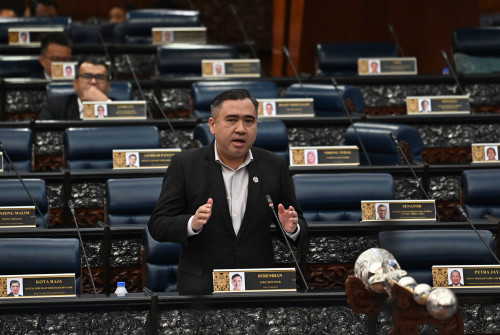
In a detailed reply in the Dewan Negara, Deputy Investment, Trade and Industry (MITI) Minister Liew Chin Tong said the move will be aligned with the forthcoming National Climate Change Bill (RUUPIN), ensuring that fiscal and legal frameworks operate “in a coordinated, transparent and consistent manner”.
Responding to Senator Datuk Ng Keng Heng, the government underscored that the authority to impose the tax lies with the Ministry of Finance, while RUUPIN—led by the Ministry of Natural Resources and Environmental Sustainability—will establish the legal foundation for carbon governance, including reporting and monitoring standards.
“The synchronisation of these two instruments is crucial,” Liew stated, adding that the frameworks must reinforce each other to achieve the Clean Net Zero 2050 ambition.
Liew said that a range of assistance programmes has already been activated to cushion domestic industries from the cost of transition, particularly those operating in carbon-intensive sectors. These measures are intended to facilitate the shift to low-carbon technologies “without undermining competitiveness”.
Central to this effort is the 2024 Green Investment Strategy (GIS), billed as the country’s principal roadmap for attracting high-value green investments in clean energy, low-carbon technologies and environmental solutions.
The GIS is built around seven investment drivers, including energy efficiency, renewable energy, green hydrogen, bioenergy, green mobility, carbon capture, utilisation and storage (CCUS), and the circular economy.
To support uptake, MITI highlighted multiple fiscal and financing incentives: the Green Investment Tax Allowance for capital expenditure on green technologies, the Green Income Tax Exemption for green-tech services, and expanded tax benefits for emerging sectors such as electric vehicle charging, wind power and green hydrogen.
The Green Technology Financing Scheme continues to help firms mitigate upfront costs and risk.
The government is also fast-tracking CCUS readiness, describing it as a “strategic pillar” under the New Industrial Master Plan and GIS. Incentives include a 100% Investment Tax Allowance for 10 years, exemption of import duty and sales tax on CCUS equipment until 2027, tax deductions on CCUS service fees, and the potential for carbon credit generation—credits that may later offset carbon tax liabilities through a claimable-rebate mechanism.
Further financing is available under the Co-Investment Fund (CoSIF), which blends government and private capital to support decarbonisation projects led by SMEs and mid-tier companies. MITI noted that such projects align with NIMP Mission Three: Push for Net Zero.
In the iron and steel sector, MITI pointed to the Steel Industry Roadmap 2035, which sets the groundwork for governance, industrial standards and emissions reporting.
A uniform Measurement, Reporting and Verification system is being developed as part of ongoing CCUS pilot studies to ensure the sector is prepared for more stringent carbon-related policies.
MITI stressed that these preparatory frameworks are essential ahead of the carbon tax’s final design by the Ministry of Finance.
“MITI will continue to provide technical input and work closely with relevant ministries to ensure industry needs are considered,” the Deputy Minister said.
On funding for green investment, the government clarified that the GIS is a strategic framework rather than a dedicated fund. Its goal is to position Malaysia as a regional green-investment hub, targeting up to RM305 billion in private-sector green investment by 2030.
Firms undertaking qualifying green projects may draw upon the portfolio of incentives and financing already in place.
The ministry concluded: “These measures aim to strengthen Malaysia’s transition to a low-carbon economy while safeguarding industrial competitiveness and encouraging sustained green investment.” - December 3, 2025




.jpeg)