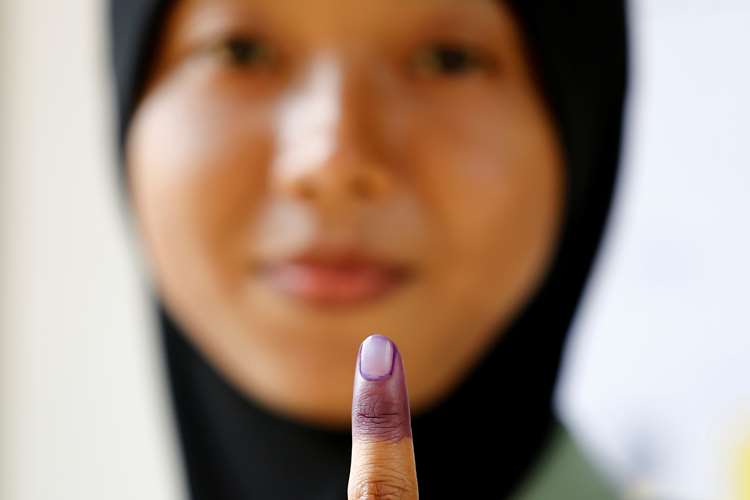
SILENT voters remain among the most critical and unpredictable variables in Malaysia’s electoral landscape, often explaining why results sometimes defy expectations on polling night.
“In a political environment that is increasingly fluid, silent voters and fence-sitters are among the most important variables in our analysis and election projections,” said Ilham Centre director Hisommudin Bakar.
He said this in a recent interview with Sinar Harian.
He said unlike earlier decades where voter loyalty was more stable, today’s voting behaviour is dynamic and constantly shifting, making static or one-off surveys insufficient.
“Based on Ilham Centre’s field experience, the size of the silent voter group is usually large when studies are conducted well ahead of the campaign period.
“However, it gradually shrinks as polling day approaches and voters begin to make final decisions,” he said.
He noted that the number of silent voters is typically high when research is done prior to the campaign period, but it decreases gradually once voters start deciding,” he said.
This transition period, he said, is where projections become most fragile and are always exposed to a certain margin of error, especially in the final phase.
He said the late shifts in voter sentiment can significantly alter outcomes.
Among all voter segments, he said young voters are the most fluid and difficult to predict.
“Younger voters have decision-making patterns that are harder to predict,” he said, noting that their choices are often shaped closer to polling day.
He said understanding silent voters requires more than percentages and charts. It involves reading emotions, hesitation and uncertainty, elements that do not always appear clearly in numerical data.
He added that in Malaysia’s evolving political landscape, silent voters may speak softly, or not at all, before election day. But when ballots are counted, their collective voice often proves decisive. – February 3, 2026