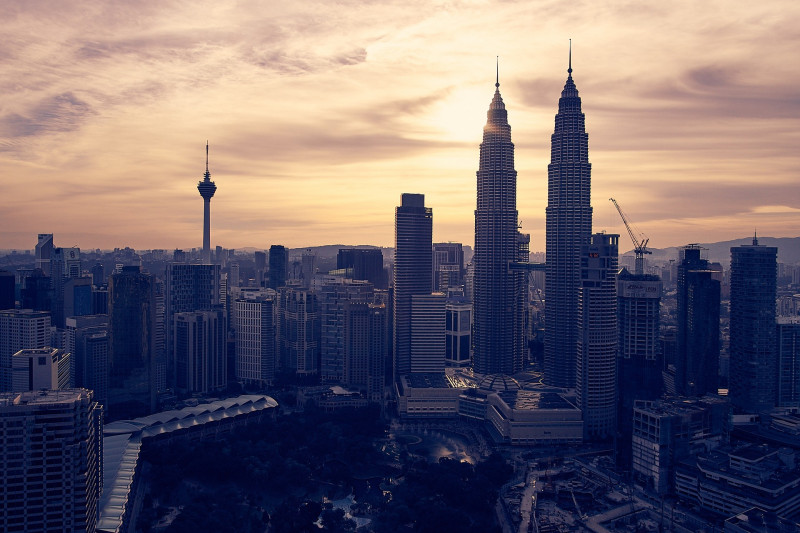
THE narrative of Malaysia reasserting itself as an Asian Tiger is gaining traction both at home and abroad, but economists warn that the label can only be credibly maintained if strong economic performance is sustained over several years and underpinned by rising productivity and meaningful reforms.
Senior Lecturer at the School of Management and Business, MILA University, Dr Mohamad Khair Afham Muhamad Senan, said the Asian Tiger designation traditionally refers to economies that record high and consistent gross domestic product growth over a prolonged period, alongside rapid productivity gains, robust investment levels, a shift towards higher value-added activities and overall macroeconomic stability.
“During the early 1990s, Malaysia experienced very rapid annual growth for several consecutive years before the Asian financial crisis, supported by large-scale investment and strong manufacturing exports,” he told BH.
Mohamad Khair said the current economic landscape reflects a more stable and balanced performance, with GDP expanding by 5.1 per cent in 2024, inflation hovering around 1.8 per cent, unemployment at 3.2 per cent and labour productivity per worker rising by about 2.4 per cent.
“This indicates that the macroeconomic fundamentals are healthier. However, to truly return to an Asian Tiger profile, productivity and income growth must be accelerated and sustained over several years, rather than reflecting a post-pandemic rebound or reliance on only a few sectors,” he said.
On market sentiment, he said conditions have turned more positive but remain cautious, even though there are reasonable grounds to support the revival narrative, including stable growth, low inflation, improving labour market conditions and rising investor confidence, including renewed interest in domestic financial markets.
“Many economists stress that bold labels such as ‘Malaysia is back’ require continuous evidence, because short-term recovery can be driven by cyclical factors such as a rebound in domestic demand, electronics export cycles or shifts in global sentiment,” he said.
He added that part of the current momentum appears structural, as it is supported by medium-term policy frameworks and institutional development rather than temporary stimulus alone.
Among the supporting factors are clearer industrial and energy transition strategies under the New Industrial Master Plan 2030 and the National Energy Transition Roadmap, as well as a more institutionalised digital agenda, including the establishment of a national artificial intelligence office to coordinate policy and regulatory frameworks.
From an investment perspective, Mohamad Khair said approved investments reached RM378.5 billion in 2024, signalling strong economic appeal, but stressed that the true test lies in implementation.
“This includes the extent to which projects are actually realised, whether local supply chains benefit, whether technology transfer takes place and how many high-skilled jobs are created,” he said.
Meanwhile, Global Asia Consulting senior consultant Samirul Ariff Othman said that while there are historical parallels in terms of the revival narrative, Malaysia’s current structural position is not yet fully comparable to its earlier Asian Tiger era.
“In the late 1980s and 1990s, productivity growth was driven by industrial expansion, technology transfer through foreign direct investment and a ‘catch-up’ process.
“Today, the challenge is more complex, involving automation, skills upgrading, research and development, and the diffusion of productivity gains into the services sector,” he said. - February 7, 2026