THE Higher Education Ministry has signalled its readiness to review the Universities and University Colleges Act (Auku) 1971 following a protest by student groups who marched to Parliament to demand the law’s complete repeal.
A group of student protesters, identifying themselves as members of various organisations under the Abolishment of Auku Secretariat, gathered outside the Parliament building on Monday morning to submit a memorandum outlining their demands.
The students argued that Auku should be scrapped and replaced with legislation that is more inclusive and democratic.
“This memorandum calls on the government to completely repeal the Act and replace it with a more progressive, inclusive and democratic legal framework.
“Despite being amended several times, the Act still retains a centralised power structure, creating room for political interference, abuse of administrative authority, and the suppression of freedom of expression and association.
“This situation contradicts the principles of constitutional democracy and the role of universities as independent and critical institutions of knowledge,” the group said in the memorandum.
The protesters also warned that if the government fails to abolish the Act, the Higher Education Minister, Datuk Seri Dr Zambry Abd Kadir, should resign.
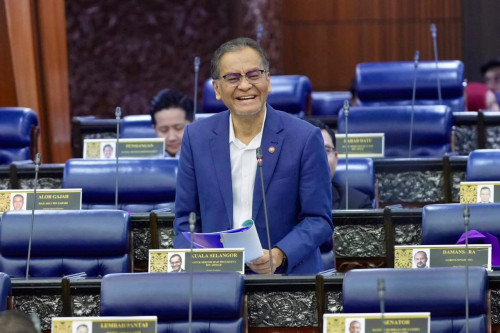
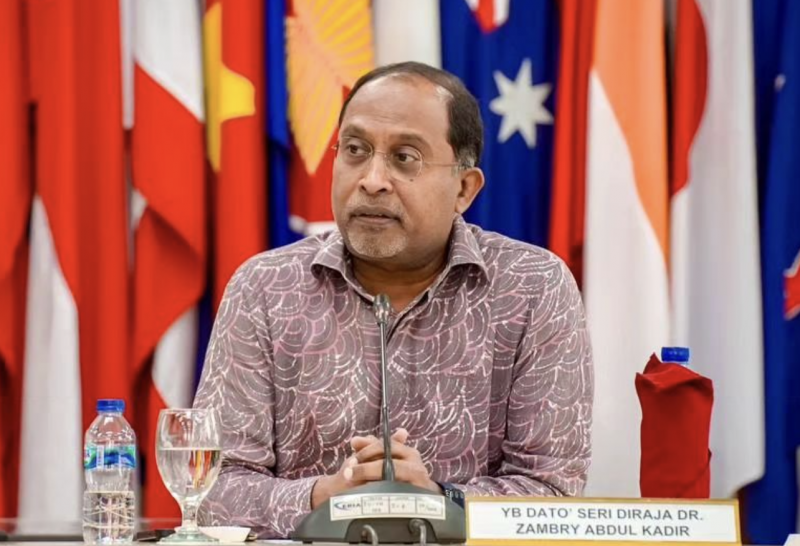
Responding to the protest later in the day, Zambry said the ministry was prepared to listen to the grievances raised and remained open to reviewing Auku, which he described as a dynamic piece of legislation.
“We can reassess the processes under it, especially if there are gaps or areas that can be improved,” he said while winding up the debate for his ministry during the motion of thanks for the Royal Address in Parliament on Monday.
Zambry added that any review of Auku would be consistent with the broader Malaysian higher education plan, which seeks to evaluate the entire higher education ecosystem, including governance structures, procedures and appointments.
“For instance, the ministry is considering developing a new legal framework for higher education, which would include a review of all relevant laws, including Auku.
“If you ask me, I would like to see Auku examined in the context of today’s world, particularly with regard to student freedom.
“Its definition cannot remain the same as in the past.
“Today, in academic terms, we talk about ‘student self-formation’—how students can exercise both their intelligence and their freedom in a constructive way,” he said.
Addressing concerns raised by the protesters over the appointment of vice-chancellors at public universities, Zambry said the ministry was also open to considering changes to the existing process.
“We are prepared to listen to their views, including the specific concerns raised this time regarding the minister’s powers.
“They were outside earlier, calling for the process of appointing vice-chancellors not to be placed entirely under the absolute authority of the minister.
“I want to state here that if we look back at the existing legislation, in the context of appointing vice-chancellors, it is not solely or absolutely subject to the minister’s discretion.
“It is not a case of the minister arbitrarily appointing whomever he pleases,” he said.
Zambry explained that under Auku, vice-chancellors are appointed by the minister based on the advice of a committee established under Section 4(a) of the Act, following consultations with the university board.
“I also never rejected the proposals given by the board,” he said.
The renewed debate over Auku underscores longstanding tensions between student activists and the government over academic freedom, university autonomy and political influence within Malaysia’s higher education system. - February 9, 2026