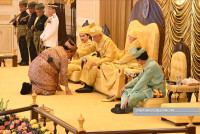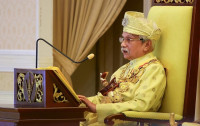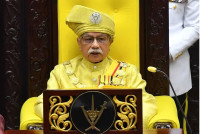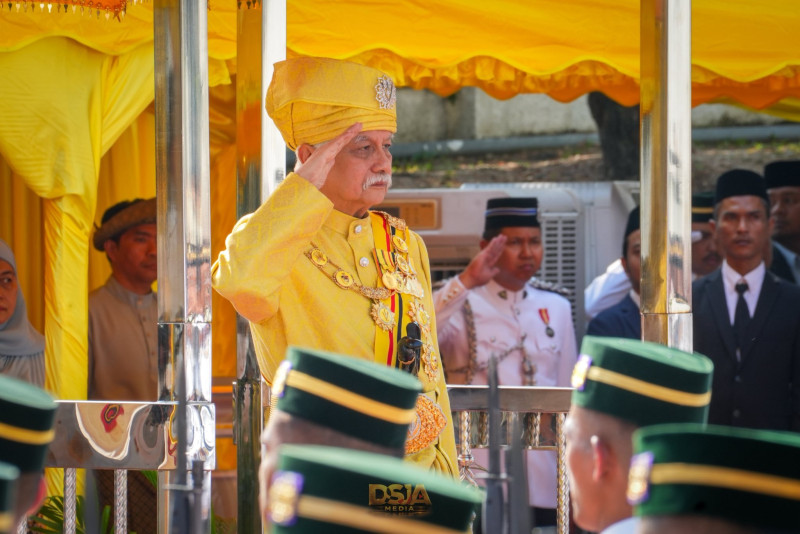
IN most years, the opening of the Negeri Sembilan State Legislative Assembly is a ceremonial constant — measured, predictable and steeped in tradition.
This year, it unfolded under very different circumstances.
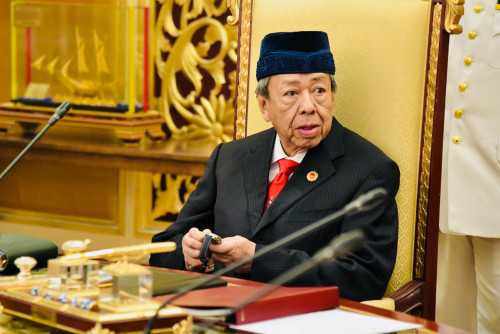
Tuanku Muhriz ibni Almarhum Tuanku Munawir took his place to officiate the sitting against the backdrop of a rare and sensitive dispute within the state’s royal structure — a development that has quietly drawn national attention.
The moment was not marked by confrontation or spectacle. Instead, it reflected something more characteristic of the ruler himself: composure, continuity and an adherence to institutional process.
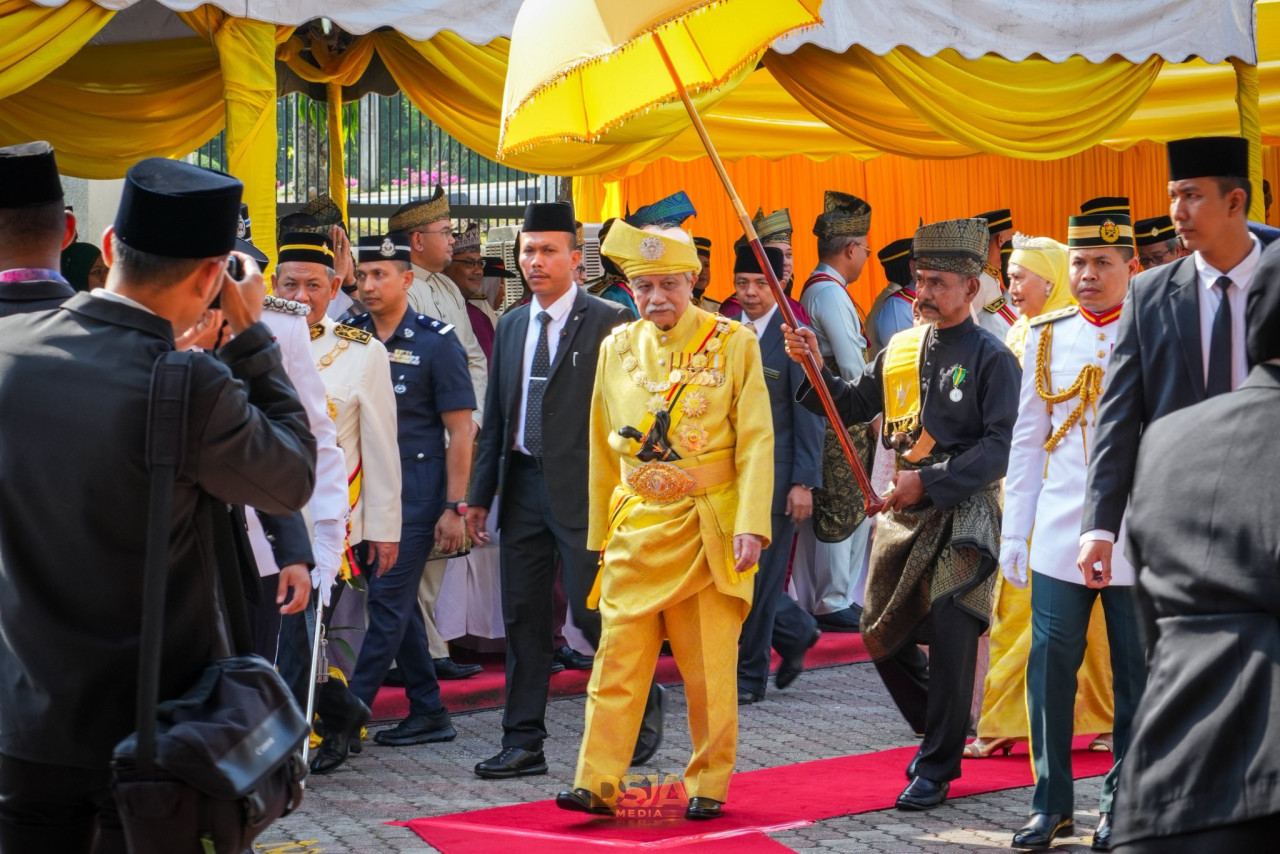
A Path Shaped by Delay, Not Destiny
Tuanku Muhriz’s journey to the throne is often described as unusual, but it is perhaps better understood as formative.
Born in 1948 into Negeri Sembilan’s royal household, he was the only son of Tuanku Munawir.
By lineage, he stood in a strong position to succeed his father. But when the throne became vacant in 1967, the decision did not fall in his favour.
The Undang — the traditional chiefs empowered to elect the state’s ruler — instead chose his uncle, citing his youth at the time.
It was a pivotal moment. Rather than ascending early, Tuanku Muhriz spent the next four decades within the system but outside its highest office, holding the title of Tunku Besar of Seri Menanti.
The role placed him close to the workings of governance and adat without placing him at its centre.
When he was eventually chosen as Yang di-Pertuan Besar in 2008, it marked not just a succession, but a return — one that carried with it years of observation and institutional familiarity.
A Different Kind of Monarchy
Negeri Sembilan’s royal system is distinct within Malaysia.
Rooted in Adat Perpatih, it blends customary law with constitutional governance, with the ruler elected rather than automatically installed through direct succession.
Within this framework, the relationship between the Yang di-Pertuan Besar and the Undang is fundamental.
Authority is not exercised in isolation, but through a structure that relies on balance, recognition and long-established practice.
Since taking the throne, Tuanku Muhriz has largely kept a low public profile, but his governance positions have been consistent — emphasising unity, institutional respect and the preservation of both tradition and constitutional order.
An Unusual Dispute Comes to the Surface
The current tensions, described by observers as highly uncommon, stem from disagreements tied to the interpretation of authority within Negeri Sembilan’s traditional system.
At the centre of the issue are questions about the role and powers of the Undang in relation to the sitting ruler — an area that is typically managed internally and seldom becomes public.
What makes the situation notable is not only the disagreement itself, but the visibility it has gained.
Actions by certain parties were perceived as challenging the established position of Tuanku Muhriz, bringing what is usually a closed institutional matter into broader view.
Despite this, there has been no disruption to formal governance.
The state administration has continued to recognise Tuanku Muhriz’s authority, allowing official functions — including the legislative assembly sitting — to proceed as scheduled.
A Constitutional Signal
In that context, the ruler’s presence at the state assembly carried significance beyond ceremony.
The opening of the legislative session is a key constitutional act.
It signals that the machinery of government remains intact and that the relationship between the monarchy and the state administration continues to function.
By proceeding with the officiation, Tuanku Muhriz effectively reinforced that continuity.
Notably, his response to the situation has not been marked by public rebuttal or escalation. Instead, it has followed a familiar pattern — measured, procedural and grounded in the norms of governance.
Leadership Without Noise
Those who have followed Tuanku Muhriz’s reign often point to its understated nature.
Unlike more visible or outspoken figures, his leadership style has been defined less by public pronouncements and more by consistency.
His speeches have repeatedly touched on themes such as national unity, responsible leadership and the importance of preserving historical and cultural foundations.
At the national level, his role as Chancellor of Universiti Kebangsaan Malaysia reflects a quieter contribution, particularly in the sphere of education and institutional development.
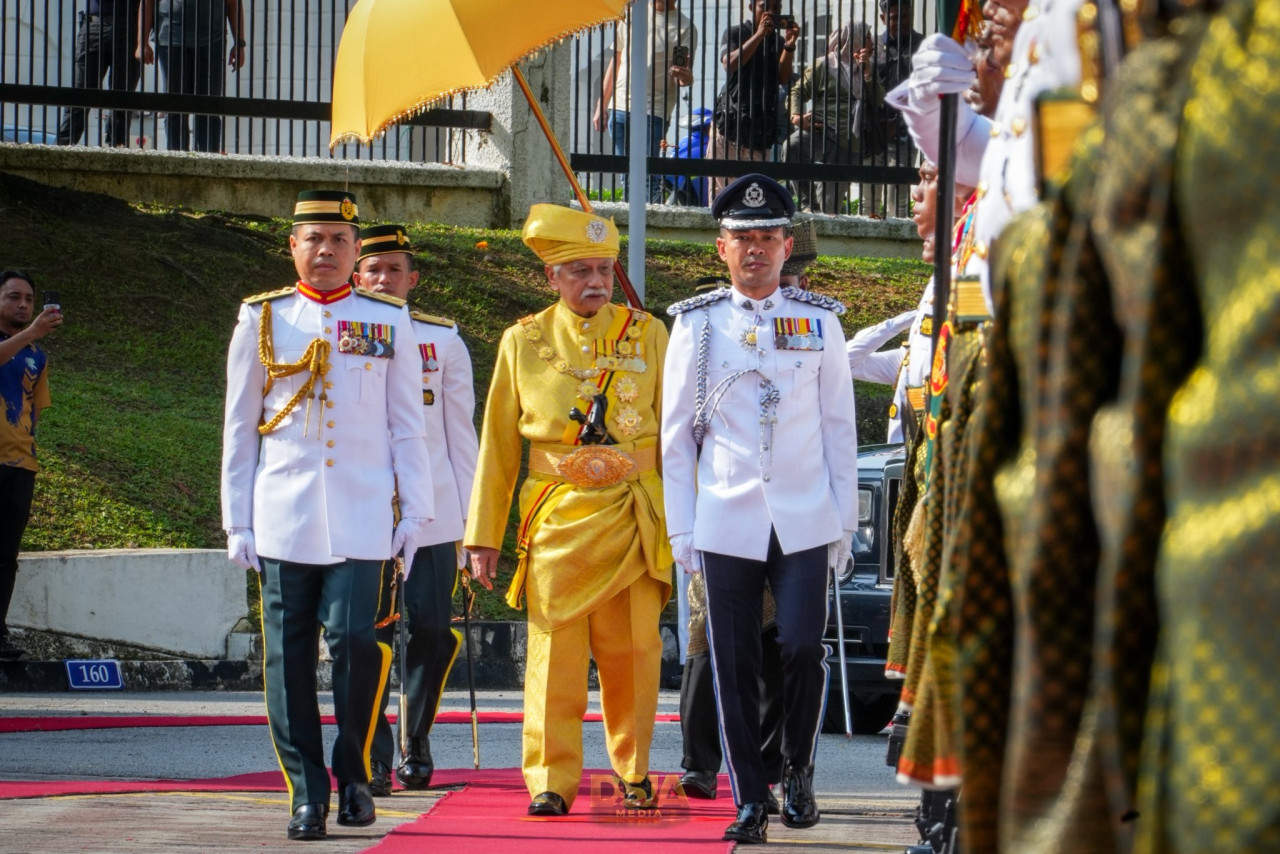
A Moment That Reflects a Lifetime
In many ways, the current situation mirrors the broader arc of Tuanku Muhriz’s life.
Having once been passed over for the throne, his eventual rise was shaped not by immediacy but by process and acceptance within a complex traditional system.
That experience appears to inform how he navigates uncertainty today.
Rather than redefining the system in moments of strain, his approach has been to hold it steady.
Beyond the Present Tension
The dispute itself remains unresolved, and its outcome will likely depend on internal deliberations within Negeri Sembilan’s traditional framework.
But for now, the state continues to function — its legislative body convening, its governance structures intact, and its ruler carrying out his duties.
In a system where tradition and modern governance intersect, that continuity may be the most important signal of all. - April 23, 2026