
KOTA KINABALU – The outcome of the Sabah election may lay the foundation for the state to break away from Putrajaya’s economic and development policies, namely the five-year Malaysia Plans (RMK).
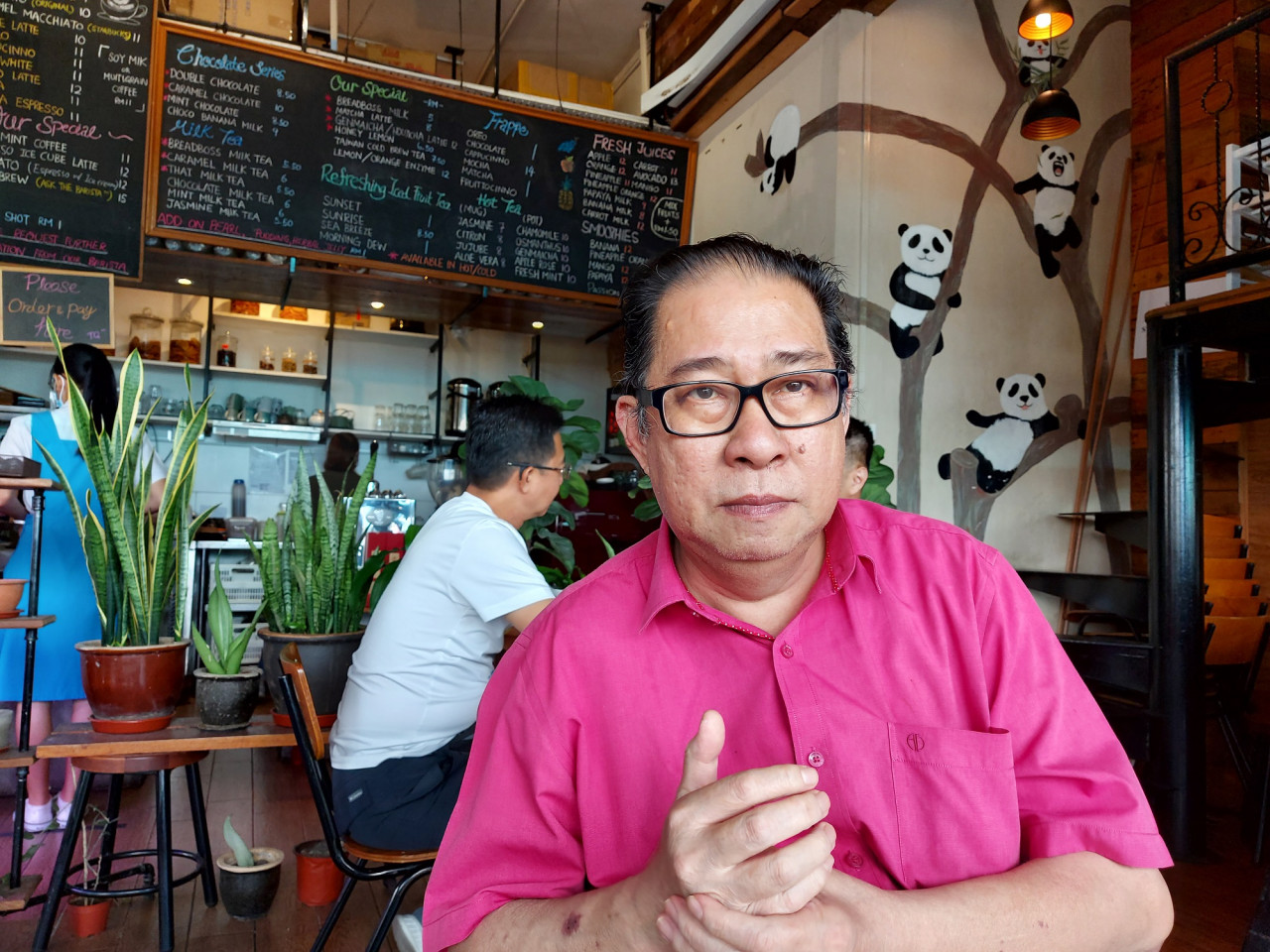
The state’s Malaysia Agreement 1963 (MA63) advisor Zainnal Ajamain told The Vibes that Parti Warisan Sabah will be declaring its intention to decouple from the Malaysia Plans after retaining the state government in the coming polls.
“We will be announcing another plan after this election. This is called the Sabah Economic Reset. What it means is, number one, we decouple from the peninsular. We have been following the RMK since the 1970s but we got nothing.
“Our infrastructure is bad, our services are bad, everything is substandard, why should we go along with all the RMK?
“We will not be part of the policy. We have to look after our own because they (federal government) have not looked after us.
“When we decouple, what do we look for? From Japan to China – three billion people. It’s a three-billion (people) market. Compare that to 27 million people (in the Peninsular). What can 27 million people give to us compared to three billion?”
Another market he brought up is the Brunei-Indonesia-Malaysia-Philippine East Asean Growth Area (BIMP-EAGA) that is home to 100 million people, which he said is a market Peninsular Malaysia cannot match.
Legal standing
On the state having legal standing to formulate its own economic and development policies, Zainnal said there are provisions in the Federal Constitution that allow Sabah this level of freedom.
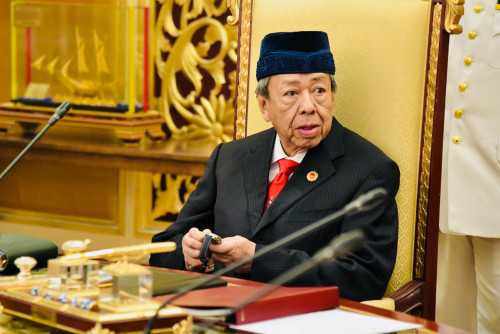
“Look at Article 95e (3) of the Federal Constitution. It’s the TYT (Yang di-Pertua Negeri) Sabah who has the authority to decide on our own plan. We don’t need to follow RMK.”.
Article 95e pertains to the exclusion of Sabah and Sarawak from national plans for land utilisation, local government and development, among others.
Subsection (3) states that under Article 92, “no area in the State shall be proclaimed a development area for the purposes of any development plan without the concurrence of the Yang di-Pertua Negeri.”
Zainnal predicted that it will take between one and two years before the Sabah Economic Reset can be rolled out.
The Warisan administration needs to go through a process of reflection where they plan on bringing in thinkers from China, England, Europe and the US to study Sabah’s strategic position.
“You have 40% of world manufacturers in China. Seven of the major ports in the world are in China. in Sabah, the shipping line is split into two.
“One goes through the Sunda Strait and the other through the Lombok Strait. Most of these new big ships are not going to use the Melaka Strait any more. Iit has become a choke point.
“So, they are coming here. When they do, who is going to look after their navigation? It falls under the state because it’s our route. We determine the charges,” said Zainnal.
On the shipping lanes, he added that if Sabah continues with its plans to detach from Putrajaya’s economic and development policies, the Peninsular must focus on a major paradigm shift in order to survive.
Shafie did not deny economic reset
When approached on the campaign trail by The Vibes, Sabah caretaker Chief Minister Datuk Seri Mohd Shafie Apdal neither confirm nor deny the possibility of a Sabah breakway from the RMK.
Instead. he remained coy and said that he needed to look into the matter.
“I have to check,” was the curt reply that came from the Semporna MP.
Why not both, says analyst
Singapore Institute of International Affairs senior fellow Oh Ei Sun said it is far more advantageous for Sabah to remain in Putrajaya’s plans while charting its own economic and development policies.
The Sabahan academic added that state and federal policies are not mutually exclusive.
“RMK is on how the federal government is going to spend money in the next five years. From a very selfish Sabahan point of view, if the federal government is willing to spend money on Sabah, I welcome it because a large amount of money comes from Sabah – oil royalties, state revenue, etc.
“We should continue being part of RMK as long as the federal government is spending money. It is the best of both worlds.
“At the same time, Sabah should also play a more proactive role as the number one hub for BIMP-EAGA in terms of consumption, markets and manufacturing.
“We should become a hub for investments from Japan, China and so on.”
He added that Warisan president and caretaker chief minister Datuk Seri Mohd Shafie Apdal has indicated he is more than willing to work with Putrajaya on a government-to-government basis even if the federal government is being administered by a rival coalition. – The Vibes, September 22, 2020