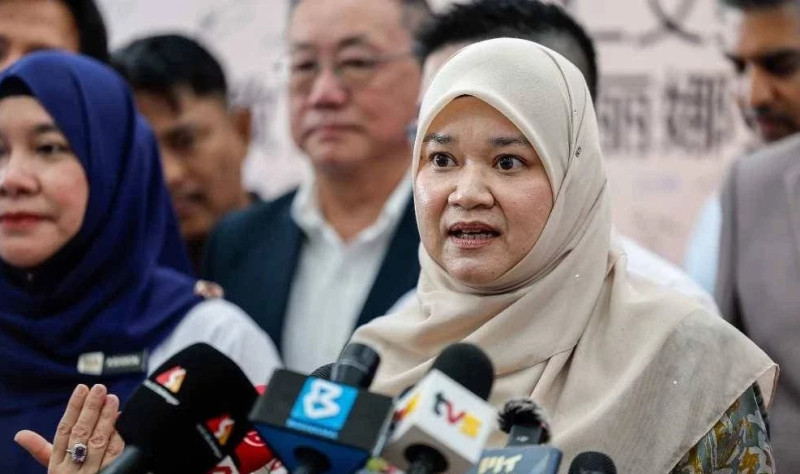
TEENAGE girls who become pregnant outside marriage must be given every opportunity to continue their education and sit for the Sijil Pelajaran Malaysia (SPM) examination, Education Minister Datuk Seri Fadhlina Sidek has said, underscoring the government's commitment to preventing vulnerable youths from dropping out of the education system.
The minister said educational continuity must remain a national priority, arguing that young mothers should not be denied the opportunity to rebuild their lives after childbirth.
She stressed that support systems must focus on rehabilitation, protection and long-term empowerment rather than punishment or social exclusion.
“They must return to continue their education after completing their confinement period. On this matter, I am very firm. We cannot take the easy route in life because education is the key to breaking the cycle of violence and returning to become a productive individual.”
“The Ministry of Education usually assists these children to return to school and ensures that they sit for the Sijil Pelajaran Malaysia (SPM) examination without experiencing educational disruption,” she said in a Facebook post.
Fadhlina’s remarks came amid renewed public discussion surrounding teenage pregnancy and young motherhood following media reports of a case in Johor involving a young mother who pleaded guilty to causing the death of her infant.
Drawing on her experience as an activist involved in the establishment of Bayt Al-Rahmah, a shelter for girls facing out-of-wedlock pregnancies, Fadhlina said such cases highlight the urgent need for compassionate intervention and structured support networks.
She said society must approach the issue through a framework centred on protection, healthcare and education, ensuring both mother and child receive the assistance they need.
According to the minister, families should prioritise medical care immediately upon discovering a teenage pregnancy by registering the expectant mother with nearby government health facilities and opening a maternal healthcare record.
“Focus on the pregnancy and the health of these young girls first. The younger these children are, the more critical their pregnancy and health conditions become. All government healthcare services are prepared and possess the expertise to manage these cases,” she said.
Fadhlina also urged parents to seek professional intervention at the earliest opportunity, including lodging police reports where necessary and arranging counselling sessions to enable teenagers to disclose the circumstances surrounding their pregnancies.
Such measures, she said, are essential in determining whether further legal, welfare or protective action may be required.
Acknowledging the emotional turmoil often experienced by parents, including feelings of shame, disappointment and anger, she emphasised the importance of safe shelter institutions that can provide support throughout pregnancy and childbirth.
“Government agencies also provide similar protective support. Families may refer to the Social Welfare Department (JKM) to obtain protection under government institutions,” she said.
The minister further highlighted the importance of postnatal care, describing the postpartum period as a particularly vulnerable stage during which young mothers may be exposed to depression, emotional distress or severe mental health complications if adequate support is lacking.
She said comprehensive assistance covering infant care, healthcare services, breastfeeding support and ongoing counselling was crucial in safeguarding the wellbeing of both mother and child.
“A far more important approach is to adopt preventive and supportive measures when seeking solutions to this social issue.”
“We can save the lives of these mothers and children if we take early action, trust the system rather than rumours, and build a strong support network within society,” she said.
Fadhlina’s comments reinforce the government’s broader position that teenage pregnancy should be addressed through education, healthcare access and community support, while ensuring that affected young women are not permanently excluded from opportunities to complete their schooling and pursue a better future. - June 4, 2026



.jpg)