.JPG.JPG)
MALAYSIA has reaffirmed its commitment to maintaining stable global energy markets and strengthening cooperation among oil-producing nations under the OPEC+ framework, as the sector grapples with geopolitical tensions, supply-side uncertainties and the accelerating shift towards cleaner energy systems.
The position was conveyed during the 41st OPEC and Non-OPEC Ministerial Meeting (ONOMM), where member countries reviewed market developments and coordinated policy approaches aimed at sustaining long-term stability in global oil supply and demand conditions.
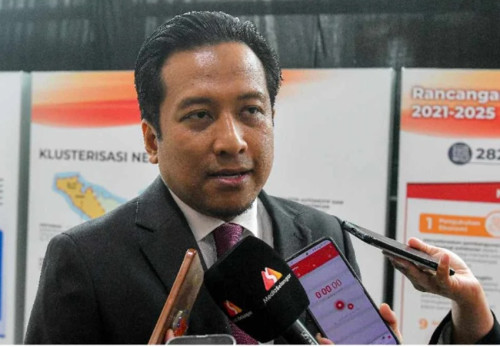
Malaysia’s participation was led virtually by Economy Minister Akmal Nasrullah Mohd Nasir in a hybrid session convened by the OPEC Secretariat in Vienna, bringing together ministers and senior officials from both OPEC and non-OPEC participating countries to assess current market dynamics.
A key area of discussion was the Maximum Sustainable Capacity (MSC) framework, which is intended to improve transparency in production assessments and strengthen the accuracy of baseline output figures across member states.
Akmal expressed support for the MSC initiative, describing it as an important mechanism for enhancing market confidence and enabling more reliable long-term production planning in an increasingly complex global energy environment.
Officials noted that improved clarity on production capacity would benefit both producers and consumers by supporting more predictable supply expectations and strengthening investment planning across the energy value chain.
The Minister also reaffirmed its continued commitment to the Charter of Cooperation (CoC), which serves as the overarching framework guiding collaboration among OPEC+ members and partner countries.
The CoC builds on the earlier Declaration of Cooperation (DoC) established in 2016, which played a central role in stabilising oil markets during periods of volatility through coordinated production management.
Unlike its predecessor, the Charter of Cooperation extends beyond output coordination, encompassing broader areas of collaboration including energy technology development, emissions reduction initiatives and support for global energy transition efforts.
As both an oil-producing country and a net energy importer, Akmal emphasised that stability in global energy markets remains critical to its national economic resilience.
Government officials highlighted that predictable oil prices and stable supply conditions are essential for domestic production planning, attracting investment in the energy sector and safeguarding long-term energy security.
He reiterated its support for collective OPEC+ efforts to ensure orderly market conditions and to mitigate disruptions that could negatively affect producers, consumers and global trade flows.
Looking ahead, Akmal pledged to continue working closely with member countries to deepen cooperation across energy, trade and investment sectors, reflecting its broader strategy of maintaining engagement in key international energy governance frameworks.
The country also confirmed its commitment to comply fully with its assigned oil production target for 2026, while continuing to engage constructively on potential future revisions to production baselines under the MSC framework.
Officials stressed that any adjustments to production benchmarks should remain fair, realistic and reflective of individual countries’ production outlooks beyond 2026, ensuring equitable treatment across all participating members.
Malaysia’s delegation also included Secretary-General of the Ministry of Economy Datuk Seri Nor Azmie Diron, PETRONAS Senior Vice-President of Corporate Strategy Marina Md Taib, alongside senior officials from the Ministry of Economy and the Malaysian Embassy in Austria.
The meeting took place against a backdrop of heightened uncertainty in global energy markets, with producers balancing supply stability concerns against geopolitical risks, fluctuating demand patterns and mounting pressure to accelerate the transition towards lower-carbon energy systems.
Malaysia’s continued engagement within OPEC+ underscores its dual objective of supporting global market stability while safeguarding national energy interests and contributing to a more secure and sustainable international energy future. - June 8, 2026




.jpg)