MALAYSIA’S fiscal reform agenda is facing a significant test as rising fuel subsidy costs driven by global geopolitical tensions threaten to derail the government’s target of reducing the fiscal deficit to 3.5 per cent of Gross Domestic Product (GDP) this year.
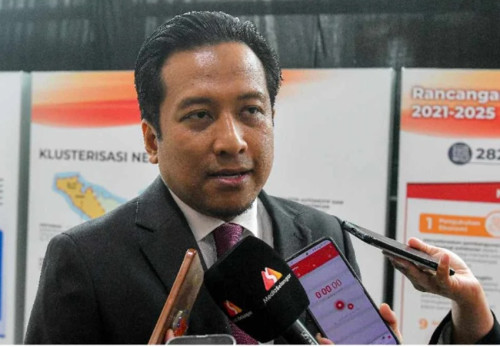
Finance Minister II Datuk Seri Amir Hamzah Azizan acknowledged that the fiscal deficit goal may prove difficult to achieve under current conditions, although he stressed that the government remains firmly committed to restoring long-term fiscal sustainability under the Fiscal Responsibility Act (FRA).
Speaking in an interview with Bloomberg TV, Amir said external pressures, particularly the sharp increase in fuel subsidy expenditure, have created new challenges for the government’s consolidation efforts.
“The challenges we are facing this year may place some pressure on that target, but it does not alter the government’s determination to achieve the objectives outlined under the Fiscal Responsibility Act over the medium term,” he said.
His remarks mark one of the clearest indications yet that rising global energy prices are beginning to weigh on Malaysia’s public finances despite ongoing subsidy reform measures.
The minister emphasised that any short-term deviation from the fiscal target should not be interpreted as a retreat from broader fiscal reforms.
“If we ultimately miss the target slightly, that is not a problem. What matters is that it does not mean the government is stepping back from its commitment to strengthening the nation’s fiscal position,” he said.
To offset mounting fiscal pressures, the government has launched an aggressive cost-saving exercise across ministries and agencies while reassessing spending priorities to create additional fiscal capacity.
According to Amir, Putrajaya has instructed government departments to identify non-essential expenditure that can be reduced or deferred.
“We requested savings of RM10 billion and, so far, approximately RM5 billion has been identified. There is still room to reprioritise expenditure in order to create additional fiscal capacity,” he said.
The principal challenge stems from a dramatic increase in subsidy expenditure following higher global crude oil prices linked to continuing instability in West Asia.
Amir revealed that fuel subsidy costs, which stood at between RM700 million and RM800 million per month at the beginning of the year, surged to almost RM5 billion per month by March.
“There were periods when subsidy expenditure reached as much as RM7.5 billion per month before moderating to around RM3.5 billion per month as oil prices began to stabilise,” he said.
Despite the sharp increase, he argued that Malaysia’s fiscal exposure remains substantially lower than it would have been without recent subsidy rationalisation measures.
According to the minister, savings generated from diesel subsidy reforms have significantly exceeded initial projections due to higher energy prices.
“The savings from diesel subsidy rationalisation, which were previously estimated at around RM5 billion to RM6 billion, have now increased to approximately RM9 billion as a result of higher oil prices,” he said.
The government has also tightened fuel subsidy mechanisms by reducing the subsidised petrol quota from 300 litres to 200 litres per month and revising diesel allocations for eligible sectors in an effort to contain expenditure.
While acknowledging the need for further adjustments, Amir stressed that social protection remains at the centre of government policy.
“The government will take whatever measures are necessary, but the primary priority is to ensure that those who genuinely need assistance continue to receive protection,” he said.
His comments underscore the delicate balancing act facing Malaysia’s economic managers as they attempt to reduce budget deficits, preserve investor confidence and shield vulnerable households from rising living costs amid an increasingly uncertain global economic environment. - June 10, 2026