THE Government has reaffirmed its decision to pursue ongoing negotiations with the United States over reciprocal tariffs and related trade measures, with authorities warning that failing to maintain engagement could expose the country to significant economic risks.
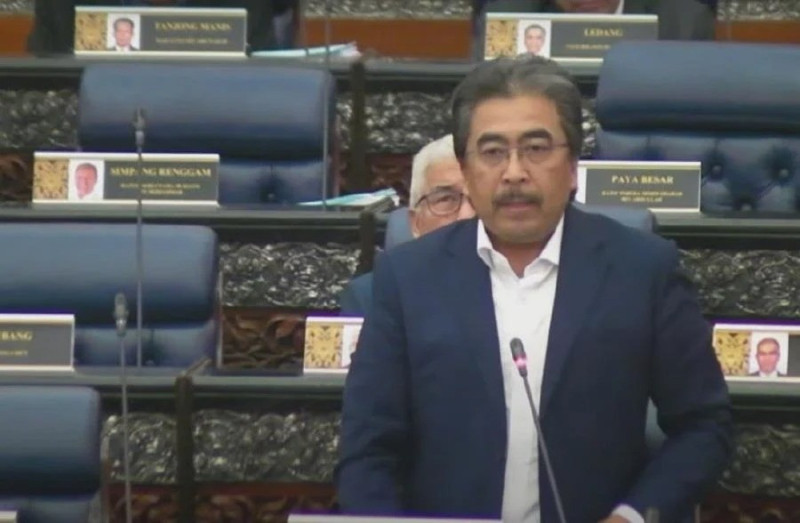
Minister of Investment, Trade and Industry (MITI) Datuk Seri Johari Abdul Ghani said sustained dialogue with Washington was necessary to safeguard Malaysia’s export interests, particularly in high-value sectors such as electrical and electronics (E&E) and semiconductors.
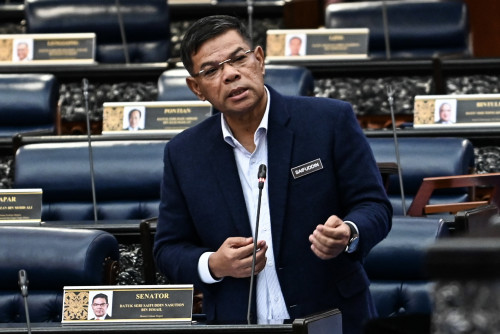
Responding to a supplementary question from Datuk Seri Hamzah Zainuddin (PN–Larut) in the Dewan Rakyat, Johari cautioned that a lack of engagement could result in unilateral tariff actions by the United States that would ultimately affect Malaysian exporters.
“Without engagement, we face the risk of the United States treating these tariffs as a unilateral measure. In practical terms, when we export goods, we agree on a price with the importer in the US. Once the goods arrive there, the US can impose an additional 19 per cent tariff on its own consumers, not on us.
“However, the impact on Malaysia is that our products, which are otherwise competitive, become less competitive after the additional 19 per cent tariff is applied. That is something we cannot prevent because it is within their sovereign right,” he said.
Johari said Malaysia recognises the importance of maintaining strong trade relations with the United States, noting that the American market accounts for a significant share of the country's exports.
He said the electrical and electronics (E&E) and semiconductor industries remain key pillars of Malaysia’s economy, with total exports valued at RM1.6 trillion, of which RM711 billion comes from the E&E and semiconductor sectors.
He added that Malaysia exported RM233 billion worth of goods to the United States last year, highlighting the importance of preserving access to the American market.
“Most of our exports are destined for the United States. Malaysia’s total exports amount to RM1.6 trillion, with RM711 billion generated by the electrical and electronics and semiconductor sectors. Of that, exports to the United States alone totalled RM233 billion last year. We must ensure that these exports continue without adversely affecting our economy.
“That is why we have to engage with them. Initially, I also disagreed with the approach. But after assessing the situation, I realised the importance of negotiations. Take China, for example, which was subjected to tariffs of 145 per cent.
“That is extremely high. If Malaysia had been hit with even a 40 per cent tariff at that time, imagine what would have happened to our companies trading with the United States,” he said.
Johari also noted that the 10 per cent tariff imposed under Section 122 of the United States Trade Act 1974 is only valid for 150 days and is scheduled to expire on July 24.
He previously told Parliament that Malaysia is currently facing several trade actions initiated by the United States under various legal provisions.
In May, the Ministry of Investment, Trade and Industry (MITI) led a delegation to Washington for talks related to the investigations, during which Malaysia emphasised that its manufacturing sector operates on market principles and responds to genuine global demand. - June 23, 2026