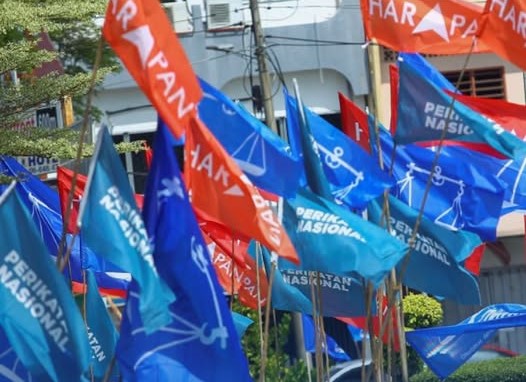
THE Johor state election has entered its decisive phase with political parties increasingly battling over public perception rather than policy proposals, as digital campaigning becomes the principal battleground in the race for voter support.
As polling day approaches, four dominant narratives have emerged, shaping the tone of the campaign and defining the contest between parties vying for control of the state, according to a report by Sinar Harian today.
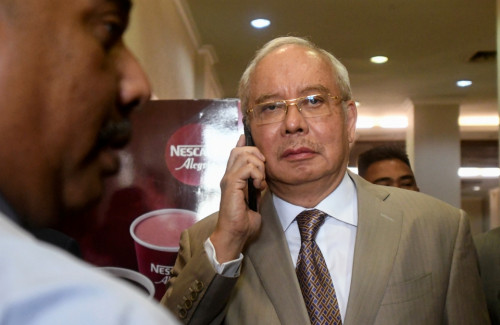
The first centres on Pakatan Harapan's claim that a victory for Barisan Nasional would pave the way for former Prime Minister Datuk Seri Najib Razak's release from prison.
Prime Minister Datuk Seri Anwar Ibrahim has argued that a strong mandate for Barisan Nasional would create political pressure aimed at securing Najib's freedom.
Barisan Nasional leaders have firmly rejected the allegation. Johor Menteri Besar Datuk Onn Hafiz Ghazi, together with Datuk Seri Azalina Othman Said and Datuk Dr Asyraf Wajdi Dusuki, stressed that any royal pardon remains the exclusive constitutional prerogative of the Yang di-Pertuan Agong under Article 42(1) of the Federal Constitution, and is not subject to political influence.
The second narrative revolves around allegations of informal cooperation between Barisan Nasional and PAS.
Pakatan Harapan has suggested that the two parties are working together strategically to consolidate Malay votes in selected constituencies.
UMNO President Datuk Seri Dr Ahmad Zahid Hamidi dismissed the allegation as political propaganda, while PAS Deputy President Datuk Seri Tuan Ibrahim Tuan Man said the party's electoral strategy was a pragmatic effort to prevent DAP from strengthening its position in key seats rather than evidence of any formal alliance.
The third major issue concerns Barisan Nasional Johor's "Reject DAP" campaign, spearheaded by Onn Hafiz, which argues that the state should maintain administrative stability without relying on multi-party political arrangements.
The campaign has drawn criticism from Pakatan Harapan and DAP, with DAP Secretary-General Anthony Loke Siew Fook urging Barisan Nasional Johor to respect the spirit of the Unity Government at the federal level despite electoral competition in the state.
The fourth narrative focuses on allegations by electoral reform group Bersih regarding the use of government resources during the campaign.
Among the issues highlighted are the broadcast of political speeches on RTM, the distribution of 3,000 Madani Southern Shuttle Commuter Cards, a RM216.44 million allocation by the Ministry of Housing and Local Government, the launch of the Johor Economic Transformation Plan and the distribution of Johor Kasih aid packages during the election period.
Prime Minister Anwar acknowledged that the RTM broadcast involved a technical error and instructed that it be rectified immediately.
Barisan Nasional Johor, meanwhile, maintained that the development initiatives and assistance programmes were part of the state's ongoing governance agenda and should not be interpreted as election campaigning.
The campaign has underscored an unusual political dynamic in which parties that cooperate within the Federal Unity Government are direct rivals in Johor, producing increasingly aggressive exchanges over political messaging while avoiding direct disputes over broader national governance.
As campaigning enters its final days, political observers suggest that the battle to shape public perception may prove more influential than competing manifesto promises. In an increasingly digital political landscape, the ability to control narratives, counter allegations and win over undecided voters is emerging as one of the defining factors that could determine the outcome of the Johor state election. - July 8, 2026