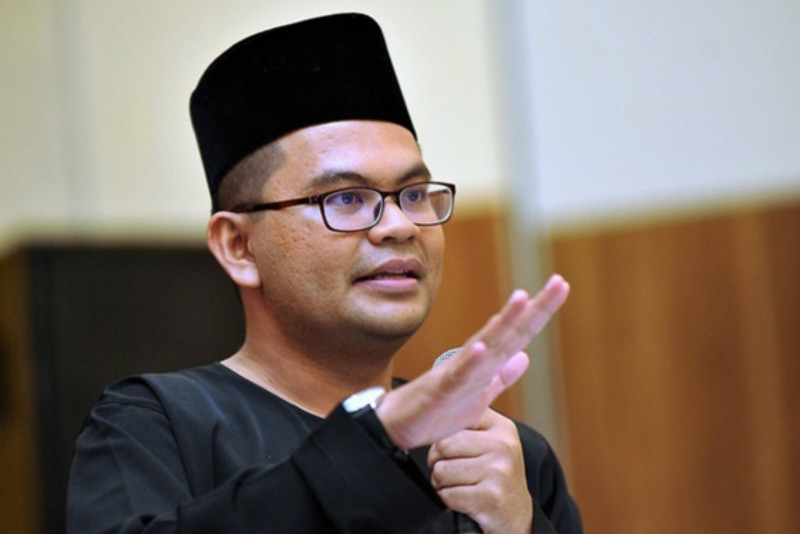
THE nation must shift its focus from merely creating more startups to developing companies that can scale up, compete globally and create greater economic value, Economy Minister Akmal Nasrullah Mohd Nasir said.
Speaking at the TERAJU Startup Ecosystem Programme: “Startups X YBM” in Cyberjaya, Akmal said the country’s biggest challenge was building a clear growth pathway for promising startups to evolve into resilient and competitive scale-ups.
He said entrepreneurs were not just building businesses but also creating jobs, income opportunities, social mobility and solutions to real-world challenges.
“Behind every startup, there is a founder who has invested their future, savings and reputation. There is a team working late nights and families providing support and encouragement. That is why when we talk about startups, we are actually talking about people; about jobs, income, dignity, social mobility and the hope of building a better life,” he said.
Akmal stressed that government policies must be shaped by the realities faced by entrepreneurs, rather than being developed solely through reports and presentations.
He said Malaysia’s economy continued to show resilience, with gross domestic product growing 5.4 per cent in the first quarter of 2026, while unemployment stood at 3.0 per cent in May and inflation was recorded at 2.0 per cent.
Malaysia also achieved a record RM426.7 billion in approved investments in 2025, which are expected to create nearly 245,000 new jobs.
However, Akmal said these investments must also benefit local companies by enabling them to participate in supply chains, gain access to technology, improve capabilities and grow alongside major industries.
“The challenge today is not just to produce more Bumiputera startups. The real challenge is to build an ecosystem that provides a clear pathway for companies with potential to grow from startups into scale-ups that are resilient, competitive and capable of reaching wider markets,” he said.
He highlighted the “missing middle” challenge faced by many startups, where businesses succeed in developing products and securing early customers but struggle to expand due to limited growth capital, weak governance and a shortage of management talent.
Akmal said support for startups must continue beyond the initial launch phase, with entrepreneurs requiring sustained access to financing, mentorship, governance improvement and market opportunities.
Aligned with the KL20 Action Plan and Malaysia Startup Ecosystem Roadmap, he said the Government aims to develop more high-growth local companies capable of becoming future industry leaders.
“Malaysia can be where they begin, but ASEAN and global markets must become the space where they grow,” he said, adding, companies must strengthen product standards, certifications, international networks and strategic partnerships to expand beyond the domestic market.
On Bumiputera economic development, Akmal said the Government was seeking a shift from participation towards ownership and creation of economic value under the 13th Malaysia Plan (RMK13) and PuTERA35.
“We want more Bumiputera companies to own their products, technologies, brands, data and intellectual property. We do not want them to remain as agents, distributors or vendors at the lowest levels of the value chain,” he said.
“We want Bumiputera companies not only to use technology, but to create technology; not only to receive contracts, but to build solutions that can be sold to hundreds or thousands of customers; not only to participate in markets, but to lead markets.”
Akmal said TERAJU’s previous programmes had shown that targeted support could help startups achieve measurable growth.
Through the Skim Usahawan Permulaan Bumiputera (SUPERB) programme between 2014 and 2021, 231 startup companies received funding, mentoring and business development assistance.
He said 82.9 per cent of these companies remained active, while those with available financial data recorded combined revenue of about RM515.1 million.
Under the SUPERB Coach & Grow programme, 48 companies increased their combined sales from RM29.87 million to RM65.29 million, while 36 companies, or 75 per cent of participants, achieved sales growth of at least 50 per cent.
“These figures prove that entrepreneurs do not only need funding. They need customers, networks, talent and support to strengthen their operations,” he said. - July 17, 2026