MALAYSIA is edging closer towards high-income economy status, with the country now just 7.1 per cent below the World Bank’s threshold, but the Government has stressed that achieving the benchmark must be accompanied by higher productivity, better-paying jobs and improved living standards.
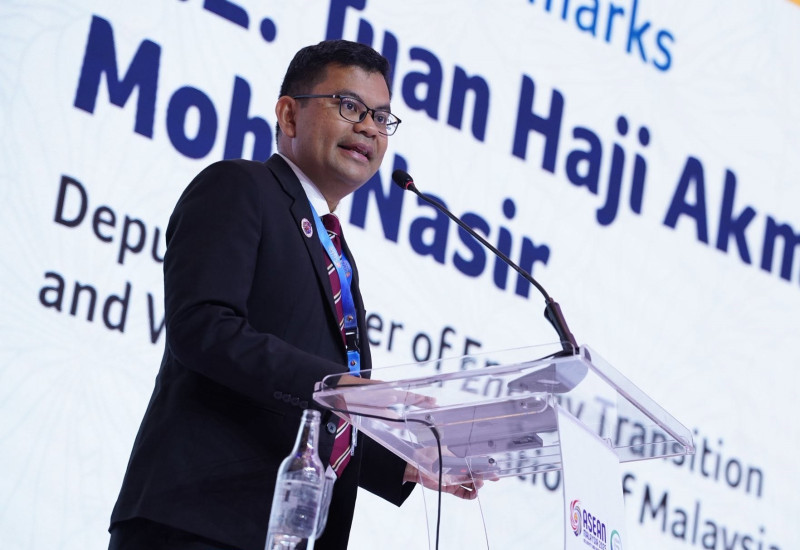
Economy Minister Akmal Nasrullah Mohd Nasir said the Government’s priority was to ensure economic growth translated into meaningful improvements for Malaysians, rather than focusing solely on crossing the high-income classification.
He was speaking at the launch of the OECD Economic Surveys: Malaysia 2026 at the Putrajaya International Convention Centre today, where the report was highlighted as an important reference for strengthening the implementation of the Thirteenth Malaysia Plan (13MP), 2026–2030, and accelerating structural economic reforms.
Malaysia’s economy expanded by 5.8 per cent in the second quarter of 2026, improving from 5.4 per cent growth in the first quarter. Inflation remained contained at 1.9 per cent, while unemployment stood at 3.0 per cent.
“These are encouraging numbers, but crossing that threshold is not an end in itself. What matters is whether growth delivers better wages, more quality jobs and stronger purchasing power for Malaysians,” he said.
In 2025, Malaysia’s gross national income (GNI) per capita increased to RM57,200, equivalent to about US$13,351, compared with the World Bank’s high-income threshold of US$14,375.
The Government is maintaining its full-year economic growth projection of between 4.0 and 5.0 per cent for 2026, supported by domestic demand, private investment, exports and technology-intensive industries, including semiconductors and data centres.
However, the OECD Economic Surveys: Malaysia 2026 identified skills development and workforce productivity as key structural challenges, particularly in ensuring education and training investments translate into higher incomes.
The report highlighted that 35.6 per cent of tertiary-educated workers remain in skill-related underemployment, prompting the Government to strengthen efforts to align education pathways with industry requirements.
Under the 13MP, the Government will enhance curriculum alignment with industry needs while expanding technical and vocational education and training (TVET), Academy in Industry (AiI) and upskilling initiatives in strategic sectors such as semiconductors, artificial intelligence and the digital economy.
“When 35.6 per cent of tertiary-educated workers remain in jobs below their skill level, we cannot measure success by graduate numbers alone. Education and training must lead to high-value jobs, stronger productivity and wages that reflect workers’ skills,” said Akmal Nasrullah.
Meanwhile, the Government is continuing fiscal consolidation efforts, with the federal fiscal deficit narrowing from 5.5 per cent of gross domestic product (GDP) in 2022 to 3.7 per cent in 2025.
The Government remains committed to reducing the deficit to 3 per cent or lower by 2030 through better-targeted assistance, reducing leakages and improving spending efficiency while protecting vulnerable groups.
“We have reduced the deficit from 5.5 per cent to 3.7 per cent and are targeting 3 per cent or lower by 2030. Fiscal consolidation is not about withdrawing support from the people; it is about ensuring that every ringgit is used more effectively for education, healthcare and infrastructure,” he said.
To further enhance productivity and competitiveness, the Government is implementing measures under Akta ILTIZAM to reduce unnecessary regulatory burdens by 25 per cent over three years.
Through PEMUDAH, the Ministry of Economy will identify high-impact business approval processes for end-to-end reviews, with the aim of improving service standards, ensuring more predictable decision-making and strengthening accountability for delays.
The OECD Economic Surveys: Malaysia 2026, the fifth OECD economic assessment of Malaysia since 2016, includes a thematic chapter focusing on improving skills, education and training.
Its findings will support the implementation of the 13MP, particularly in areas involving productivity enhancement, education reform, workforce development, digitalisation and climate resilience. - July 28, 2026