POLICE has identified an airport screening officer to assist investigations into the case of a Malaysian pilot accused of attempting to smuggle drugs into Indonesia, as authorities intensify efforts to strengthen security at Kuala Lumpur International Airport (KLIA).
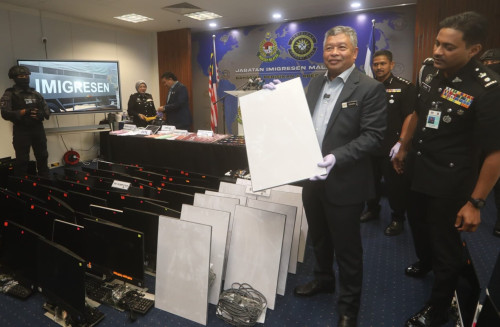
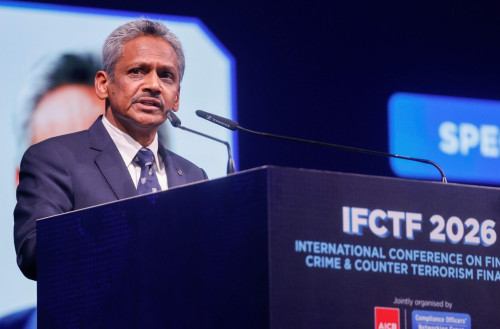
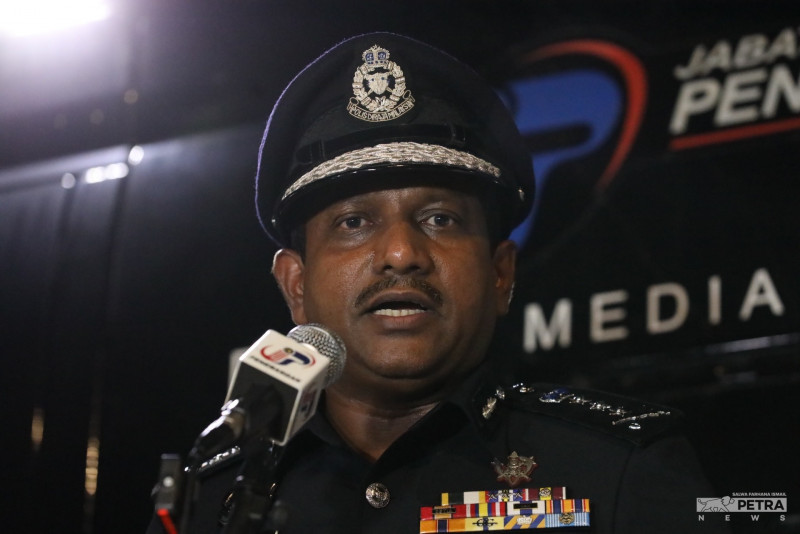
Bukit Aman Narcotics Criminal Investigation Department (NCID) director Datuk Hussein Omar Khan said the individual, a man in his 30s attached to the airport's screening division, had been identified but had not been arrested.
"At this stage, we have identified an individual in his 30s who works in the screening section at the airport entrance.
"He will be called in soon to assist with the investigation and, if necessary, we will make an arrest," he said at a press conference at the Selangor police headquarters on Tuesday.
Hussein said the investigation was examining whether there had been any weaknesses or irregularities in KLIA's screening procedures after the pilot allegedly passed through all security checks before being arrested in Indonesia.
He explained that passengers departing from KLIA are subjected to a four-tier screening process.
If the initial automated screening system does not detect any suspicious items, passengers are not required to undergo secondary screening. However, any suspicious findings would result in further inspections at the second or third screening levels.
"In this case, if the baggage passes the screening without anything suspicious being detected, it goes through," he said.
Hussein added that PDRM had met with the Transport Ministry and relevant agencies, with all parties agreeing that security procedures at KLIA should be further tightened.
"We all agree that there is a need to strengthen and enhance inspection procedures at KLIA," he said.
Separately, Hussein said strong demand for cannabis flowers in Europe had made KLIA an attractive transit point for international drug trafficking syndicates.
"Based on the number of arrests and seizures, it can indeed be said that KLIA has become one of the main hubs used to transport cannabis flowers to Europe.
"However, we do not wish to comment in detail on security procedures at other airports," he said.
He said demand for cannabis had increased partly because several European countries permit its medical use, while cannabis extracts are also widely used in vape products.
Investigations found that the syndicates involved operate through both international and domestic networks, with cannabis believed to be smuggled into Malaysia via northern land and maritime routes before being trafficked overseas.
"We believe around 80 per cent of the cannabis entering Malaysia is subsequently re-exported to overseas markets such as Indonesia, the Philippines and several other countries," he said.
Hussein said the Transport Ministry and relevant enforcement agencies were reviewing standard operating procedures (SOPs) at KLIA to ensure drug smuggling receives the same level of attention as other major aviation security threats.
"Previously, security inspections focused primarily on preventing the smuggling of firearms and prohibited items.
"However, all parties now agree that drug trafficking must also become a key priority in KLIA's security procedures," he said.
He stressed that police did not regard KLIA as having weak security, but acknowledged that organised crime syndicates continuously sought to exploit any vulnerabilities.
"Although many arrests and seizures have been made, these syndicates never give up and will continue attempting to move drugs through KLIA," he said. - August 4, 2026