By Murray Hunter
MALAYSIA’S unity government that was forged after the hung parliament of GE15 was always a marriage of convenience rather than conviction.
Nearly four years on, with state elections in Johor and Negeri Sembilan delivering strong performances for Barisan Nasional, the underlying fault lines are now very quickly widening.
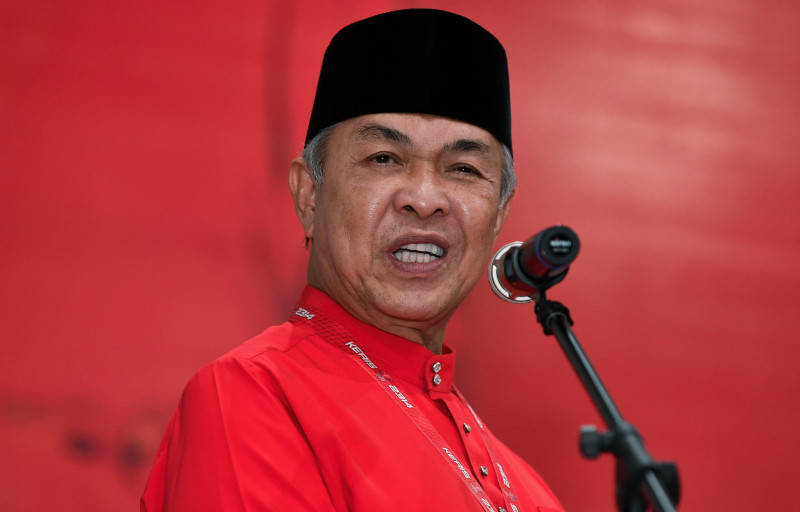
Datuk Seri Ahmad Zahid Hamidi’s public preference for an earlier GE16, rather than waiting until the parliamentary term expires in early 2028, is less a sudden revelation than the logical extension of UMNO’s recovery strategy planned by him.
The July and August 2026 state polls provided UMNO with clear momentum.
In Johor, BN secured 48 of 56 seats, consolidating its traditional stronghold.
In Negeri Sembilan, it took 25 seats and formed the state government, displacing the previous PH administration.
These results have emboldened UMNO’s narrative of a “blue wave” and given Zahid, as party president and BN chairman, greater leverage within the federal coalition, which he is now using without any hesitation.
The forthcoming Melaka state election, widely expected after the UMNO general assembly in mid-September, offers another test in a BN-friendly environment.
A solid performance once again would further strengthen the case for early national polls.
Zahid has never hidden that the premiership remains an ambition, even while framing it in the language of destiny and public service.
His recent comments on GE timing sit alongside BN’s explicit openness to alliances calculated on “benefits and harms.”
This includes weighing cooperation with PAS or remaining with PH components is now finely balanced.
Such pragmatism is classic elite politics with no permanent friends, only permanent interests.
Reports of informal discussions and ground-level resistance within PAS itself underline that any Malay-unity realignment would be transactional and contested.
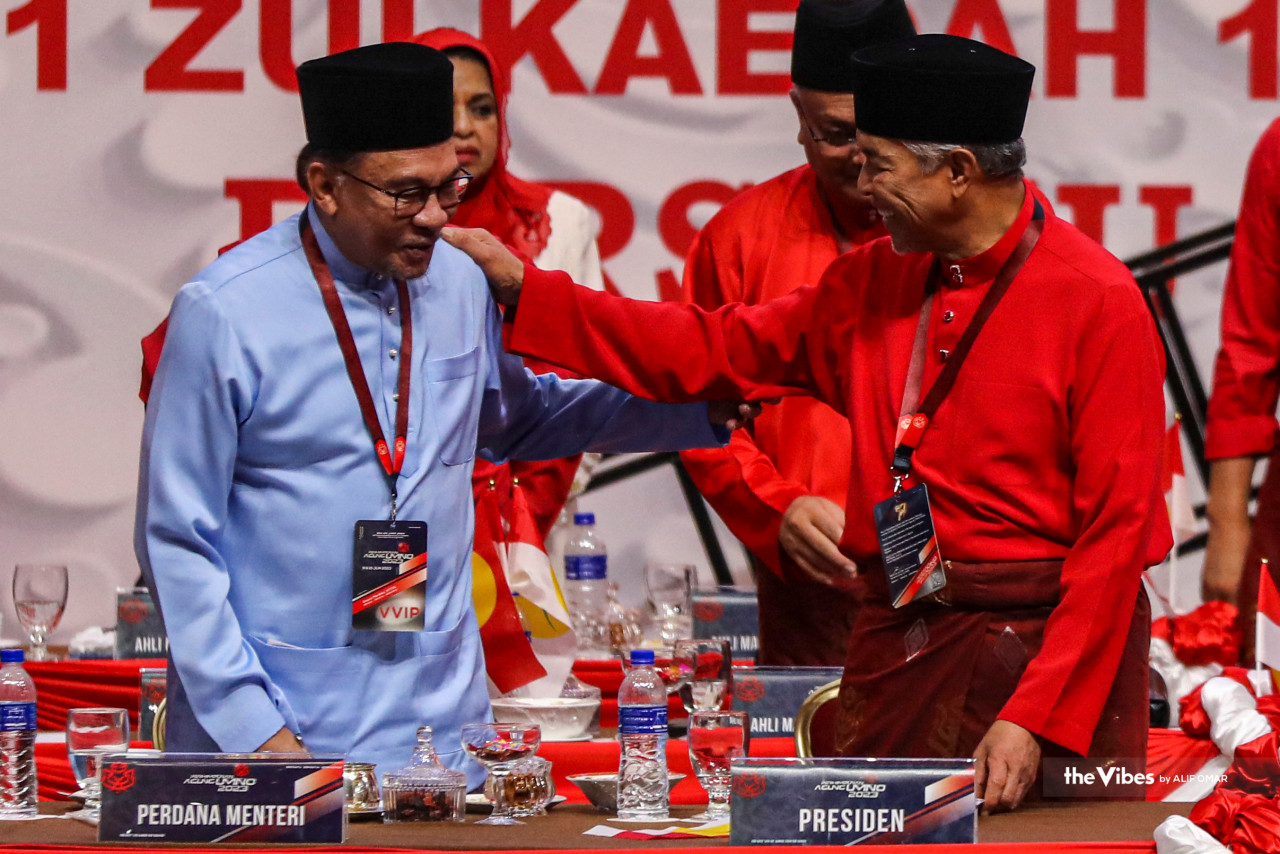
Tensions inside the current arrangement within the ‘unity government’ are now very clearly visible.
A public spat over the Rural and Regional Development Ministry’s spending, Zahid’s portfolio, has exposed differences with the Finance Ministry and Treasury over allocations and payments to contractors.
Claims of overspending relative to approved budgets, followed by defensive responses, create an appearance of discord that weakens the government’s collective discipline.
When senior civil service figures weigh in on the need for ministries to adhere to set budgets, it highlights how administrative friction can quickly acquire political colour. In a system where the civil service retains significant institutional autonomy and historical loyalties, such episodes fuel perceptions of sabotage or selective pressure, whether or not coordinated intent exists.
UMNO ministers’ relative silence or distancing on certain reform bills further signals that the coalition’s reform agenda is not uniformly owned.
Political cooperation remains conditional. Returning figures and sharper opposition rhetoric from some quarters add to the sense that the Madani government is entering a more contested phase.
Social media amplification of criticisms is predictable in Malaysia’s polarised information environment.
Yet the narrative of a meticulously engineered plan by Zahid to collapse the government overstates the degree of control any single actor possesses. Malaysian politics remains a multi-player game involving East Malaysian partners, parliamentary arithmetic, and public opinion.
Zahid’s DNAA on previous charges still hangs in the background of political gossip, but institutional processes and political costs constrain any simple “reopening” scenario.
Party delegates at an UMNO assembly can provide cover or pressure, but they do not unilaterally dissolve a federal government.
The deeper issue is structural.
The unity arrangement papered over fundamental differences in political bases and visions.
PH’s reformist rhetoric has always collided with UMNO’s organisational recovery, establishment politics, and the enduring appeal of ethno-religious mobilisation.
State election outcomes show that Malay-majority constituencies remain responsive to BN’s organisational strength when PH’s delivery narrative falters or when coalition branding confuses voters.
An early GE would allow parties to realign more cleanly, but it also risks returning the country to fragmented outcomes and sharper polarisation.
Anwar’s government has delivered relative stability and some fiscal discipline after years of volatility.
Yet the unfinished business of institutional reform, the persistence of patronage networks, and the difficulty of building a durable multi-ethnic electoral majority have left it electorally vulnerable.
Zahid’s manoeuvring is rational within the rules of the existing game.
That is, maximise UMNO’s position while the window is open.
Whether that leads to a change of prime minister, a reconfigured coalition, or an early election depends less on any single “plan” than on the broader balance of forces, parliamentary numbers, royal counsel, economic conditions, and the electorate’s tolerance for continued horse-trading.
Malaysia’s political class continues to prioritise elite bargains over systemic overhaul.
The result is recurring instability cycles in which reform is subordinated to survival and succession.
The current tensions are not an aberration; they are the system operating as would be expected under such polarisation.
Until incentives shift away from zero-sum ethnic arithmetic and short-term power plays, the pattern will repeat regardless of who occupies the top office. – September 5, 2026








_Datuk_Rusdi_Mohd_Isa._Facebook_pic..png)