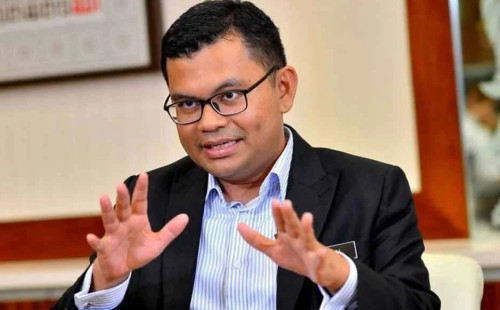
MALAYSIA is targeting an additional 0.8 to 1.2 percentage points in annual GDP growth from artificial intelligence by 2030, as the Government moves to turn the country’s growing digital infrastructure into higher productivity, investment and quality jobs.
Communications Minister Datuk Seri Fahmi Fadzil said the target under the National AI Action Plan 2026–2030, or AI Nation 2030, was equivalent to about RM13 billion to RM20 billion in additional economic output a year.
The Government is also targeting between 300,000 and 500,000 new AI-related jobs as Malaysia seeks to capture more economic value from the technology.
“The question is no longer simply what AI can generate, but where it can create real value,” he said at WAIC Connect Malaysia 2026 today.
Fahmi said the targets reflected Malaysia’s ambition to move beyond building digital infrastructure and become a country where AI was developed, deployed and applied across the economy.
He said the aim was to enable more Malaysian businesses to adopt and develop AI, increase Malaysian participation in the AI economy and ensure more AI-generated value remained within the domestic economy.
Malaysia already had a strong foundation for the AI economy, with RM144.4 billion in investments in data centres and cloud computing approved by the Malaysian Investment Development Authority between 2021 and mid-2025.
The digital economy currently contributes 25.5 per cent to national GDP and is expected to reach 30 per cent by 2030, while national data centre capacity is projected to more than double to 2,055 megawatts by the end of this year.
However, Fahmi said infrastructure alone would not determine Malaysia’s success in AI.
He said the technology must be used to raise productivity and competitiveness in high-value sectors including semiconductors and electronics, advanced manufacturing, logistics, healthcare, agriculture and public services.
“Our progress should be measured not simply by computing capacity, but by the economic value and opportunities we create from it,” he said.
Fahmi said Malaysia must also ensure that AI and data centre expansion remained sustainable, given the growing demand for electricity and water.
Data centres are projected to account for around 7 per cent of Malaysia’s electricity consumption this year, equivalent to about 10,544 gigawatt-hours, with their share potentially rising significantly over the next decade.
He said the Government had strengthened assessments of proposed data centres, including their energy and water requirements, to ensure digital infrastructure growth remained aligned with national resources and environmental commitments.
At the same time, Malaysia is developing a dedicated AI regulatory framework to support innovation and investment while ensuring AI remains responsible, secure and trusted.
Fahmi also welcomed Huawei’s plan to nurture 30,000 Malaysian AI talents and develop 200 local AI partners over the next three years through knowledge transfer and Cloud and AI collaborations.
He said initiatives such as WAIC Connect Malaysia 2026 could help connect China’s AI expertise with Malaysian and ASEAN industry needs and accelerate practical AI applications.
Fahmi said Malaysia’s AI strategy was ultimately about converting technology and infrastructure into stronger productivity, higher-value employment, domestic capabilities and sustained economic growth. - September 8, 2026