A COALITION of civil society organisations, political parties and public figures has urged political leaders to keep the monarchy above partisan disputes and protect public institutions from political interference.
In a joint statement, the group warned that the country’s system of checks and balances must not be compromised in the pursuit of political interests.
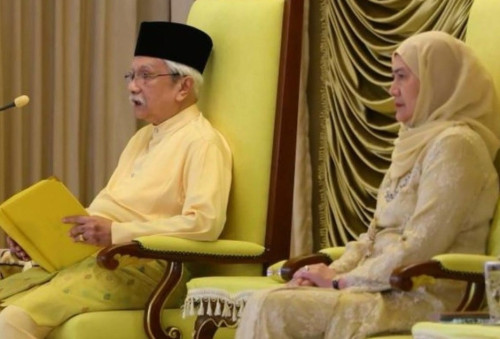
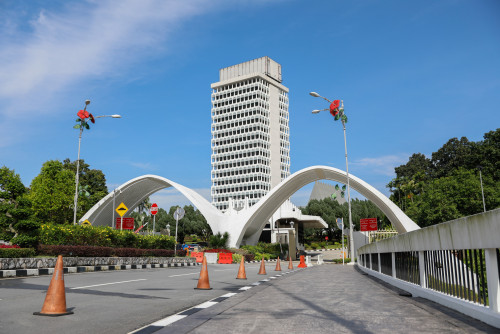
It further stressed that the constitutional roles of the Yang di-Pertuan Agong, Parliament and the elected government must be respected as Malaysia pursues institutional reforms and navigates multiparty politics.
The statement was initiated by Projek Stability and Accountability for Malaysia (Projek SAMA), Bersih, the Centre to Combat Corruption and Cronyism (C4 Centre) and Rasuah Busters.
It received the backing of 93 civil society organisations, two political parties and 63 individuals.
At the centre of their appeal was the need to preserve the monarchy’s non-partisan position, with the signatories arguing that the responsibility for political decisions must remain with elected representatives.
Citing British constitutional thinker Walter Bagehot, they said the distinction between the monarch and the machinery of government was fundamental to constitutional monarchy.
“This separation protects the constitutional monarch from political controversies and enables him to unite the nation, which may be politically divided,” the statement read.
The groups pointed to Article 40 of the Federal Constitution, which provides the Yang di-Pertuan Agong with discretionary powers in specific matters, including the appointment of a prime minister and the withholding of consent to a request for the dissolution of Parliament.
In other matters, the King acts on the advice of the Cabinet, an arrangement intended to ensure that political responsibility rests with the elected government.
The signatories said this distinction must be respected, particularly when government decisions attract public criticism.
“Ministers must have the moral courage to make clear and prudent decisions so that there is no perceived need for intervention from the Palaces,” the statement said.
They added that politicians had a responsibility to answer to voters for their decisions, unlike unelected institutions whose independence and impartiality must be safeguarded.
The statement also raised concerns over the vulnerability of key public institutions to political interference, identifying the Judiciary, prosecution service, Election Commission, Malaysian Anti-Corruption Commission, Auditor-General, Human Rights Commission and Bank Negara Malaysia as bodies that must remain independent or impartial.
“They must not be controlled, used or weaponised by elected politicians against others,” the groups said.
The coalition also stressed that the civil service, police and military must be allowed to perform their duties professionally and within the limits of the Constitution and the law, without being subjected to arbitrary government action or used for partisan purposes.
It argued that the separation between elected governments and unelected institutions had been eroded during more than five decades of one-party rule, making institutional reforms a priority before the next general election.
On appointments to key public offices, the groups said the process should not be left to the prime minister alone.
“The YDPA’s function is to appoint, not to choose,” the statement said, arguing that candidate selection should involve elected representatives across the political spectrum.
It also acknowledged that institutional reforms could raise concerns among officials in affected agencies, including the Attorney-General’s Chambers, civil service and police.
However, those concerns should be addressed through Parliamentary Special Select Committees (PSSCs), which the groups identified as the appropriate forums for examining proposed reforms and hearing from affected stakeholders.
The statement was endorsed by Parti Bersama Malaysia (BERSAMA) and Parti Sosialis Malaysia (PSM), alongside 93 civil society organisations and 63 individuals.
Among the individual signatories were former MPs Charles Santiago, Wong Chen and Hassan Karim, former ambassador Dennis Ignatius, political scientist Wong Chin Huat, lawyer Siti Kasim and former Bar president Karen Cheah. – November 18, 2026