FROM a conditional pardon and a RM50 million fine paid by UMNO to a request for a second house-arrest address, the former prime minister’s circumstances have changed.
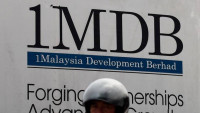
The consequences of 1MDB, however, have not disappeared.
When will Datuk Seri Najib Razak acknowledge the full extent of the damage done to this country?
This is a question worth asking, particularly now that the former prime minister has begun serving the remainder of his SRC International sentence under house arrest.
There is something difficult to reconcile about the way this saga has unfolded.
A man once entrusted with running the country has been convicted in a major financial scandal, had his prison sentence reduced through a royal pardon, had his RM50 million fine paid by his own political party and is now serving the remainder of his sentence at home.
And yet, there appears to be little appreciation of just how extraordinary his circumstances are.
Najib’s written request to have a second residence included in his house-arrest arrangements, subsequently rejected by the government, only adds to the public’s unease.
It is difficult to understand what more he expects.
This is not about denying anyone their legal rights.
Nor is it about questioning the constitutional prerogative of the King. It is about a former national leader recognising the gravity of the circumstances that brought him here.
Perhaps what Malaysians have been waiting for all these years is not another explanation, but a genuine reckoning.

Najib did issue an apology in October 2024 over the 1MDB scandal, expressing regret that it had happened under his watch. But he also maintained that he was not the mastermind and had been deceived.
That distinction matters.
An apology for something happening during one’s administration is not quite the same as confronting one’s own responsibility for the failures that took place.
Najib was not a peripheral figure in government. He was prime minister and finance minister. The responsibilities attached to those offices were enormous.
The courts have since delivered their verdicts. In the SRC International case, his conviction involving RM42 million was upheld by the Federal Court.
In a separate case, the High Court found him guilty on all 25 charges involving approximately RM2.3 billion in 1MDB funds and sentenced him to 15 years’ imprisonment. He has appealed against that second conviction.
These are serious findings, and they should not be reduced to another round of political arguments between supporters and opponents.
What should concern Malaysians is the scale of the damage and the opportunities that were lost along the way.
Consider, for a moment, what billions of ringgit could have meant to this country.
There are children from struggling families who attend school without proper meals. Parents worry about whether they can afford their children’s books, uniforms and transport. In remote parts of the country, school buildings and facilities remain in desperate need of attention.
Our hospitals face their own challenges, from overcrowded facilities to the pressure on medical staff and resources.
Money on the scale involved in the 1MDB scandal could have made a meaningful difference to countless lives. It could have gone towards better schools, improved healthcare, rural infrastructure and assistance for families who have spent years waiting for a fairer share of the country’s prosperity.
Instead, Malaysia was left dealing with an international financial scandal, a damaged reputation and the long, expensive process of recovering misappropriated funds.
The financial consequences did not end when Najib left office. The country continues to deal with the obligations and liabilities associated with 1MDB. These are matters that cannot simply be wished away by a change of government.
This is what makes the scandal so infuriating. The people who ultimately bear the consequences are not necessarily those who had anything to do with the decisions that led to it.
They are ordinary Malaysians.
Then came the RM50 million.
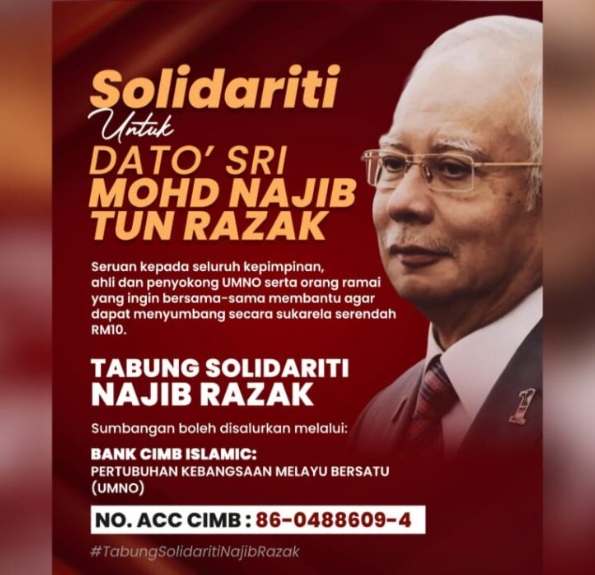
UMNO mobilised its Najib Razak Solidarity Fund, and the party confirmed on November 6 that the full amount had been paid to the High Court. The money fulfilled one of the conditions attached to Najib’s conditional pardon, allowing him to serve the remainder of his SRC sentence under house arrest.
The party also thanked its members and members of the public who had contributed.
I wonder whether those who opened their wallets have stopped to consider the wider implications of what they were supporting.
There is no shortage of Malaysians who could use RM50 million for something far more urgent. There are families struggling with medical bills, parents unable to meet their children’s educational expenses and households finding it increasingly difficult to keep up with everyday costs.
I do not begrudge anyone the right to support a political figure of their choosing. But there must be a point at which political loyalty gives way to a little introspection.
What exactly are supporters defending? And at what cost to their own principles?
A political leader is not entitled to unquestioning loyalty simply because he once held high office. Nor should a party’s affection for one of its former leaders become more important than the public interest.
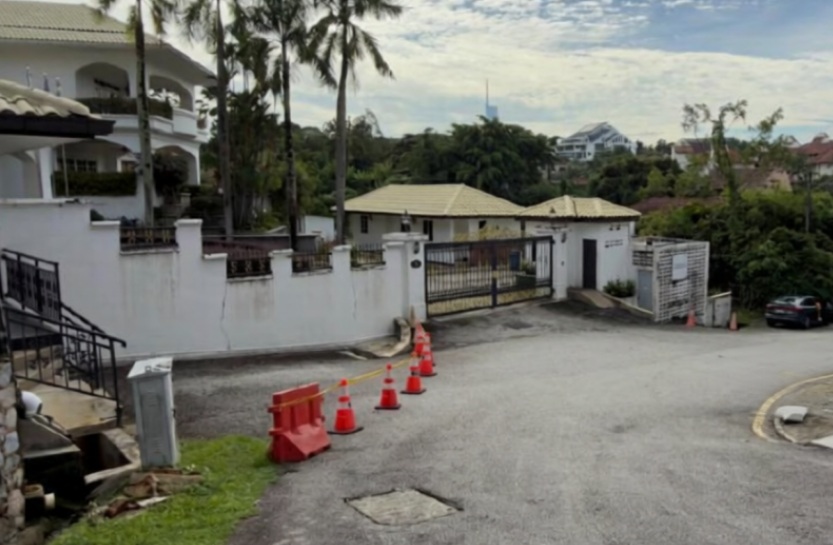
The request for a second house-arrest address was particularly difficult to stomach. Home Minister Saifuddin Nasution Ismail confirmed in Parliament that Najib had made a written request for another residence to be included, but the government could not approve it because the Pardons Board had specified only one address.
The request may have been dealt with administratively, but its wider significance should not be dismissed.
There are Malaysians who spend decades trying to own a single home. There are families who cannot afford to keep the homes they already have. Against this reality, a former prime minister seeking an additional residence while serving a sentence at home is hardly going to inspire public sympathy.
A little humility would not have been too much to ask.
Lord Acton, the British historian, famously warned that “Power tends to corrupt, and absolute power corrupts absolutely.”
His words have endured because public office carries a responsibility that goes far beyond personal ambition. Those entrusted with power are expected to protect public resources and serve the people. They are not owners of the institutions or money placed under their care.
Malaysia has paid a considerable price for learning that lesson. The country has spent years trying to restore confidence in its institutions and its standing internationally.
The 1MDB scandal became a global reference point for financial misconduct and corruption. It was an embarrassment that reached far beyond the political fortunes of one man.
And while Najib has every right to pursue his legal appeals, Malaysians have an equally legitimate right to question the extraordinary support and accommodation that have come his way.
A pardon is an exercise of constitutional mercy. It is not an acquittal. A reduced sentence does not erase a conviction, and the comfort of a home does not diminish the seriousness of the offences established by the courts.
I keep returning to the people who rarely feature in this political conversation: the schoolchildren in dilapidated classrooms, the parents struggling to feed their families, the patients waiting for treatment, and the communities still hoping for better public facilities.
They did not get a chance to vote on how billions in public funds were handled. They did not get to decide what happened to the money. Yet they are part of the country that must live with the consequences.
Najib has had years to reflect on what happened. He has received considerable support from people who remain convinced that he deserves their loyalty.
But an apology should not be an exercise in managing public perception. It should come with an unambiguous recognition of the harm caused and the responsibility that comes with having led the country.
He may have the comfort of his own home, the backing of his party and supporters willing to contribute millions on his behalf.
What he cannot reasonably expect is for Malaysians to forget.
The country has already paid a heavy price. The least Malaysians deserve is an apology that places the country, its people and the damage done to their trust ahead of his own defence. – November 19, 2026