THE Negeri Sembilan royal crisis has put Umno in an uncomfortable position, raising questions about its claim to be a defender of the Malay Rulers at a time when the party is accusing DAP of disrespecting the monarchy.
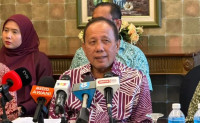
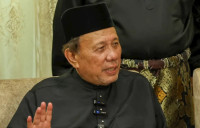
The questions have become harder to avoid following Barisan Nasional secretary-general Datuk Seri Dr Zambry Abd Kadir’s announcement that Negeri Sembilan Menteri Besar Datuk Seri Ismail Lasim had resigned, only for the state palace to subsequently say it had yet to verify the authenticity of the resignation letter.
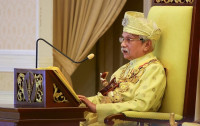
The palace also made clear that Ismail’s resignation could only take effect with the consent of Yang di-Pertuan Besar Negeri Sembilan Tuanku Muhriz Tuanku Munawir, in accordance with the state constitution.
The episode has revived concerns over the handling of the state’s royal dispute and the extent to which political leaders have respected the constitutional position of the Ruler.
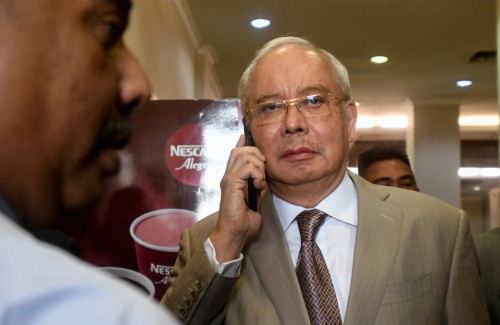
It also provides an uncomfortable backdrop to Umno’s attacks on DAP over Federal Territories Minister Hannah Yeoh’s opposition to the proposed house-arrest arrangement for former prime minister Datuk Seri Najib Razak.
Yeoh was accused of disrespecting the Yang di-Pertuan Agong after the declassified minutes of the Federal Territories Pardons Board’s Sept 18 meeting revealed that she had opposed allowing Najib to serve the remainder of his sentence at home.
But she was not alone.
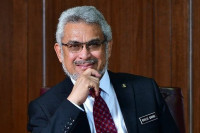
Attorney-General Tan Sri Mohd Dusuki Mokhtar also objected, arguing that Najib should continue serving his sentence in prison.
According to the minutes, Dusuki warned that the arrangement could affect political stability, the economy, investment and Malaysia’s international standing.
His objection, like Yeoh’s, was recorded during the board’s deliberations. The King nevertheless proceeded with the conditional pardon.
The distinction is important in assessing Umno’s criticism. Disagreement within a constitutional body does not automatically amount to defiance of the institution or its authority.
The question is whether Umno applies that same distinction when its own political interests intersect with the monarchy.
Negeri Sembilan puts Umno under scrutiny
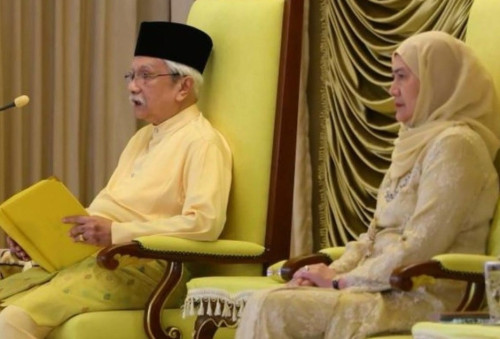
The dispute in Negeri Sembilan has been developing for months, centred on the position of Tuanku Muhriz following an April 19 proclamation by a group of Undang seeking to remove him and install Tunku Nadzaruddin Tuanku Ja’afar.
The legitimacy of that move has been disputed, with the Negeri Sembilan royal crisis subsequently becoming the subject of legal and constitutional proceedings.
The controversy took another turn when Ismail and members of his state executive council submitted a letter dated Sept 17 to the Conference of Rulers, taking a position that was seen as challenging Tuanku Muhriz’s position.
On Nov 10, Ismail and the 10 executive councillors issued a letter withdrawing their earlier position, citing the Oct 14 statement by the Conference of Rulers and a June 5 High Court order maintaining the status quo over the Yang di-Pertuan Besar’s position.
Ismail later confirmed the withdrawal, saying the letter was self-explanatory.
The subsequent resignation controversy has raised further questions about the relationship between the state administration, Umno’s leadership and the palace.
Zambry announced that Ismail had resigned and that Umno president Datuk Seri Ahmad Zahid Hamidi would propose a successor.
However, Royal Comptroller Datuk Azizi Mohamad Ali said the palace had yet to establish the authenticity of the resignation letter, which had been delivered to Istana Hinggap after Zambry’s announcement.
The palace also disclosed that Tuanku Muhriz had agreed to grant Ismail an audience before the BN secretary-general issued his statement.
The audience has been scheduled for Nov 20.
The sequence is significant because it places the constitutional process at the centre of a political dispute that has increasingly involved party leaders and competing claims over the state administration.
It also raises questions about why BN chose to announce the resignation before the palace had verified the letter and completed the necessary process.
A question of consistency
Umno has built much of its political identity around defending the Malay Rulers and the institution of monarchy. That position carries weight, but it also demands consistency.
The party cannot question Hannah’s respect for the monarchy simply because she disagreed with a proposal during a Pardons Board meeting while expecting its own actions in Negeri Sembilan to be judged by a different standard.
There is a clear difference between challenging a proposal during deliberations and disregarding the constitutional authority of a Ruler. That principle should apply regardless of political affiliation.
The Negeri Sembilan crisis has demonstrated why royal institutions and their constitutional processes should not become instruments in political manoeuvring.
For Umno, the challenge is not simply to defend its position against DAP’s criticism. It must also explain whether its own political conduct reflects the respect for royal authority that it so readily demands from others.
Royal loyalty cannot be established through accusations alone. It must be demonstrated through actions, particularly when political interests and constitutional authority come into conflict. – November 20, 2026