
KUALA LUMPUR – Malaysia was once regarded as a place of compassion, where people from around the world, including those who were forced to leave their home countries, could seek refuge.
However, of late, the nation has seen an alarming trend among Malaysians of looking down on refugees. This is especially true in the case of Rohingya refugees who fled the troubled Arakan province in Myanmar.
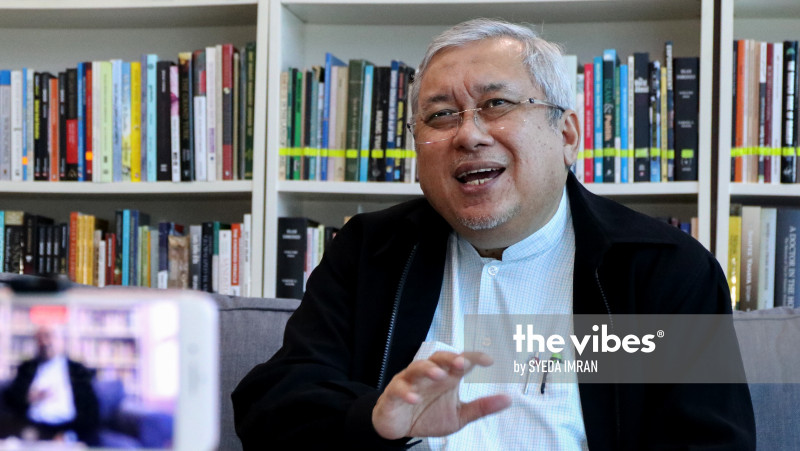
This perspective was aired by the Organisation of Islamic Cooperation’s independent permanent human rights commissioner Ahmad Azam Abdul Rahman.
“People looked at us, Malaysia, as a dream country.
“Malaysia received glowing support and respect because of what we have done for the Rohingya – as we have done with refugees from all over the world – giving them space to live, to breathe, while the political situation in Burma (Myanmar) is resolved.
“However, our image and the goodwill that we have built for many, many years have gone down the drain, and now, they will spit in our (Malaysians’) faces, as (for) every action, there will be a reaction.”
Azam was speaking to The Vibes for the final episode of its series Humanity Beyond Religion, which features views on this topic by eminent thinkers from different religions.
End negative, loathsome sentiments
The issue of how the Rohingya are viewed with disdain by locals reflects the deep-seated discriminatory attitude prevalent in Malaysian society.
Azam pointed to media coverage of the treatment of the Rohingya during the current movement control order imposed to stem the Covid-19 pandemic.
Comments that spread on social media have only aggravated the situation, with netizens’ angry reactions portraying Malaysia as racist and inhumane. As a result, the issue has spread globally, casting the country in a poor light.
Azam said the Rohingya are not in Malaysia by choice, as they are not economic migrants. On the contrary, they are here in an attempt to stay alive.
He is also of the opinion that people must stop labelling and stereotyping all Rohingya for the mistakes made by some.
“If you have 100,000 Rohingya coming here, and we see 500 of them creating problems, we cannot generalise them as being all bad. What do you plan to do? Where do you want to send them? Send them to sea… Send them back to Arakan?
“You would be sending them to their deaths, because they have no other choice,” he said, adding that he, too, has faced condescending attacks on his Facebook account.
Azam advised millennials to put an end to sharing such loathsome sentiments and negativity on social media, as the platform should be used constructively.
Asked whether humanity among Malaysians is at risk, he reiterated that the country is blessed as it has people of many races who subscribe to major religions, such as Christianity, Buddhism, Hinduism and Islam. However, if society chooses to adopt a narrow-minded perspective, the future will be bleak.
“Surat al-Hujurat ayat 13 in the Quran is a very powerful verse, and the Quran is for all of mankind, not just for Muslims. Don’t study it from (a religious) perspective. ‘Lita’arafu’ means to learn from each other, and to benefit from each other upon knowing each other, and if humans understand that, then there is no room for negativity. That is, if you understand the text correctly.” – The Vibes, January 17, 2020
This is the last of a five-part series on Humanity Beyond Religion, featuring eminent thinkers of major religions in Malaysia, that has run every Sunday since December, 20, 2020.
Watch out for a special wrap-up of the series by The Vibes reporter Zaidatul Syreen Abdul Rashid next Sunday.
Read the previous parts here: