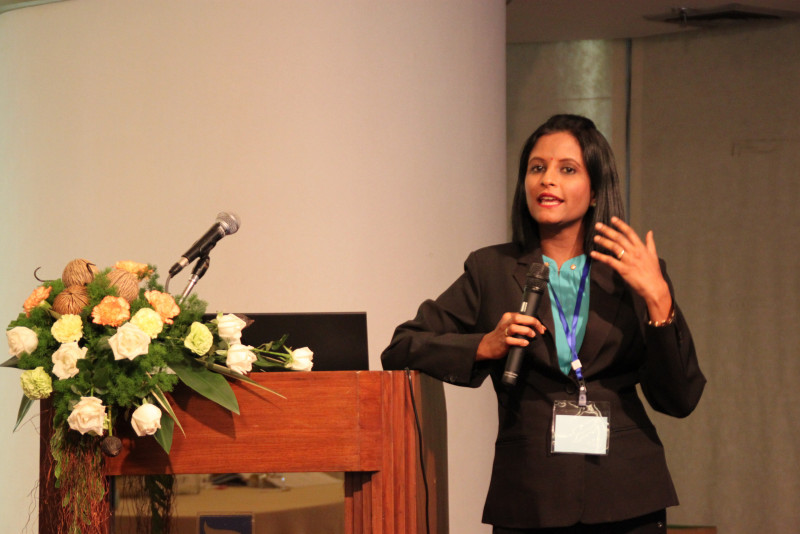
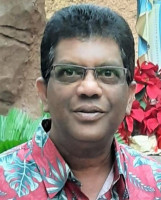
KUALA LUMPUR – The negative effects of bureaucracy and the looming influence of non-scientific sentiments in seats of higher learning are nothing new, said internationally-renowned science communicator Mahaletchumy Arujanan.
“Today, we are reaping the bad seeds that we had sown decades ago, where there were no wilful initiatives to stop the back-slide,” she said in response to an article by The Vibes today.
Mahaletchumy is the executive director of Petaling Jaya-based Malaysian Biotechnology Information Centre (Mabic) and editor-in-chief of Mabic-hosted science news portal The Petri Dish.
She said getting scientists and experts to provide comments, feedback and interviews on issues relevant to them is difficult – especially now, on matters pertaining to the pandemic and vaccine roll out.
“Most of the time we have to pass through red tape before we get to the real experts or principal investigator of a research project when seeking their comments.
“It is the bigwigs who are not the actual experts that want to be the ‘face of the research’ and steal a two-minute fame before the camera.
“In the end, we get inaccurate information and one that is irrelevant and amateurish. But this is only the tip of the iceberg.”
She said members of Malaysian academia must be given the freedom of thought and speech.
“Malaysian scientists and researchers do not have such freedom. This goes against the basic principle of building the body of knowledge.”
Lacking in freedom
“As a frequent delegate to international conferences, I have seen how scientists from around the world sign unilateral petitions to voice out matters related to research, technologies, policies and regulations.
“But Malaysian scientists do not have such freedom as they are always bound by the prevailing bureaucracy and the influence of non-scientific agendas.
“It is strange and sad that we lack the professionalism and maturity among the cream of society, the academicians,” said Mahaletchumy.
She said she has seen how some bosses demand to have their names tagged on peer-evaluated ground-breaking research papers, although they hardly contributed to either the research or the writing of the paper.
“This may be common in other countries too, but is a crying shame and is not acceptable.
“I was personally denied editorship of a proceeding by a ministry official although I edited the entire publication, citing that I was from an NGO.
“I was young at that time to understand the procedures and protocol, and just gave in.
“All these, backstabbing, stealing of the limelight and bullying of subordinate researchers should have no place in the corridors of academia.”
She said a guideline for scientist-media engagement must be put in place.
“There should be message map to guide scientists on what to highlight about the research project to avoid misinformation.
“The higher-ups need not be afraid that the institution’s image or credibility might be tarnished.
“With this in place, the corporate unit of institutions, who are not the experts of the research, could confidently allow the principal researcher to speak freely to the media and others.”
Mahaletchumy also called for a change of culture among young researchers.
“The code of conduct and ethics for research and researchers must be included in the curriculum.
“This is the ethical and responsible approach towards research which is key and salient for all researchers and department heads.
“It is not just the ethics of the beneficiaries like research animals, patients or farmers but ethics of co-researchers.
“I do not think this area of ethics and research protocol has ever been addressed before,” she added.
Mahaletchumy Arujanan was listed as one of the 100 most influential people in the field of biotechnology by the 7th edition of The Scientific American Worldwide View: A Global Biotechnology Perspective Journal. – The Vibes, January 23, 2021