
KOTA KINABALU – The statelessness of Filipino migrants in Sabah is a problem that saw its beginnings some five decades back.
An armed conflict in Mindanao, southern Philippines, in the early 1970s led to displaced Filipinos making their way to the Malaysian state.
This was followed by the inflow of economic migrants in the 1980s.
Over the years, these individuals had asylum-seeker status, allowing them to obtain the IMM13 document issued by the Immigration Department that allows them limited access to employment, social services and public amenities in Sabah.
While there are also Indonesians holding IMM13 papers, Filipinos make up the majority.
This is despite Malaysia not ratifying the 1951 Geneva Convention on Refugees and 1967 Protocol – essentially, the country is not obliged to give protection to asylum seekers.
Their stay here is not absolute. Under the terms to obtain IMM13, the Filipino migrants were supposed to return to southern Philippines when peace prevailed in the region.
Such peace was already obtained via the signing of the Bangsamoro deal in March 2014, but their exodus home did not transpire.
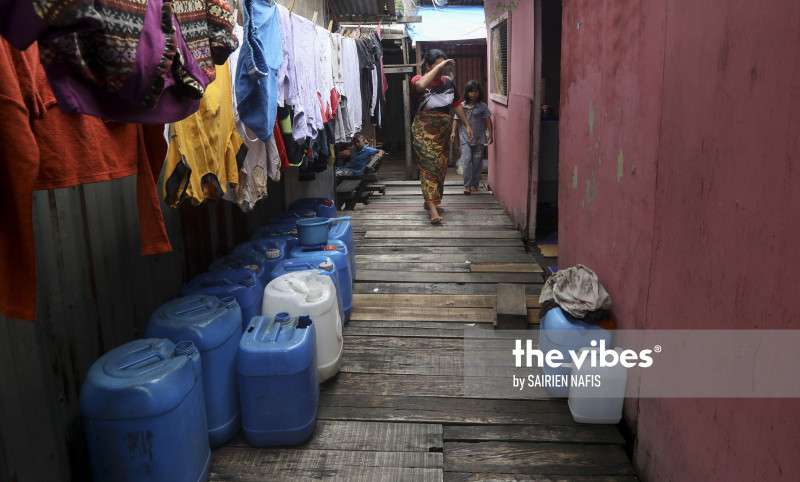
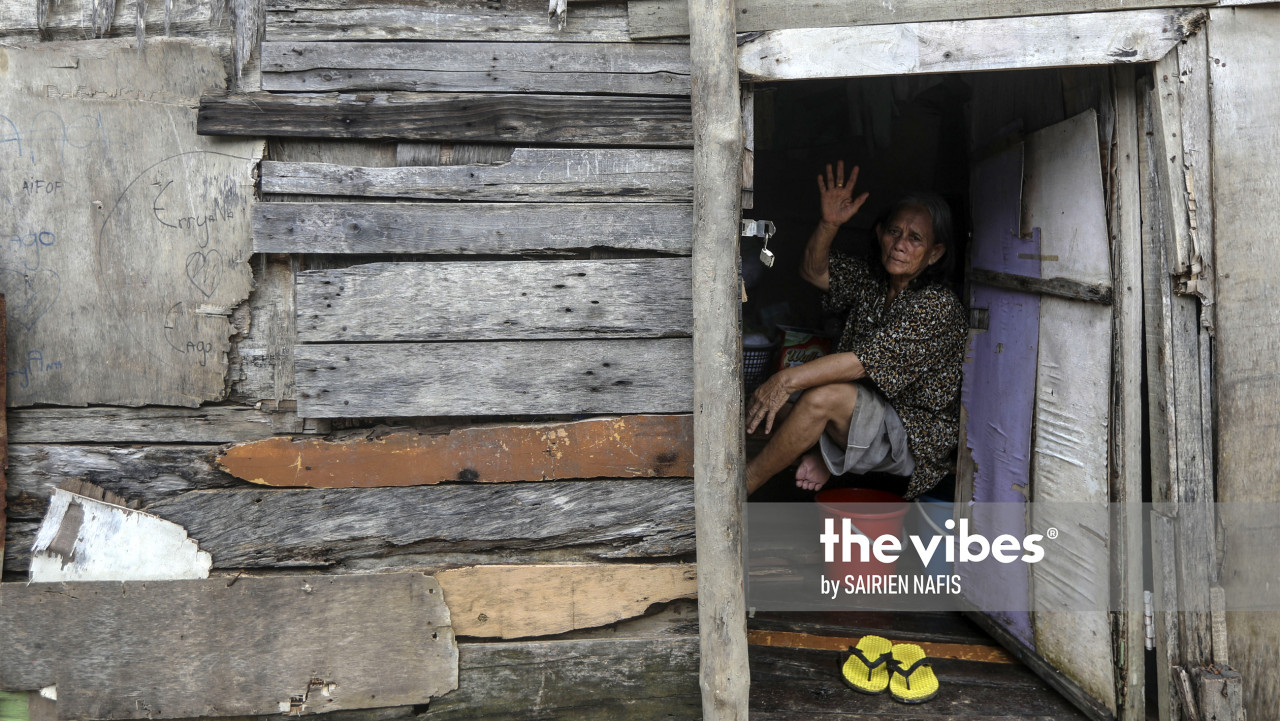
Many asylum seekers and economic migrants settled in traditional water villages across Sabah, taking over these areas, while the locals left.
It was estimated that the number of migrants stood at between 57,000 and 70,500, but the figure has since increased. Some have up to four generations living in Sabah, resulting in a population boom.
It is estimated that the state’s population has increased fourfold over the last 35 years.
Failed efforts
Many social ills in the state are often attributed to Filipino migrants, with the common perception being many of them turn to crime due to their lack of employment, and inability to obtain an education and healthcare because they do not have citizenship.
The haphazard layout of the water villages makes these places a hotbed of drugs and other crimes.
Even with the presence of the Eastern Sabah Security Command, many of these villages remain no-go areas for locals.
During the reign of Parti Bersatu Sabah (PBS) from the mid-1980s to 1994, the Chief Minister’s Office initiated the Surat Burung-Burung exercise to determine the number of undocumented migrants in the state.
Based on a royal commission of inquiry (RCI), the then state government registered 325,000 undocumented migrants in a census conducted between 1987 and 1992.
When PBS lost the state to Barisan Nasional, the federal government established a task force to carry out another census on migrants in Sabah.
It led to the issuance of census cards with the aim of repatriating Filipinos. However, the efforts died down.
Just months before the 2013 general election, the deadly Tanduo incursion in Lahad Datu helped initiate another RCI, which found that corruption and political meddling led to the state’s influx of migrants.
The inquiry further enforced the local perception that a deliberate scheme existed to grant citizenship to migrants.
Project IC is colloquially called “Project M”, in reference to then prime minister Tun Dr Mahathir Mohamad’s alleged role in granting citizenship to undocumented migrants in the 1980s and 1990s.
BN eventually took control of the state in 1994 when several PBS reps switched sides.
In 2018, upon Pakatan Harapan winning the general election, it was revealed that IMM13, Surat Burung-Burung and census card holders stood at 133,055, excluding their families.
PH proposed the issuance of the Temporary Sabah Pass (PSS), a rebranding of the Sabah Resident Pass that was proposed by the RCI technical committee to Putrajaya.
However, this was met with great opposition from the pact’s political rivals, such as Sabah Umno and Sabah Star, which alleged that PSS was a programme to grant citizenship to migrants.
There were also calls for the PH government to repatriate the migrants, following the 2014 Bangsamoro deal.
However, Parti Warisan Sabah president and then chief minister Datuk Seri Mohd Shafie Apdal argued that stateless Filipinos should be allowed to stay on in the state and build their lives, given that they no longer have families in the Philippines.
PH cancelled the PSS plan following a request by its ally Warisan, after the party lost the Kimanis by-election last January.
After the Sheraton Move in late February, Perikatan Nasional became the federal government on March 1.
Lack of data on migrant population
There has yet to be accurate data on the migrant population in Sabah.
When the implementation of PSS was still a possibility, the then Warisan state government said there were 133,055 IMM13, Surat Burung-Burung and census card holders.
The state Immigration Department, in a recent workshop, revealed that a third of the Sabah population comprises foreigners.
The estimates, based on Statistics Department information, include expatriates and other foreigners working in the state.
Many Sabahans are generally indifferent to their presence. However, the migrant population is having an impact on the state’s demography and social order, portending a social and economic upheaval against locals in the future.
There is an urgent need to appoint a United Nations special rapporteur to gather more information on the matter, while Asean should establish a coherent policy to address the stateless population in Sabah. – The Vibes, January 25, 2021