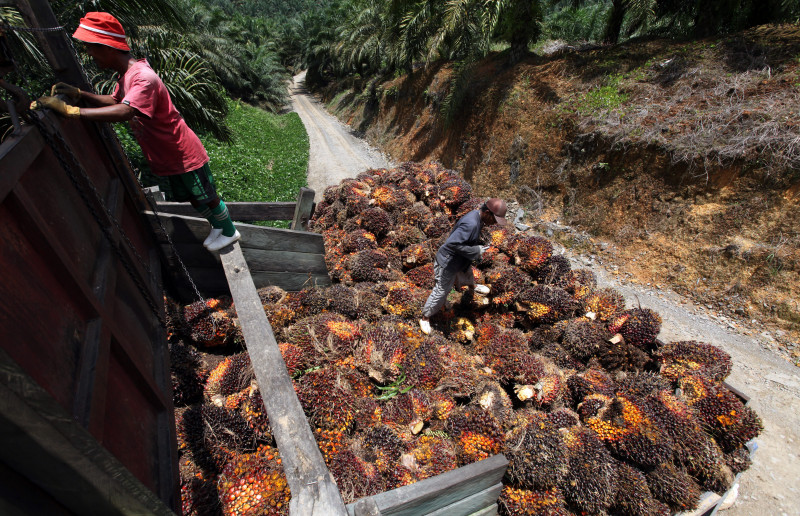

KOTA KINABALU – Palm oil activities must continue in Sabah with strict standard operating procedures in place despite Covid-19 infections being detected in the estates, said palm oil bodies.
The Malaysian Palm Oil Association (MPOA) and the Malaysian Estate Owners Association (MEOA) said in a joint statement that an agreement has been reached between them and the state government to continue operations but with strict compliance to the SOPs, instead of a total closure of the plantations.
They said that even though the state’s approach to mitigating the virus’ spread includes a 30-day voluntary lockdown to assist screening of workers, operations will still continue.
Sabah Chief Minister Datuk Seri Hajiji Noor had said yesterday that several plantations with active infections had been ordered by the Health Ministry to shut down.
Six clusters have been identified, involving estate workers and their close contacts, over the past week ending January 24.
Hajiji had said that plantations must immediately cease operations upon detecting positive cases, and that their reopening will depend on the ministry’s assessment.
“Malaysia’s largest palm oil producing state Sabah will not impose a shutdown of plantation operations,” said the statement by MPOA and MEOA today.
“The Sabah state government was wisely able to comprehend that any shutdowns or drastic changes in policies can adversely affect the Sabah palm oil industry, impacting the state’s economy,” it added.
The oil palm planted area in Sabah covers over 1.544 million hectares, with the landbank owned by both MPOA and MEOA representing 43% of the area.
The palm oil sector’s mid-stream involves 132 palm oil mills and 12 palm kernel plants, and its downstream 11 refineries.
The associations warned that a complete shutdown of the oil palm plantation sector would cause significant losses for Sabah and its people, and have socio-economic consequences.
“Crude palm oil (CPO) prices are now hovering favourably at around RM3,500 per tonne and planters will lose the opportunity to recoup their investments from earlier years of depressed prices.
“The state itself will also lose out on sales tax collection for its treasury. Sabah can potentially produce about five million tonnes of CPO per year.”
With the prevailing Sabah sales tax of 7.5% set against CPO average price at RM3,500 per tonne for 2021, the total sales tax collectable for state coffers can amount to over RM1.3 billion, the two bodies said.
It said planters will forgo about RM1.7 billion in CPO and palm kernel revenue in a single month in the event of a complete shutdown; this excludes other spin-offs throughout the supply chain.
The bodies said daily operations in the oil palm plantation are already confined to permanent locations in large landscapes, where movement control of both plantation workers and outsiders is now enforced.
By virtue of the nature of work activities in the plantation, the workers are by default well-distanced from each other, it said.
“Thus, it is safe for the workers to be out in the fields working.
“A shutdown, however, will encourage the workers staying at their quarters to mingle and group together, which potentially puts themselves and all others in the plantation community at higher risk,” it said. – The Vibes, January 26, 2021