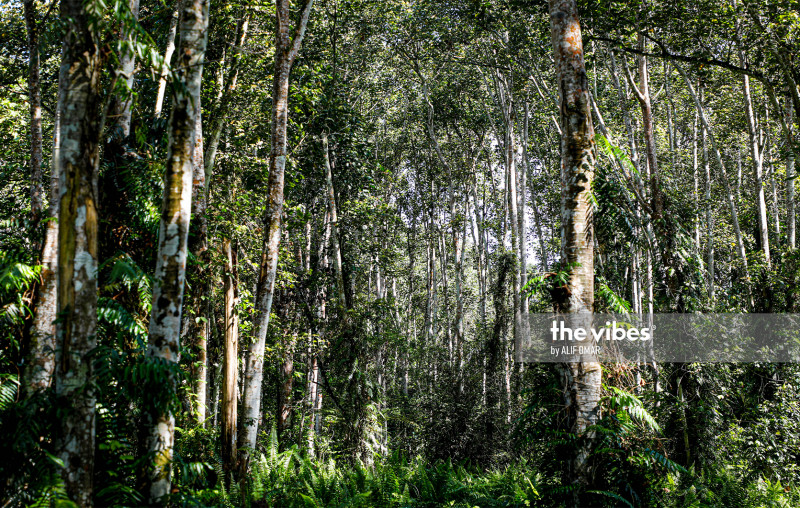
KUALA LUMPUR – The World Wide Fund for Nature-Malaysia (WWF-Malaysia) has sounded the alarm on protecting the country’s forests, which are depleting mainly due to large-scale agricultural activities, to ensure another pandemic does not happen.
“Tropical forest regions that experience land-use change are more prone to forest loss, and if this is allowed to continue, the prevention of future pandemics may not be a realistic option,” said the organisation in a statement today.
It said Malaysian Borneo has seen 1.9 million hectares of forest lost between 2004 and 2017, with 50,000ha wiped out in the peninsula in 2019 alone.
“While we may be pleased to note that we still have more than half of our land covered by forest, we must acknowledge that we have lost much of our natural heritage. In a business-as-usual scenario, we will lose more forest.
“We need to accept the fact that Malaysia’s forest loss must command a sense of urgency within the country,” it said, stressing that commercial agriculture is the leading cause of deforestation globally.
“In many cases, the growing demand for land leads to encroachment on public land, and land inhabited by indigenous people and communities.
“In the case of Malaysia, large-scale agriculture is a major cause, with forested areas cleared to create space for livestock and to grow crops.”
The statement was issued to announce the launch of a WWF report titled “Deforestation fronts: drivers and responses in a changing world”, which provides an analysis of deforestation hotspots across the globe.
The report provides a number of recommendations, given that deforestation leads to global problems.
First, it recommends that at least half of Malaysia’s natural forests be accorded legislative protection by 2030.
“The legislation must include the need to protect, conserve and manage large blocks of contiguous lush forests for the provision of ecosystem services and wildlife habitats, and restore degraded areas to improve forest cover.”
Second, it recommends that at least a million hectares of forest be restored by 2030.
Third is the idea that 60% of Malaysia’s land mass can be sustainably managed to boost the green economy.
“Forests in Malaysia often share common borders with agricultural land. As such, it is crucial that agricultural activities do not drastically affect the health of adjacent forests,” said WWF-Malaysia.
“For that reason, it is crucial that agricultural land and forests be jointly managed in an integrated manner, in compliance with the principles of sustainability.” – The Vibes, January 30, 2021