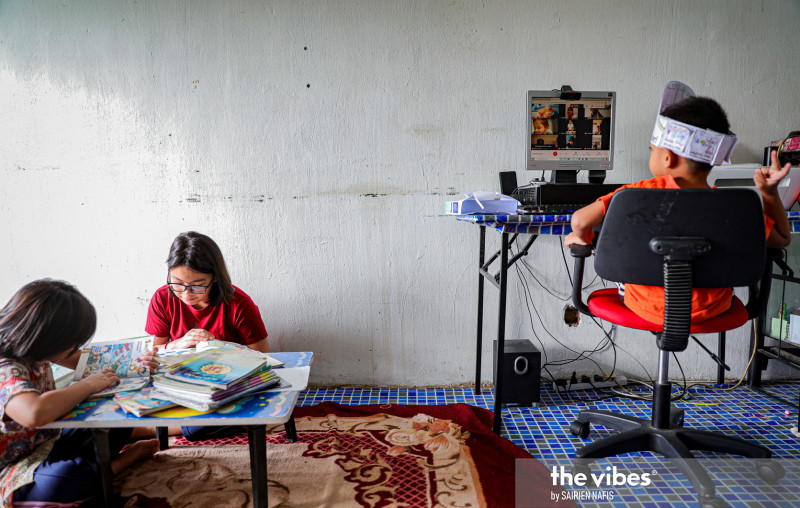

KOTA KINABALU – There is no need for parents to spend extra money on additional electronic gadgets for children to learn at home if school lessons can be broadcasted on television channels instead.
Kota Kinabalu MP Chan Foong Hin said he agrees with the suggestion by Kepayan assemblyman Jannie Lasimbang that school lessons be aired on TV for this purpose.
“This way, parents will not have to spend money on additional gadgets for their children to learn from home,” he said.
Chan said there needs to be dedicated efforts to narrow the gap between haves and have-nots, as well as the between urban and rural areas.
“An education channel on TV could be an option. We need to think deeply about what teachers should teach and what students should learn before the end of the pandemic, which could take time – years, even.
Chan said there also needs to be a review of the syllabus to reduce the learning hours in class.
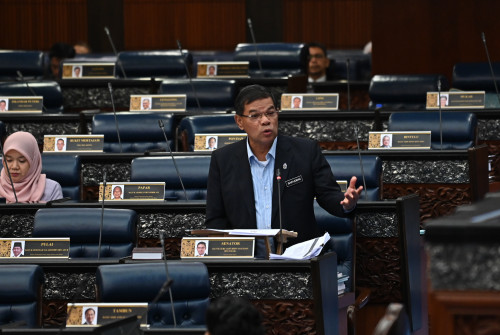
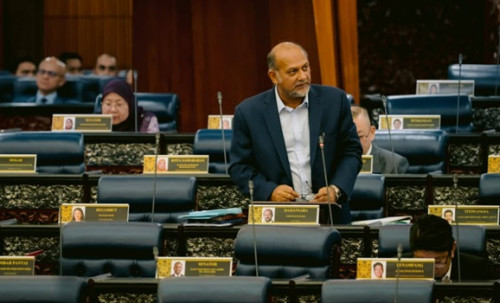
“Schooling time should only take two to three hours per day. Just like how it is in Parliament.
“Exams at physical sites should be replaced by continuous assessments. Besides that, exams should no longer be a test of students’ memories, but of their critical thinking skills instead.”
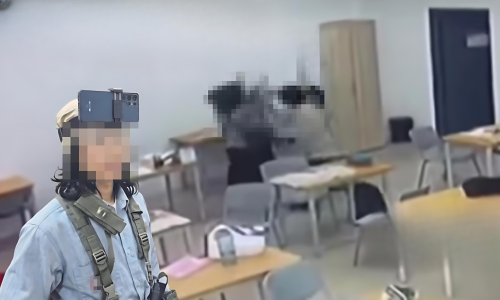
Chan said the current solution or trend of virtual learning via smartphones is not feasible.
“The words are so small on the screen,” he said, adding that a big family with many children would face problems taking turns on the phone.
He said another weakness of online learning is how parents or older family members do not accompany students when they are attending virtual classes, making learning ineffective, but recognises that parents, especially those who are working, do not always have the time.
Lasimbang had earlier called for school lessons to be broadcasted on television and radio channels as the 150,000 laptops promised by the federal government have yet to materialise.
Meanwhile, when contacted, Sabah Education Director Datuk Mistirine Radin said that online learning is not the only option available to students during the movement control order.
She said all possible methods will be used by schools in Sabah to ensure that teaching and learning from home (PdPR) programmes can be implemented even without internet access.
Mistirine said that students in rural areas without internet access will not be marginalised because schools will use the most appropriate methods available, including printed modules and worksheets, to enable them to undergo PdPR like other students without being left behind.
She said schools will facilitate parents to pick up and deliver learning materials on a weekly basis by offering a drive-in or walk-thru facility.
In addition, she said there are teachers who take the initiative to send learning materials and assignments to students at home while complying with the government’s standard operating procedures. – The Vibes, January 30, 2021