
KUALA LUMPUR – Uncertainty remains over which state will receive sales tax revenue on gas extracted from Sabah and sent to Sarawak via the 500km Sabah-Sarawak Gas Pipeline (SSGP).
So far, industry observers and rights activists do not believe Sabah will earn any revenue from the sale as the gas is accumulated in neighbouring Sarawak.
Built in 2011 at a cost of RM4.6 billion, the SSGP, which began operations in 2014, was commissioned by Petroliam Nasional Berhad (Petronas) with the purpose of sending gas from the Kimanis Oil and Gas Terminal in Sabah to the Bintulu LNG Plant in Sarawak.
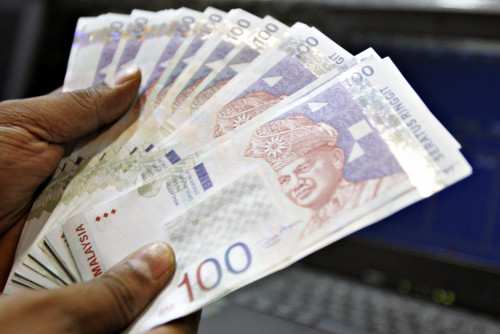
Sabah is expected to collect 5% oil and gas sales tax from Petronas amounting to RM1.25 billion this year.
But industry observer Datuk Johan Arriffin Samad is unsure about which of the two states will collect the 5% sales tax.
“By right, Sabah should benefit directly from the sales tax as it should be regarded as a sale at source.
“The problem with SSGP is that it is used as a transit point for gas to be fed to Bintulu LNG terminals, and from thereon, exported overseas,” he told The Vibes.
He also expressed concern on whether either state will be able to collect the tax in the first place, since the gas is extracted from floating liquefied natural gas (FLNG) operations owned by Petronas some 90km off the Sabah coastline.
“There are still territorial disputes on the continental shelf and these can be seen on the remaining four of 21 points agreed to during the Pakatan Harapan (PH) government.
“Since that part is not settled, it is unlikely that Petronas will be paying the state,” he said.

Malaysian Agreement activist Zainnal Ajamain also said Sabah may not be able to collect the sales tax if extraction is done on the high seas.
He said Petronas changed operations from pipelines to floating plants on sea due to disagreements over territorial waters.
“In accordance with the Sabah Land Ordinance, state territories include the continental shelf, but at present, we are still limited to the three nautical miles.
“Everything beyond that distance is under the federal government’s jurisdiction,” he said.
He also said this legal loophole could allow Sabah to stake a claim over gas extraction off its waters.
“There is money to be made. It is supposed to go to the state, but the state does not know.
“Petronas is supposed to pay the state. When they do it in the high seas, it is outside the state’s jurisdiction,” he said.
Zainnal said he believes the change of operations from pipelines to floating plants have largely been due to leaked pipelines.
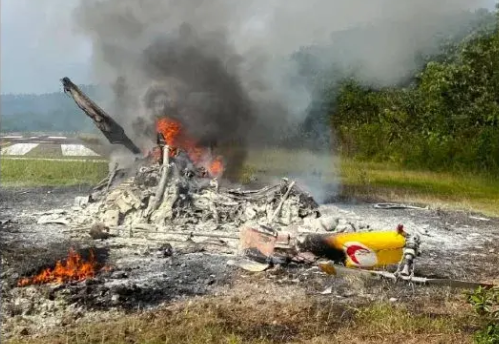
On June 11, 2014, the pipeline was shut temporarily after a line between Lawas and Long Sukang, Sarawak, exploded.
Nearly four years later on January 10, 2018, the line along Long Luping of Lawas near Limbang division began leaking.
And, just over a year ago on January 13, 2020, another explosion occurred, resulting in a fire in the vicinity of the Penan village of Long Selulong in Ulu Baram, Sarawak.
Zainnal said the Sabah government risks being short-changed, even if it is able to collect the 5% sales tax, as the production volume remains confidential to Petronas alone.
He said only the oil and gas giant and the prime minister has knowledge of the exact production volume.
“(A total of) RM1.25 billion? I guess we will never know the figure.
“Petronas will never reveal the production volume,” he said, citing ambiguous revenue numbers. – The Vibes, February 6, 2021