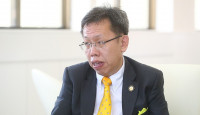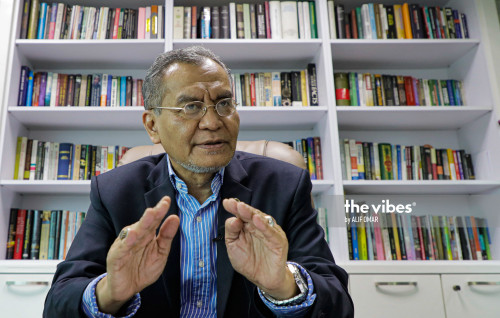

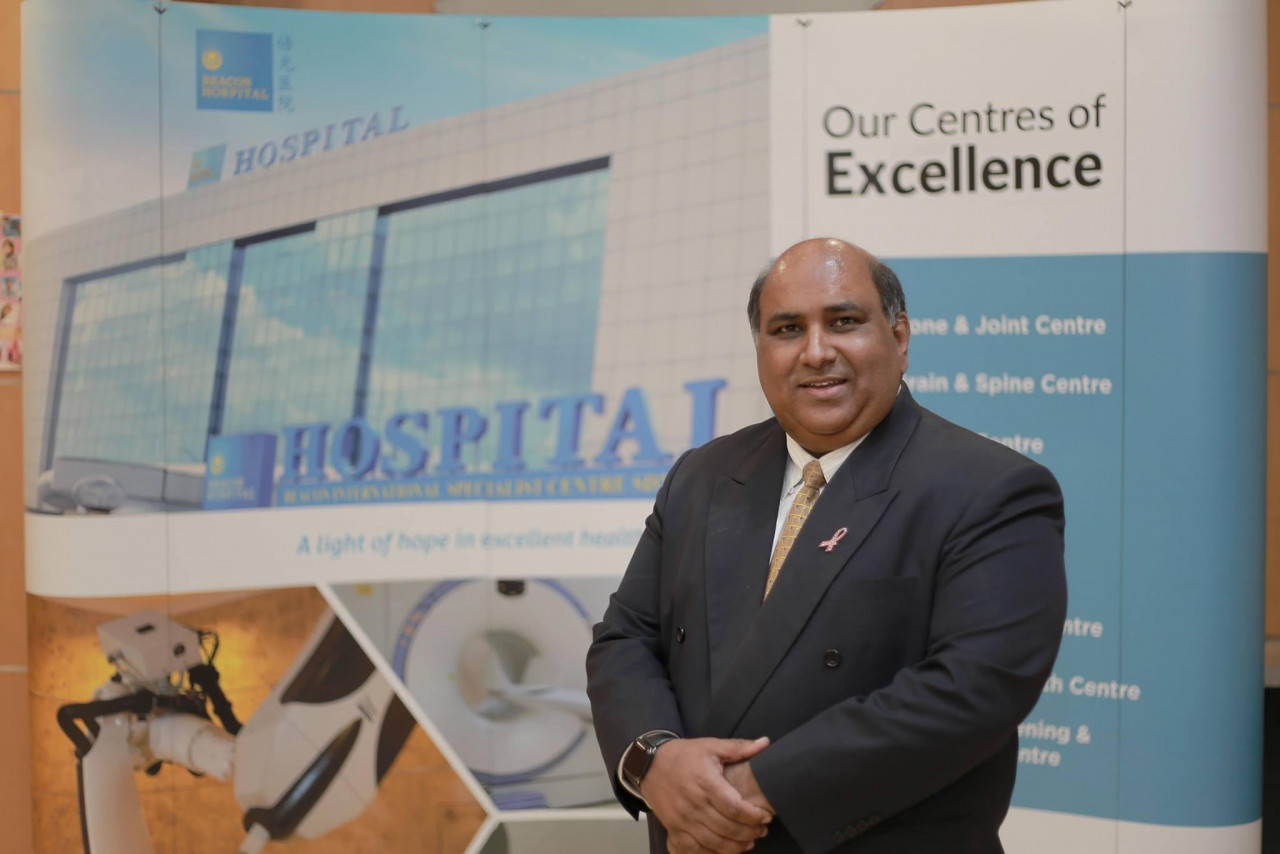
KUALA LUMPUR – The Health Ministry should consider recruiting private hospitals to help in the country’s biggest ever immunisation exercise, scheduled to begin February 26, said Beacon Hospital medical director Datuk Dr Mohamed Ibrahim Wahid.
This is to ensure smooth administration of Covid-19 vaccines to the people, besides expediting the effort.
He also told The Vibes that it is most important to avoid long queues at hospitals during the drive.
“Bearing in mind that some 30 million people, including foreigners, will be inoculated twice, that brings the total number of vaccination doses to 60 million nationwide.
“This being a massive drive, I think the ministry should consider asking private hospitals to assist in the vaccination exercise so it can be disseminated faster,” said Ibrahim, who has been a consultant clinical oncologist for more than 17 years.
The first batch of Covid-19 vaccines will arrive at the KL International Airport (KLIA) today, ahead of the nationwide immunisation exercise.
An Airbus A330-300 of national carrier Malaysia Airlines will fly in 312,390 doses of the Pfizer-BioNTech vaccine.
Ibrahim, who is former Malaysian Oncological Society president, said just like public hospitals, in the event the ministry decides to recruit private hospitals to disseminate the vaccine, it should be done free of charge.
“Perhaps the only charges that will be incurred is a minimal administrative fee of about RM10, which can be determined by the ministry.”
Other issues that need to be worked out is the storage facility for the Pfizer-BioNTech vaccine, which requires an ultra-cold storage of -70°C.
“Then again, we may not need to set up this storage facility if we can work out the logistics of transporting the exact number of doses to be administered immediately on that particular day within the permissible time.”
Ibrahim, who is College of Radiology Malaysia vice-president, said private hospitals could reach out to their own patients to get them vaccinated.
“Cancer patients should be the priority since they are susceptible to infection and need to be protected as soon as possible.
“However, vaccination will not be effective for those who are undergoing myelosuppressive therapy, which suppresses the immune system.”
Cancer patients are categorised as high-risk and will be receiving the vaccine in the second phase of the National Covid-19 Immunisation Programme, from April to August.
A total of 500,000 medical and non-medical front-line workers will receive jabs in the first phase, which is expected to end by April.
The third phase is from May to February 2022 for those aged 18 and above, be they citizens or non-citizens, with priority given to those in red zones, followed by yellow zones and green zones.
Ibrahim is also appealing to Malaysians to come forward and be vaccinated.
“I know there are anti-vaccine groups out there but please don’t be afraid and don’t listen to negative talk.
“Look at the bigger picture, what are the alternatives? Are you going to live with this virus and lockdowns for the rest of your life?
“Vaccinating is the only way for us to wipe out this virus.”
Ibrahim cited the success rate of countries that are implementing the vaccination exercise, such as in Israel, where the Pfizer-BioNTech vaccine is halting nine out of 10 infections. The country is said to possibly approach herd immunity by next month.
Based on the health records of hundreds of thousands of Israelis, the vaccine has been found to sharply curtail transmission of the coronavirus.
“High vaccine uptake can meaningfully stem the pandemic and offer hope for eventual control over it as vaccination programmes ramp up across the rest of the world,” he said. – The Vibes, February 21, 2021