BANTING – Early every morning, Tonjoi Pipis gets ready for his “jaunt” in the jungle, which is just 1km from his home in Kg Orang Asli Pulau Kempas.
Foraging forest produce is not the only thing on his mind, however. Tonjoi is also undertaking a noble mission: to restore parts of the peat swamp forest destroyed by a huge fire seven years ago.
The 51-year-old is among the 2,000-odd Temuan clan living in four settlements on the southwestern fringes of the Kuala Langat North Forest Reserve (KLNFR), located 21.5km from the town here and facing an uncertain future as the Selangor government has proposed its degazettement for development.
The father of seven, who is Friends of Kuala Langat North Peat Forest chairman, is among the 30 or so villagers actively involved in forest restoration, with the help of several government agencies, private companies and civil society groups.
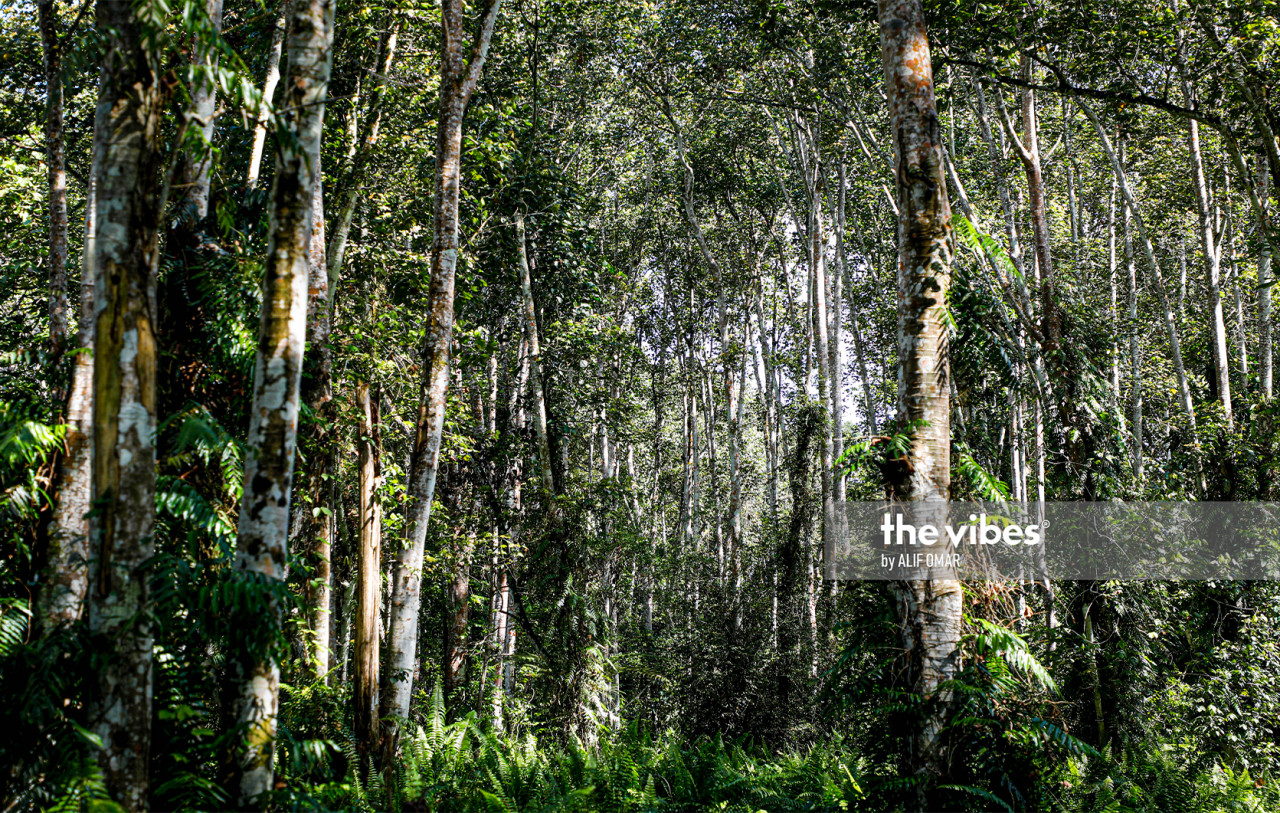
It is still a work in progress, but their efforts to replant jungle tree species such as tenggek burung have succeeded in greening some of the ravaged areas.
“We are doing all this to ensure the forest remains part of our heritage,” Tonjoi told Bernama at his village recently.
He does not understand why the state government wants a chunk of KLNFR, which comprises mainly peat swamp forest that serves as a natural carbon reservoir, to make way for development, when the rehabilitation process has been successful.
One of the reasons cited by the state government justifying its proposal to degazette KLNFR – said to be the last green lung in southern Selangor – is the frequent occurrence of fires, which, it said, have degraded 40% of the forest.
Forest blazes
The 957.63ha KLNFR – which was spread over 7,246.96ha when it was first gazetted as a forest reserve in 1927, but has dwindled due to development – has seen several fires over the last 10 years.
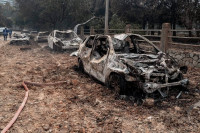
According to the state government, 359.60ha of the forest reserve was razed between 2012 and 2017.
However, Selangor Forestry Department (JPNS) statistics showed that a huge fire in 2014 impacted 132ha of KLNFR, while blazes destroyed some 82ha and 50ha in 2013 and 2012, respectively.
In 2014, the Global Environmental Centre (GEC), fearing KLNFR’s vulnerability to peat fires, teamed up with Boh Plantations Sdn Bhd and Gamuda Land Sdn Bhd, as well as JPNS, the Kuala Langat Orang Asli Development Department, Fire and Rescue Department, and United Nations Development Programme (Orang Asli/Orang Asal Micro-Grant Facility for Conservation and Livelihood), to protect and conserve the forest’s valuable peat swamp ecosystem, which is over 8,000 years old and home to endemic species of flora and fauna.
Besides empowering local and indigenous communities there to conserve and restore KLNFR, the collaboration also aimed to implement a forest fire management plan to reduce further degradation of the area.
Locals are showing their support through Friends of Kuala Langat North Peat Forest. And, the Junior Peatland Forest Ranger Programme sees Orang Asli children being taught the importance of safeguarding the peat forest in their “backyard” and cultivating a love for nature from a young age.
Successful rehabilitation
Tonjoi and his fellow villagers are worried about their fate should the degazettement happen, and also frustrated that their work to rehabilitate the forest over the last few years has gone unappreciated.
“Nevertheless, our spirit will never be broken, and we will continue with our forest restoration work.”
GEC’s forest and coastal programme manager Nagarajan Rengasamy said the Selangor government’s assertion that 40% of KLNFR has degraded is inaccurate.
This is because rehabilitation activities carried out in the areas affected by fires since 2015 have resulted in the planting of 12,000 tree saplings, which are now 4 to 5 years old.
“The fact that 40% of the forest was degraded was true in 2014, but not now. The report on the progress of the rehabilitation programme we have implemented shows that KLNFR is recovering well with our tree-planting efforts and the natural regeneration of vegetation,” said Nagarajan.
He said the rehabilitation has led to the formation of a secondary forest comprising 20ha of replanted trees, which have reached a height of 7m to 8m, adding that 200ha of vegetation has regenerated naturally.
To make it easier for the Orang Asli to replant trees in the forest reserve, a 0.16ha nursery was opened in Kg Orang Asli Pulau Kempas. Species like tenggek burung and mahang were selected due to their hardy nature and the fact that they adapt well to waterlogged peatland soil.
Fire mitigation system
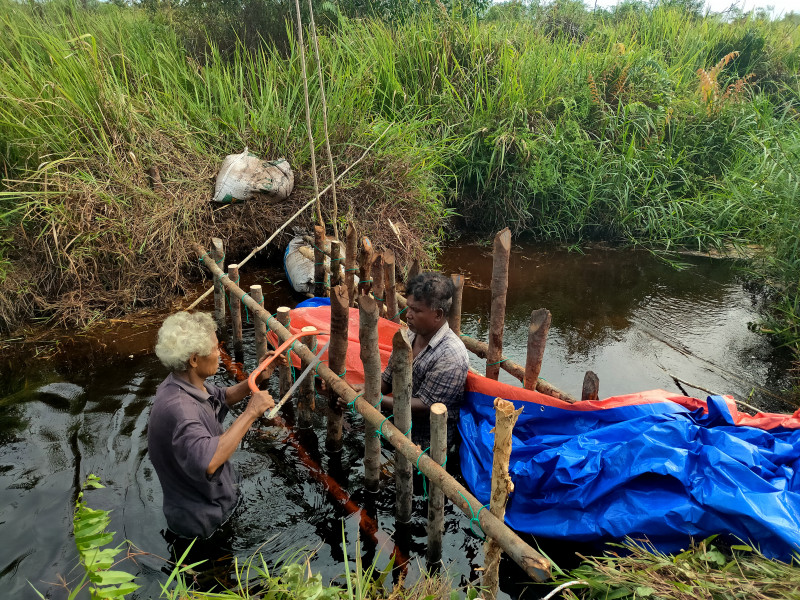
Explaining the forest fire management plan, Nagarajan said 12 canal blocks and nine piezometers have been installed to manage KLNFR’s hydrology.
He said GEC taught Friends of Kuala Langat North Peat Forest members how the canal blocks work, with these members also helping in the installation of the said blocks in the areas most prone to fires.
“They have also been taught how to maintain the canal blocks and monitor the water level in the canals concerned using the piezometers.”
He said five fire danger rating system signboards have been erected in high-risk areas of the forest as an early warning system.
A motorcycle patrol team manned by the Orang Asli has been established to patrol and monitor KLNFR three to four times a week. There is a watchtower that allows residents to look out for signs of burning, too.
The fire mitigation measures in place since 2014 have proven to be effective, with JPNS statistics showing that not a single blaze was reported in KLNFR in 2015, 2016, 2018, 2019 and 2020.
One incident was reported in 2017, involving 95.6ha of the forest. The latest fire occurred last month, but only 5ha was hit, with the flames swiftly brought under control.
Nagarajan said there is strong reason to believe that the latest fire was caused by humans.
“This is because the gravel road near that part of the forest where the fire broke out is usually used by people to get to Dengkil, Putrajaya and Cyberjaya. Someone passing by might have thrown a cigarette butt into the forest.” – Bernama, April 21, 2021