
KUALA LUMPUR – The government is expected to reach its tax revenue target this year, despite the bleak economic outlook brought by the Covid-19 pandemic, a taxation expert said.
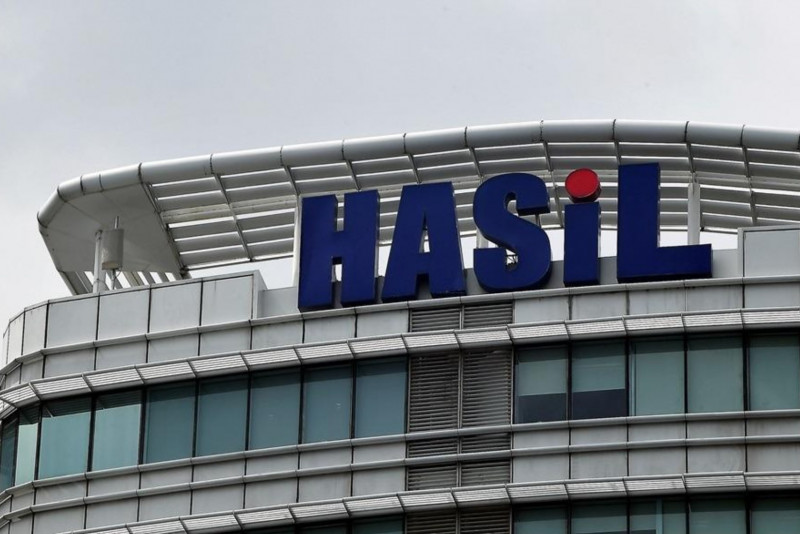
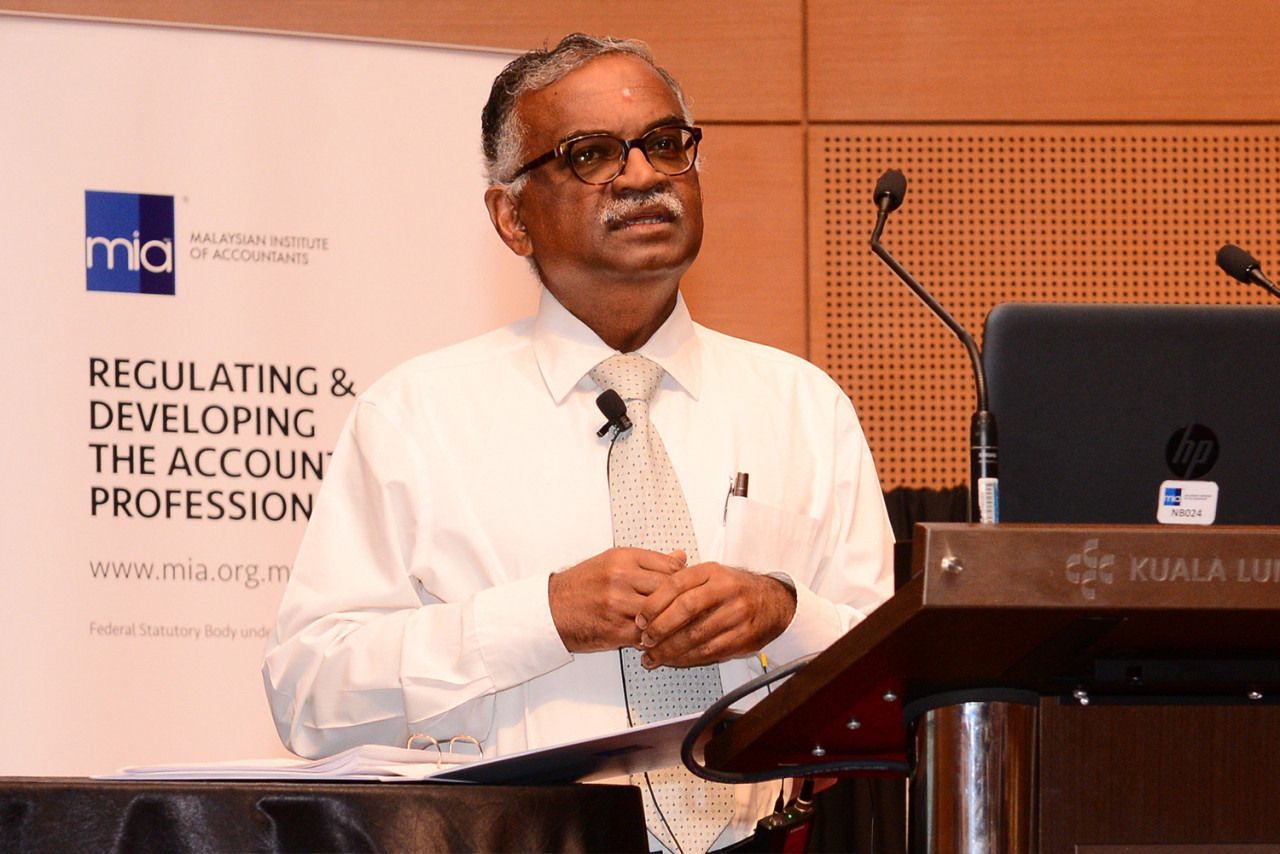
Thannees Tax Consulting Services Sdn Bhd managing director S.M. Thanneermalai, said the Inland Revenue Board (IRB) will likely reach its target or “come close” to achieving the projected income this year based on numerous factors.
“If it doesn’t reach the target, it would not be falling off from it in a big way, based on the rate that it is going after taxpayers,” he told The Vibes.
“The IRB has also been more aggressive in carrying out investigations and audits on taxpayers. It is reviewing more and more cases and have ramped up its activities in achieving its targets.”
Thanneermalai said the number of investigations has increased and the intensity of its collection has also been ramped up.
He said issues that previously required six to nine months to resolve are no longer prolonged beyond six months.
“As far as tax authorities, such as the IRB and Customs Department are concerned, they are taking stronger positions in interpreting the law and are more than willing to challenge taxpayers in court,” he said.
“The IRB has given a shorter time frame for you to answer their questions. It has been shortened to around 14 days, so that puts pressure on taxpayers to respond very quickly.”
In November last year, the IRB said the government’s target of RM143.9 billion in direct tax collection for this year was “reasonable”, owing to the economic recovery.
IRB chief executive officer Datuk Seri Sabin Samitah said the country’s economic growth projection of between 6.5% and 7.5% in 2021, as well as the economic stimulus packages and global economic growth, would help realise the target, according to a local daily.
He said the RM143.9 billion or 40.9% will come from direct taxes, representing 55.7% of overall government revenue for 2021.
This year’s period for filing taxes began on March 1 and ends on April 30 for non-business contributors, while those with businesses must declare their income between June 1 and June 30.
As with previous years, the April 30 deadline for non-business taxpayers is also expected to be extended, but it is uncertain for how long.
In light of this, Thanneermalai said the collections are not expected to be significantly lower than previous years, although many workers have received larger returns based on the increased tax reliefs.
“Based on the number of investigations, we can see that they have increased the intensity of their efforts as they have become more targeted in their approach and are very good at mining information.
“They now rely on artificial intelligence, which has sharpened their intelligence-gathering. Now, tax authorities are able to detect anomalies as they have the tools. By doing this, they will collect more revenue because they have become more efficient and not letting most escape the dragnet.”
On fresh graduates joining the workforce, Thanneermalai said they did not represent a large portion of revenue collection as most earn below RM34,000 a year, which is the minimum threshold to be taxed.
“Their challenge is different because they are the ones facing difficulties finding jobs as opposed to paying taxes.”
Underground, informal economy
While revenue collection is tipped to reach the targets, Thanneermalai said, however, that it is mostly those who are registered under the tax system who will endure the more aggressive moves by the IRB.
“They (IRB) also have to focus on those from outside the system and who have under-declared their revenue,” he said.
“It can involve those from the informal economy or gig economy, and those making heaps of cash sales and getting away with it.
“Those in the underground economy should also be caught. Why should they get away with it (not paying taxes)? And also, those who are seemingly well-connected also cannot escape.”
Those in the underground economy should also be caught. Why should they get away with it (not paying taxes)? And also, those who are seemingly well-connected also cannot escape.
Thanneermalai’s remarks on the underground and informal economy echoes an earlier statement by the Malaysian Institute of Accountants (MIA), which noted they were equivalent to roughly a third of the country’s gross domestic product.
On April 20, MIA president Veerinderjeet Singh said the country could generate hundreds of millions in tax revenue through stronger enforcement.
“The shadow economy and tax administration are the immediate areas that we should be looking at while we push the economy forward. No other taxes should be implemented until we reach the status of a high-income and high-developed nation,” Veerinderjeet said in a statement.
The statement was issued in conjunction with the recent Malaysian Tax Conference 2021, during a panel session entitled Reconstruction of the Malaysian Tax System: Where are We Heading?
Veerinderjeet said tax administration could be transformed through digitalisation and technology adoption, such as the application of data analytics, which is imperative to enhance tax operations and enforcement.
“Using data analytics could shift the onus for generating tax returns from the taxpayer by enabling tax authorities to compute the tax payable in real-time, for example,” Veerinderjeet said.
“To optimise the use of data analytics, government ministries and agencies should be more integrated, cut through silos, and share data.
“Greater inter-ministerial and inter-agency coordination and data sharing will lead to more efficient enforcement and better compliance.” – The Vibes, April 24, 2021