
GEORGE TOWN – The authorities are being urged to ban masks and other protective equipment that contain potentially toxic nanoparticles, including graphene, from being sold in the market.
The Consumers’ Association of Penang (CAP) made the call today following the Canadian government’s move to ban the use of masks that contain graphene nanoparticles.
In a safety alert on April 2, Health Canada advised against the usage of masks that contain graphene, which poses health risks if the wearer inhales its particles. A few days later, Health Canada removed graphene masks from the market.
CAP president Mohideen Abdul Kader said that, even though there are potential health risks, the production and sales of masks containing nanographene is still being carried out all over the world.
He called on the authorities to implement standards for masks and ban the sale of those that contain graphene nanoparticles or other potentially harmful materials.
“Meanwhile, consumers should take the cue from this and stay safe by opting for cotton masks, which can prevent the spread of infection,” he said in a statement today.
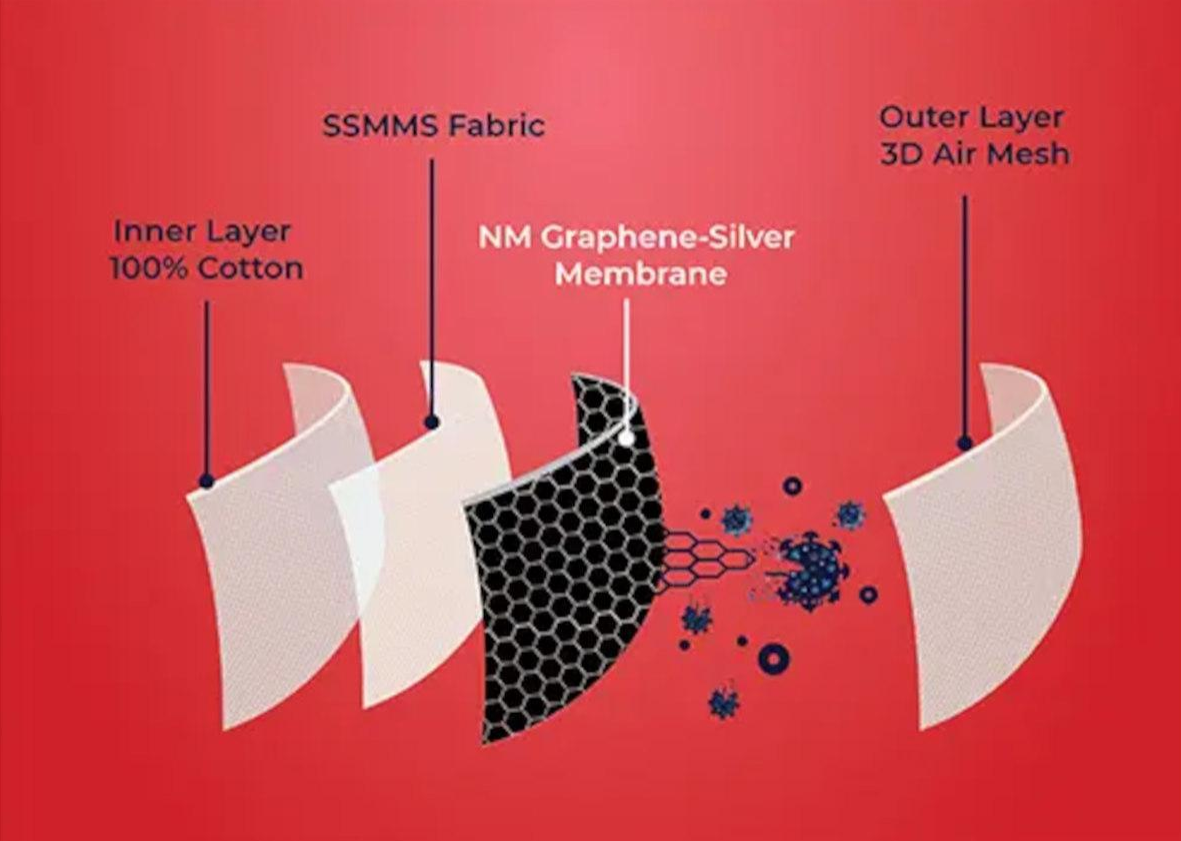
Graphene is a single layer of carbon atoms that are tightly bound in a hexagonal honeycomb pattern. Hundreds of layers of graphene make up graphite. When materials like carbon are reduced to atoms, they tend to behave unusually, which can also increase their toxicity.
Masks that contain graphene nanoparticles can be recognised by a dark-coloured lining on the inner side of the mask itself. It is easily identifiable by its grey colour.
Graphene helps prevent the spread of microbes with its sharp edges that damage incoming viruses and cells as they pass by.
When applied in a mask, the nanographene coating is intended to protect the wearer from particles in the air, effectively slicing them apart as they go through the graphene layer.
Even though graphene possesses antibacterial qualities, the continuous usage of such masks can cause microscopic flakes of nanographene to become airborne and be inhaled into the lungs of the user.
Mohideen said people who have used graphene-laced masks have complained of difficulty breathing, skin irritation and the sensation of breathing in cat hair.
The Centre for International Environmental Law and international NGOs have since sent a letter to European officials urging them to remove personal protective equipment containing nanoform materials and masks with nanoparticles from the market. – The Vibes, May 17, 2021
















.jpeg)