
KUALA LUMPUR – The latest military offensive by the Israel Defence Forces in Gaza, which decimated buildings and left hundreds dead, has reinvigorated boycott calls against companies linked to the Jewish state.
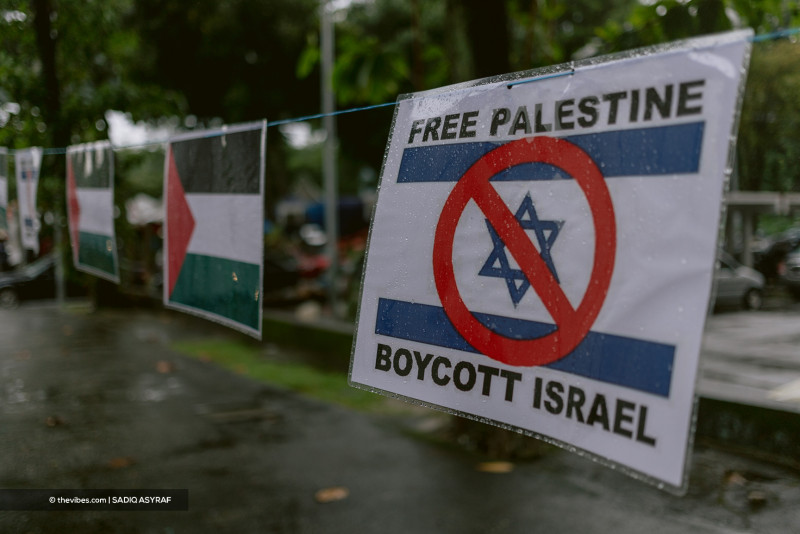
In Malaysia, staunch supporters of the Palestinian cause, as well as consumer groups and non-government organisations, have ramped up their campaigns, with some actively pulling goods deemed “friendly” to Israel off the shelves at sundry shops, markets and restaurants.
Other organisations have pointed to corporations operating in the country that are said to have contributed to the seizure of Palestinian homes to make way for Israeli settlements.
Such campaigns have spurred debate on whether they are effective, given the geographical, economic and diplomatic disconnect between Malaysia and the Middle Eastern nation.
In late May, the Malaysian Islamic Consumers’ Association (PPIM) removed dozens of Coca-Cola bottles from a grocery store here.
The soft-drink giant was among three brands identified by PPIM as having links to Israel, with the other two being Starbucks and Hewlett-Packard (HP).
In response, Coca-Cola Malaysia denied contributing to the Israeli siege on Palestine, saying the company takes a neutral stance on religious causes across the world.
The multinational corporation added that it has been selling its products in Palestine since 1998, and that its beverages made in Malaysia are “for Malaysians and by Malaysians”. It noted, too, that Malaysians are the first to be hurt by boycott campaigns.
Former youth and sports minister Syed Saddiq Syed Abdul Rahman, in a Twitter thread, said although he is angry at Israel’s actions, Malaysians should not be easily influenced by “rumours” on Coca-Cola.
He said the brand has been in the country since 1938, employing 1,000 Malaysians directly and another 8,000 through its supply chain as of 2017.
He also noted that the company has invested RM1.5 billion in Malaysia since 2010, including the construction of a world-class factory in Nilai, Negri Sembilan, for the halal market in Southeast Asia.
In light of this long-standing debate, The Vibes caught up with advocacy group Boycott, Divestment, Sanctions (BDS) Malaysia to get its take on the issue.
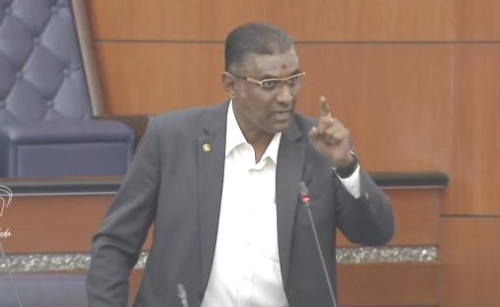
The interview was conducted with Prof Nazari Ismail, who chairs the Malaysian chapter of the global movement.

Q: Calls to boycott Israel-linked products and companies have resurfaced in the media in recent weeks, following the latest siege on Gaza. What are the current developments with BDS regarding this campaign? Have you seen greater participation from the public?
A: We are stepping up our boycott campaigns against Caterpillar, G4S, Puma and HP. These campaigns have been ongoing, but the events in May in Palestine have boosted public interest in them, as evidenced by the increase in our followers: FB now has almost 14,000, and Instagram now around 6,600.
We have started another round of petition campaigns directed at the local conglomerate that distributes Caterpillar, and companies that are known to be using the products and services of HP and G4S, respectively. Against Puma, we have conducted various publicity drives to persuade the public to refrain from purchasing its products. We have definitely received numerous queries from the public on what to boycott, which is certainly an indication of greater interest in participating. We therefore take this opportunity to urge the public to boycott the following, as these are products on offer at the retail level and subject to a consumer boycott. Everyone should avoid:
- All HP products. HP helps run the biometric ID system that Israel uses to restrict Palestinian movement.
- All Puma products. Puma sponsors the Israel Football Association, which includes teams in Israel’s illegal settlements on occupied Palestinian land.
- Airbnb. Airbnb continues to allow rentals on stolen Palestinian land.
- Ahava cosmetics and beauty products. Ahava cosmetics have their production site, visitor centre and main store in an illegal Israeli settlement.
- Axa Insurance. AXA invests in Israeli banks, which finance the theft of Palestinian land and natural resources. Do not buy insurance policies with AXA, or if you currently have an insurance policy with them, try cancelling it.
Q: Malaysia has no diplomatic relations with Israel, and direct forms of trade are minimal. So, how does BDS go about maximising the effectiveness of the boycott campaign?
A: It matters not that Malaysia, or for that matter, any other country, has no diplomatic relations with Israel, or that trade with Israel is minimal. The pressure applied on Israel is indirect. We boycott or apply direct pressure on all companies that are considered prime targets, as they are complicit in the repressive Israeli apartheid against Palestinians; those that facilitate the violation of the human rights of Palestinians, for instance, Caterpillar, which provides the heavy machinery for the ethnic displacement of Palestinians in the occupied Palestinian territories, and G4S, which provides training to Israeli security forces, and HP, for the reason already stated above.
It is a campaign to hurt these companies where it hurts most, which is their pockets, and the way to do that is to conduct a hearts-and-minds battle to win over public opinion, and eventually, decision-makers, so much so that there is stigma attached to these companies due to their attitude of putting profits above human rights, or above anti-apartheid obligations. When the public and other corporations refuse to do business with these companies, that’s when they will feel the pain and review their business links with Israel.

Bear in mind, BDS is a global movement. Loss of business in one country may not hurt, but there is always a snowball effect. The loss of business in several countries may well hurt. On our part, it is essentially a battle for the hearts and minds of the public. It is a slow process, but since the inception of BDS 16 years ago, the change has been tremendous the world over.
In Malaysia, we are continuing our efforts and campaigns to take advantage of already-high anti-Zionist public sentiments, and for our impact to reflect that.
Q: On your website, BDS singles out four companies, including consumer brands Puma and HP. How does BDS verify and confirm that these companies are indeed aiding Israeli settlements and causes?
A: There is every evidence, as confirmed by the BDS National Committee (BNC), that these companies are complicit, and enablers and facilitators of Israeli apartheid. It is beyond dispute. All for the sake of money and profits. Not a single one has denied complicity, despite ample opportunity to do so. We have no doubt that they are deserving targets. Further information on these companies’ complicity can be found on BDS’ international website.
Q: What are your thoughts on local consumer groups that have launched boycotts against franchises operating here, such as Coca-Cola and McDonald’s, even though these companies have denied involvement in funding Israel or Zionists? Do you think some campaigns, although well-intended, are misguided?
A: BDS Malaysia has clear criteria and guidelines provided by BNC on who should be targeted, and as mentioned before, the primary targets are those proven to be complicit in Israeli apartheid, or have a presence in illegal Israeli colonies in the occupied Palestinian territories. The identity or ethnicity of the owners of those companies is not among the criteria we use, except, of course, if they are Israeli-registered companies.
We cannot comment on boycotts by other consumer groups. Perhaps, they have their own sets of criteria.
Q: What is BDS’ response to parties that say such boycott campaigns would bring more damage to local jobs and the economy than to Israel?
A: That is a disingenuous argument to deflect boycott efforts. Let’s be clear. BDS isn’t about bankrupting businesses, but getting them to recognise the gross violation of Palestinian human rights that they are complicit in, and to rethink their business policies. Yes, successful boycotts may lead to company closures and the loss of jobs. But will demand for the products and services supplied by those companies also shrink? No. The slack will be taken up by other companies, which will need more manpower to handle the additional demand or orders now coming their way. Looking at it from the macro level, there is not likely to be a real net loss of jobs.
As for the targeted companies, if and when they stop their complicity and support for Israeli repression, we will stop our boycott campaign against them. Israel will never admit that boycotts hurt its economy, even when that is the case. So, don’t try to look for feedback on boycott effectiveness from that source.
Divestments and sanctions definitely will hurt their economy, and those have always been the aims of BDS.
Q: Finally, when was BDS formed, and what would you say are the collective of NGOs’ biggest successes to date? And, what are the plans moving forward?
A: BDS was formed in 2005. It is a global movement with chapters in many countries, of which Malaysia is just one. It is hard to single out one or two that can be described as our biggest successes. There have been so many achievements. BDS has always believed that the struggle will be incremental and over the long term. The foe is powerful, influential, has abundant resources, and is aided by a formidable propaganda machinery, and because of that, we don’t expect overnight victories. Nonetheless, if you look at our international website, you will see the many achievements of BDS over the years in the academic, cultural and economic spheres.
A measure of how significant these achievements are is in the response of the Israeli government to the global BDS campaign – we are considered by them to be a strategic and existential threat, and a whole ministry has been designated and funded to counter our efforts. They certainly would not have resorted to this if they felt BDS was ineffective and not making headway in changing people’s attitudes towards the occupation of Palestine. The Zionist lobby has also managed to get many US state legislatures to criminalise BDS. That is how scared they are of BDS.
Ultimately, we are confident they will fail, as criminalising a peaceful, non-violent movement such as BDS is in breach of the US constitution. It has been stated so by a federal district court in Kansas. The implication is that all those anti-BDS laws in the other states are also unconstitutional. This counts as a major victory, and may well open the floodgates of support for BDS.
BDS is also supported by many progressive Israelis sickened by the apartheid system that their government has imposed on Palestinians, and they are convinced, as we do, that peaceful change will come about only through external pressure by BDS. Prominent human rights activists in Israel generally are strong BDS supporters.
Moving forward, we are heartened to see that there is a distinct change in the tone of the public conversation in the US about Palestine after the events in Gaza and East Jerusalem brought the issue back to the fore of the world’s conscience. What was taboo before is no longer so. This is very important, as the US government is a major enabler and protector of Zionist atrocities against Palestinians. We hope to see the intensification of US public opinion pressuring for the end of Israeli apartheid. BDS operates at the grassroots level, and works towards creating and sustaining that pressure.
For Malaysia, it is indeed shameful if we are left behind in the global groundswell for a free Palestine. We are stepping up our campaigns to bring across our message to all communities and segments of Malaysian society, and take this opportunity to invite all Malaysians to support all our campaigns and programmes. – The Vibes, June 5, 2021

_-_AZIM_RAHMAN_2.jpg)