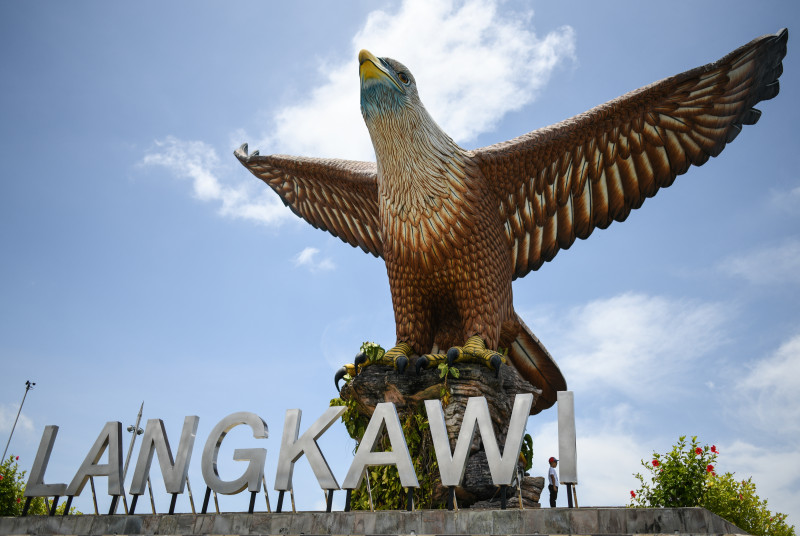

LANGKAWI – A tourism official here backs the suggestion by Kedah Speaker Juhari Bulat to temporarily ban movements in and out of Langkawi until Covid-19 is contained.
Langkawi Tourism Organisation chief Ahmad Pishol Isahak said this can be a game changer that expedites the restoration of the island’s green-zone status after being listed as a red zone for the past month following outbreaks in two localities.
The island logged 344 infections as of yesterday, of which 53 are active. It has seen one death.
At present, visitors can travel to Langkawi using only one route: the rollover ferry service from Kuala Perlis. Those who work here and others with the required travel documents are allowed to enter.
Pishol told The Vibes that there should at least be a limit on the number of people allowed to enter.
On the proposed ban, he said it could be for 14 days, adding that the aim is to bring cases down to the single digits.
“This is possible as the island has a small population (estimated at 111,500).”
Health and tourism authorities have earmarked Langkawi as one of the first districts nationwide to attain herd immunity by year-end.
“Before any tourism marketing or promotions can be done, it is best to first attain herd immunity by regaining green-zone status,” said Pishol.
Langkawi district health officer Dr Mansor Ismail said given the red-zone status, no tourists should be allowed on the island.
“We do not encourage people to come and go, but at times, it could be work-related or due to family matters.
“It would be nice to limit the movement of people, and if this still happens, physical distancing must be practised.”
He said there are signs that cases are declining, with the number of clusters down from three a fortnight ago to one now.
He acknowledged, however, that the virus has spread in the community, and it will take time to stem infections.
On the vaccination rate, Mansor said about 35% of those who have registered have received the jab, as has a majority of people in high-risk groups, such as the elderly and those with underlying medical conditions.
This leaves an estimated 55,000 individuals left to be inoculated, which can be done in two months if resources are properly deployed, he said. – The Vibes, June 21, 2021