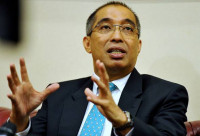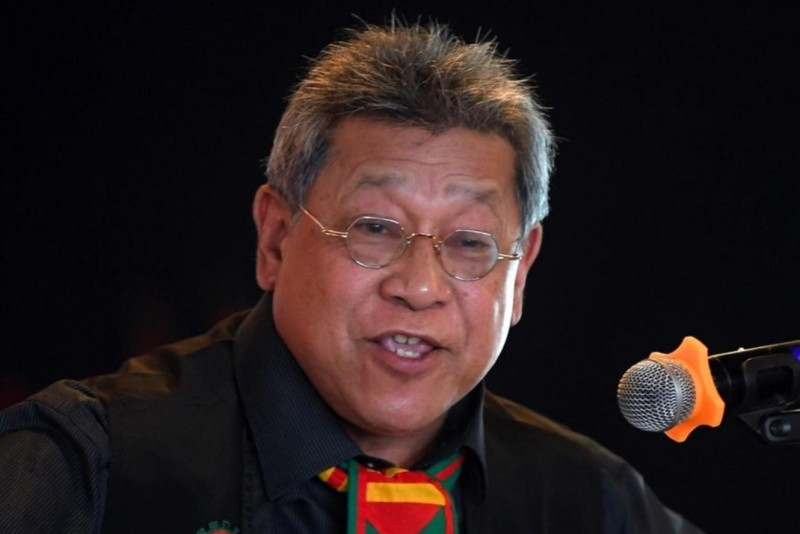

KUALA LUMPUR – As politicians in the peninsula grapple to sway public allegiance by using race and religion, former Dewan Rakyat speaker Tan Sri Pandikar Amin Mulia said they should leave Sabah out of it.
“Enough is enough; do not involve us in your racial issues.
“Sabah’s four main issues – rural poor, development gap, regional politics, and divide-and-rule politics – are brought about by the political gurus in the peninsula.
“I thank God that we do not have any racial or religious problem like the ones you have in Malaya (peninsula),” said the United Sabah National Organisation (Usno Baru) president.
He said democracy will not be the most talked-about issue in a decade or 15 years from now, as by then, Sabah and Sarawak may have been convinced to leave the federation of Malaysia.
“Sabah has had more changes in government than anyone else ‘by unsavoury means’ – I am insulted by these words. They are not very nice as they imply that Sabah politics are dirty, immoral, unethical or undemocratic.
“To me, party-hopping is in accordance with the constitutional rights, i.e. freedom of speech and freedom of association; it is not against the constitution.
“You may be interested to know that this culture of political-hopping was brought over to Sabah by the political gurus from Malaya.
“In 1985, Kuala Lumpur (the federal government) took sides where people were enticed to hop. If you study the culture of political-hopping in Sabah, you will find that it originated from Malaya.
“My question now is: are politicians from Malaya learning from politicians in Sabah? Do not just blame party-hoppers in Sabah, the ‘guru-guru’ politics in Malaya with invisible hands interfering in politics in Sabah should be blamed.”
Pandikar was referring to the large-scale defections in Sabah that led to a snap state election in 1986, which took place after PBS founder president Tan Sri Joseph Pairin Kitingan won in the earlier polls.
He said the motion of no-confidence will not see the light of day, although Parliament does not have any specific condition for it to be tabled.
Even if he were the current speaker, Pandikar said he will not move the motion to the top of the pile unless there is no business of the government left.
“How can a speaker allow for the motion to be tabled when the business of the government must be given precedence?
“Having said that, an MP can bring in a motion, but it must go through Standing Orders 26 and 27, give a notice of 14 days (ordinary), seven days (minister). I was (once) criticised for not allowing for a motion of no-confidence during my time.
“In 2015, then opposition leader Datuk Seri Dr Wan Azizah Wan Ismail tried to bring a motion of no-confidence against then prime minister Datuk Seri Najib Razak.
“I told her that she knew the Standing Orders very well, but let’s bring it to the secretary and see what happens.
“When Pakatan Harapan was the opposition, it was very particular about a motion of no-confidence. However, when it came into power for 22 months, although they were talking about reformation of parliamentary procedures, they did not touch on the confidence motion.
“Now we are talking about this again. If you ask the current speaker, who used to criticise me, he will cite the same thing – Standing Order 15.”
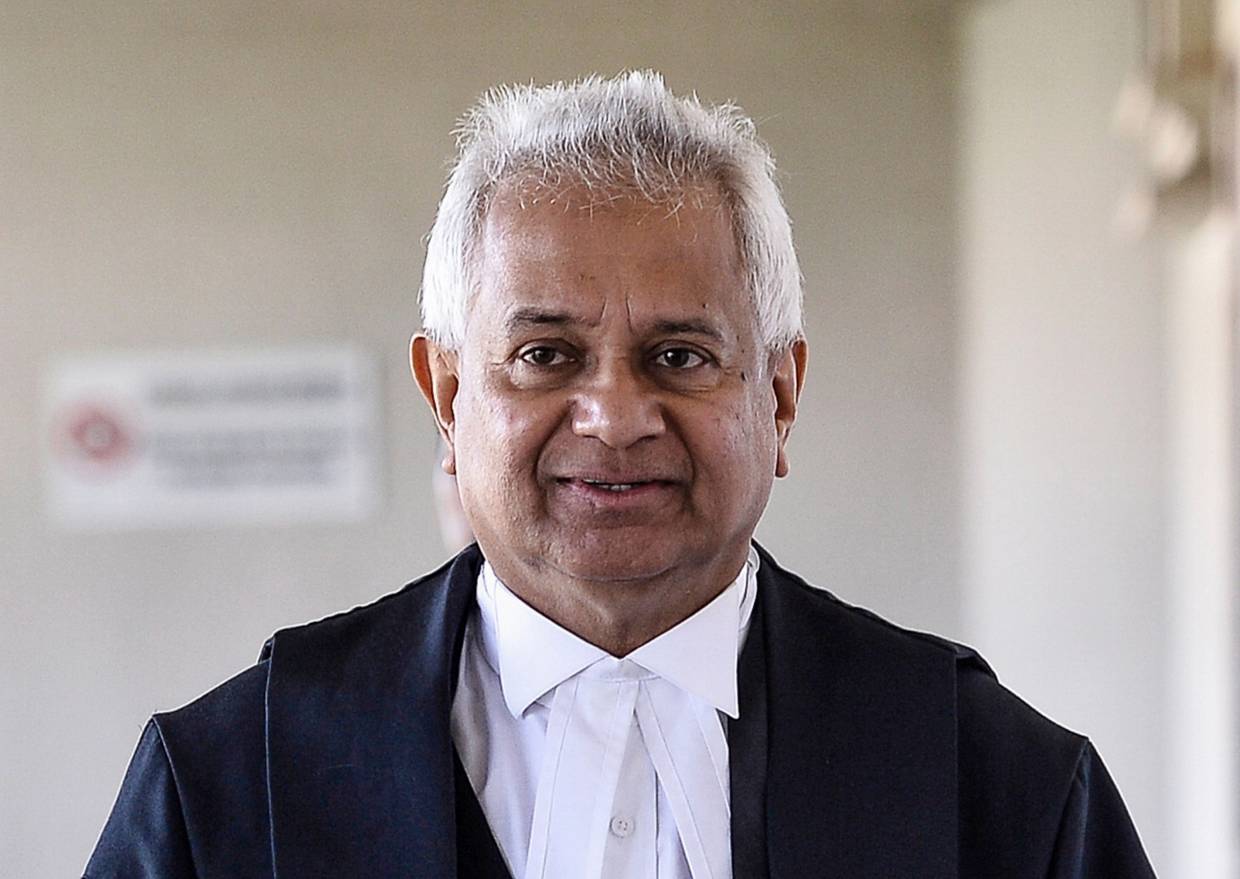
However, Pandikar’s point was challenged by former attorney-general Tan Sri Tommy Thomas.
“Standing Orders are subject to the federal constitution, which is supreme.
“Act 43(4) – if the prime minister ceases to command the confidence of the majority of the members of the House of Representatives, then, unless at his request the Yang di- Pertuan Agong dissolves Parliament, the prime minister shall tender the resignation of the cabinet.
“The only way to test it is in the elected lower house. It is always tested with a motion of no-confidence, which speakers in all other Parliaments will place on the floor.”
Pandikar was speaking at a webinar titled “Emergency, Democracy and The Rule of Law” hosted by Sekhar Institute and The Vibes today.
Other panellists are Thomas, PKR vice-president and information chief Datuk Seri Shamsul Iskandar Md Akin, DAP Youth chief and Perak exco Howard Lee, as well as actor, producer and social activist Datuk Afdlin Shauki Aksan.
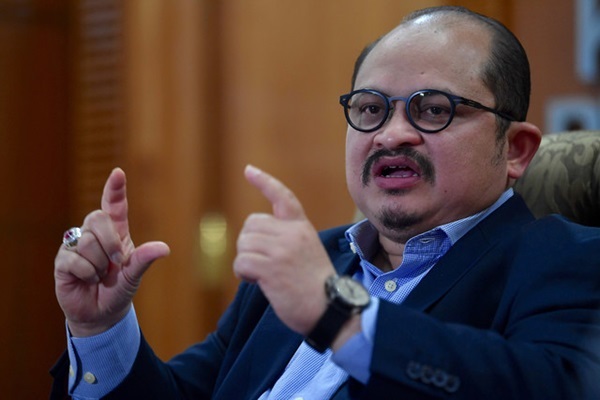
Shamsul Iskandar said Malaysia has to return to the Rukun Negara, which was created to bring about harmony and unity among the races after the racial riots in 1969.
“When we focus on education from the very beginning, we can move out from this cocoon of racism.
“There is a stark difference between nationalism and national unity. That is what thinkers, such as Roger Scruton said: nationalism will erode the democratic dynamics in the country.
“Rather, he suggests people from various races go through the national unity process via education to find a national identity.”
Lee said the real contention is not one of race or religion, but of class and economic gaps.
“When people feel angry and dissatisfied, the mind is subject to a lot of propaganda that leads you to be angry about something.
“In this country, it is usually directed to ‘the other’ race or religion, when the real ‘other’ is the gap between the rich and the poor.
“Like what is happening on the ground now, people will start to see the problem that it is not about people of another race, as they are equally hungry.”
In recent times, some Malaysians have taken to social media to share their plight, while civil society groups are calling for donations, as more families reach out for help. – The Vibes, July 3, 2021