
KUALA LUMPUR – Following an environmental impact assessment (EIA) report on a bauxite mining project slated for Bukit Goh in Kuantan, Pahang, concerns have been raised regarding the endangered Malayan tapirs near the area.
The EIA carried out by KenEp Consultancy & Services Sdn Bhd states that 16 mammal species have been recorded near or within the vicinity of the project site, and highlights the possibility of 27 other mammal species in the area.
The report said five of the mammals are categorised as totally protected, while six are classified as protected.
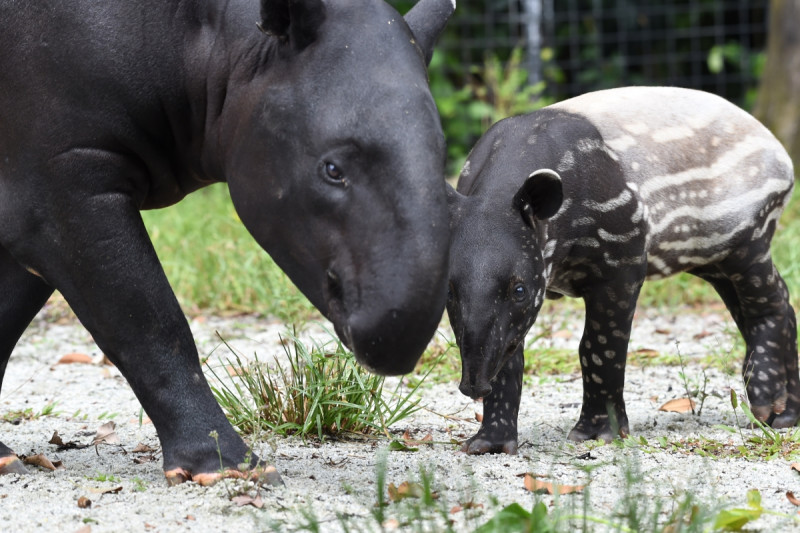
Only one mammal is listed as endangered according to the International Union for Conservation of Nature Red List of Threatened Species – the Malayan tapir.
“The Malayan tapir was sighted one night at the Bukit Kuantan Forest Reserve, bordering the proposed project,” read the EIA.
“Only one was encountered, and upon sighting, the shy and harmless mammal moved away further into the forest.
“There were also footmarks and faeces noted some hundred metres away, but only within the forest reserve, none in the areas within the proposed project.
“However, it is possible that more than one Malayan tapir is present.”
The report acknowledged that although the Bukit Kuantan Forest Reserve is not involved in the project, it may still be affected by land encroachment for timber and planting.
Traffic could also pose a threat to fauna in the area, it added.
“Mining may cause some species, especially those trying to escape, to cross the road and stand the risk of becoming roadkill.
“The Malayan tapir, which was sighted at night at the Bukit Kuantan Forest Reserve bordering the (north side of) the proposed project, is a very (critically endangered) species (that could) become roadkill.”

KenEp in its EIA report proposed mitigation measures to combat any habitat or fauna loss, including a recommendation for BG Mining Sdn Bhd – the company awarded with the project – to collaborate with the Pahang Forestry Department.
“Among the things that could be considered is to have suitable fencing and maintenance along the perimeter of the forest reserve to stop encroachment, and better protect its biodiversity, resources and inhabitants.”
KenEp also recommended that BG Mining appoint an “experienced and knowledgeable” wildlife officer to conduct “fauna management” before and during mining activities.
This officer must also brief site workers on matters involving wildlife, and remain in contact with the Wildlife and National Parks Department (Perhilitan).
“The rescued wildlife and fauna are to be relocated to suitable and secure habitats with Perhilitan’s assistance or advice.
“Costs incurred for the rescue and relocation, especially for the Malayan tapir, is to be borne by the proposed project proponent.”
Former Malaysian Nature Society president Tan Sri Salleh Mohd Nor, who commented on the matter, said it is of utmost importance for the state government to ensure the EIA recommendations are followed for the protection of flora and fauna around the site.
As to whether tapirs in the area are at risk, he pointed out that the species is shy and will most likely run away from any noise pollution.
“Tapirs are shy and will run away if there are any loud noise. This is similar to other animals, too.
“It is possible that they could also end up running into roads, but if the forest reserve is big enough, maybe not,” he said when contacted.
Persatuan Alam dan Warisan Bukit Fraser chairman Nik Jassmin Hew said placing a fence may prevent animals from entering the mining site, but having the project close to a forest may prove detrimental.
“Anything like that (bauxite mining) that is in close proximity to nature is obviously not good for the habitat.
“So, my opinion is that if it’s anywhere near a forest reserve, the wildlife will be affected.
“Additionally, it is not only the fauna that is of concern, as the flora in a forest reserve could also be affected,” Jassmin told The Vibes.
According to the EIA report, the Pahang government has approved a 3,642ha bauxite mining project by BG Mining at Bukit Goh.
The report raised concerns beyond threats to wildlife, including negative impacts on the environment, such as soil erosion, air pollution and hydrological changes. – The Vibes, July 14, 2021