
KUALA LUMPUR – The government’s surprise announcement on Monday of the retroactive revocation of all emergency ordinances effective July 21 has courted brickbats and questions on why the decision was not made known earlier.
There are accusations that the Perikatan Nasional administration’s move is part of its political scheming to forestall the opposition from criticising it over the emergency imposed in January to stem Covid-19.
Following the announcement – and voices of indignation from MPs in the Dewan Rakyat – how does the decision fare in the intrinsic eyes of the law itself?
Legal experts told The Vibes that the decision to revoke the ordinances via powers provided for under Article 150(3) of the federal constitution is, in fact, unlawful.
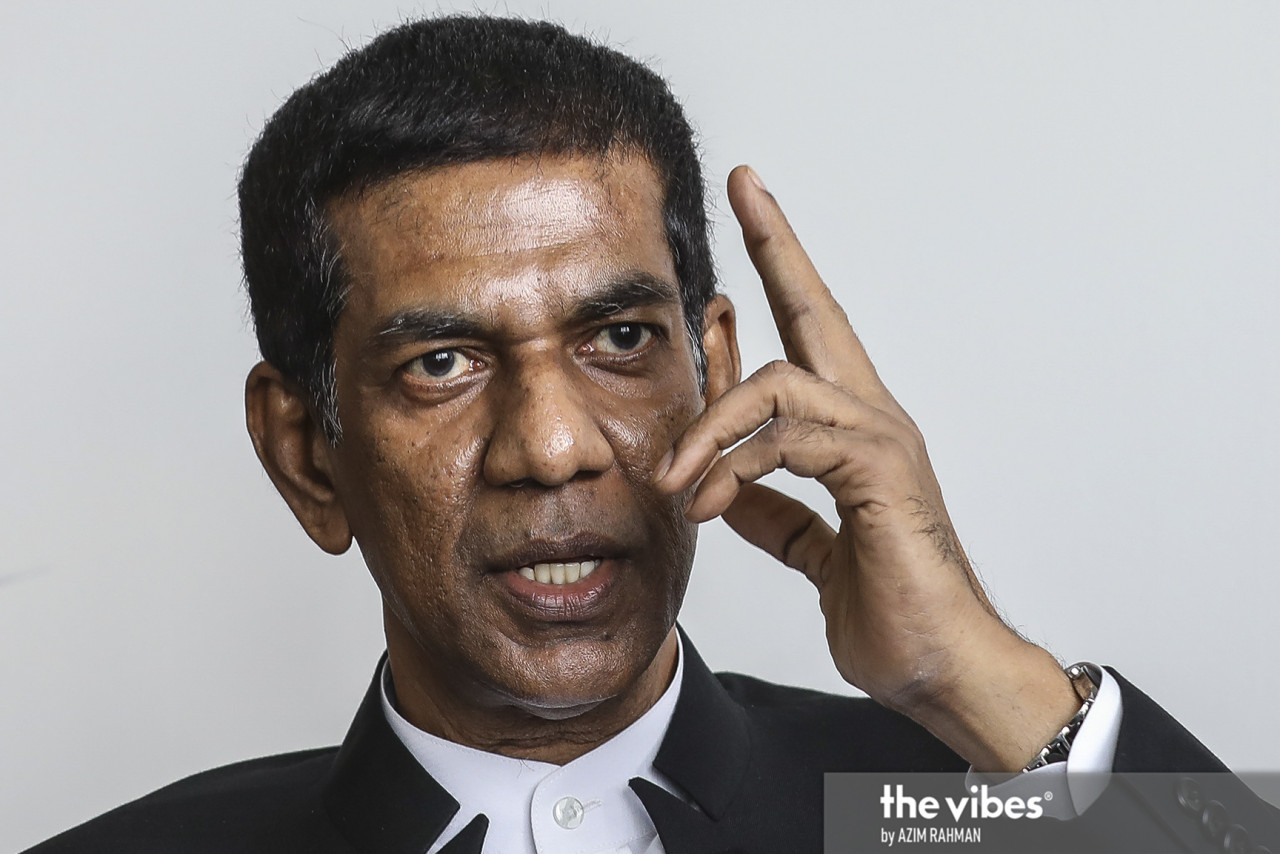
Lawyer Datuk Seri Jahaberdeen Mohamed Yunoos said the government’s decision, which had been kept secret for days, is peculiar and lacks transparency.
“The point is, if it (the revocation) is not gazetted, the ordinance is still valid.
“Another question is, who revoked it? The government or Agong?”
He pointed to Section 11 of the Emergency (Essential Powers) Ordinance 2021, which states that the cabinet holds executive powers.
“The ordinances are now revoked, but the proclamation of emergency still exists until August 1. Who then is the government since Clause 11 is no more?”
Law Minister Datuk Seri Takiyuddin Hassan told the House on Monday morning that the government has decided to revoke all ordinances under the emergency proclamation.
He also said Putrajaya will not advise Yang di-Pertuan Agong Al-Sultan Abdullah Ri’ayatuddin Al-Mustafa Billah Shah to extend the emergency beyond its scheduled end on August 1.
After he was blasted by numerous MPs, Takiyuddin revealed that the revocation of the six ordinances was backdated to July 21.
Senior lawyer Datuk Seri Rajan Navaratnam highlighted the importance of Article 150 of the constitution with regard to the matter.
Under Article 150(2B), the king may promulgate ordinances if His Majesty is satisfied that they are required during an emergency, while Article 150(2C) states that they shall still be in force until they are revoked or annulled.
“But what is of significance is that under Article 150(2B), it specifically states that it can be revoked or annulled only under Article 150(3),” said Rajan.
Simply put, Article 150(3) provides that proclamations of emergency and ordinances must be brought before both houses of Parliament, and shall cease to have effect if a resolution is passed to annul the said proclamations.
.jpg)
“Therefore, Article 150(3) has two crucial implications,” said Rajan.
“First, the proclamation of emergency itself that was made under Article 150(1), and the ordinances made under Article 150(2B), shall be laid before both houses of Parliament.
“In the legal sense, it is mandatory for the proclamation of emergency and the ordinances promulgated to be presented before both houses of Parliament.
“Secondly, any revocation of the ordinances, if done sooner before the ordinances are laid before the houses of Parliament, can only be done by the Agong and at the same time the Agong also has the power to promulgate any other ordinances.
“Alternatively, they could be revoked through Parliament after the proclamation of the emergency and the ordinances have been laid before both houses of Parliament,” Rajan added.
Similarly, he said, under the ordinances themselves, the law provides that they must be laid before Parliament.
“The Federal Government Gazette for Emergency (Essential Powers) Ordinance 2021 and the Emergency (Essential Powers) (No. 2) Ordinance 2021 both specifically state that the ordinances are to be laid before Parliament in accordance with Article 150(3) of the constitution.”
Lawyer Datuk Gurdial Singh Nijar, too, suggested that Putrajaya’s revocation of ordinances is unlawful.
The person responsible for making ordinances under the state of emergency has the power to revoke the law as well, he said.
“In this case, it is the Agong, although on the advice of the prime minister.”
When it comes to revoking such laws, it must be done before or at the time of revocation, he said.
“If this process is not followed, any such revocation is unlawful.” – The Vibes, July 28, 2021