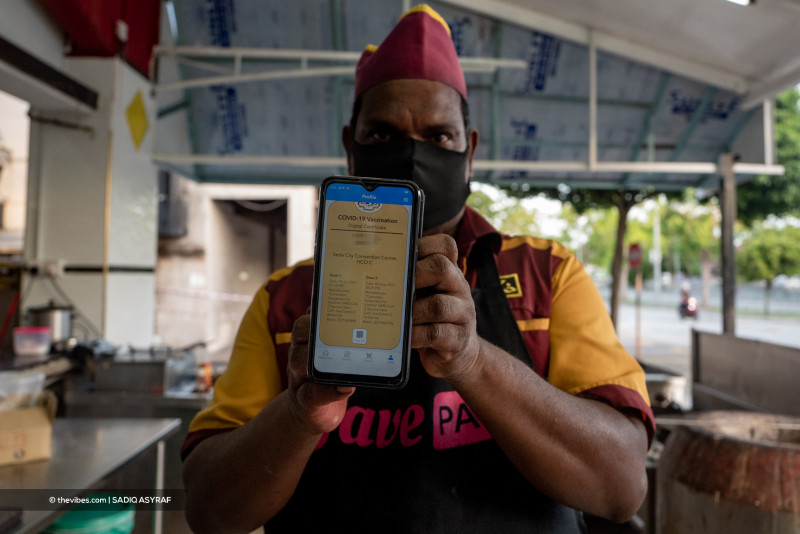

KUALA LUMPUR – If you think you can finally “lepak” at your favourite mamak following the easing of movement restrictions, think again.
Food and beverage associations are torn over the government’s move to loosen curbs for states under Phase 2 of the National Recovery Plan (NRP) amid calls for dine-ins to resume.
Malaysian Indian Restaurant Owners’ Association president J. Suresh told The Vibes that now is not the right time to relax the standard operating procedures for individuals fully vaccinated against Covid-19, as the country is still seeing a five-figure infection tally each day.
“I feel it’s not the right time because there are so many cases and deaths every day.
Earlier, we sent in requests for the government to allow dine-in when cases were still in the 3,000-4,000 range. But with the surge in cases now, I feel it’s not the right time to do so.”
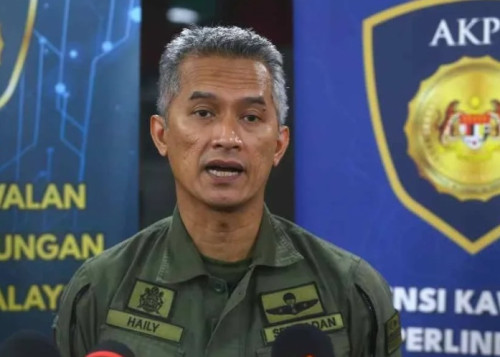
Prime Minister Tan Sri Muhyiddin Yassin on Sunday said fully vaccinated individuals in states under Phase 2 upwards are allowed to dine in at restaurants.
States and territories currently under Phase 1 are Kedah, Selangor, Kuala Lumpur, Putrajaya, Negri Sembilan, Melaka and Johor. Penang, Perak, Pahang, Kelantan, Terengganu and Sabah are in Phase 2, while Perlis, Labuan and parts of Sarawak are in Phase 3.
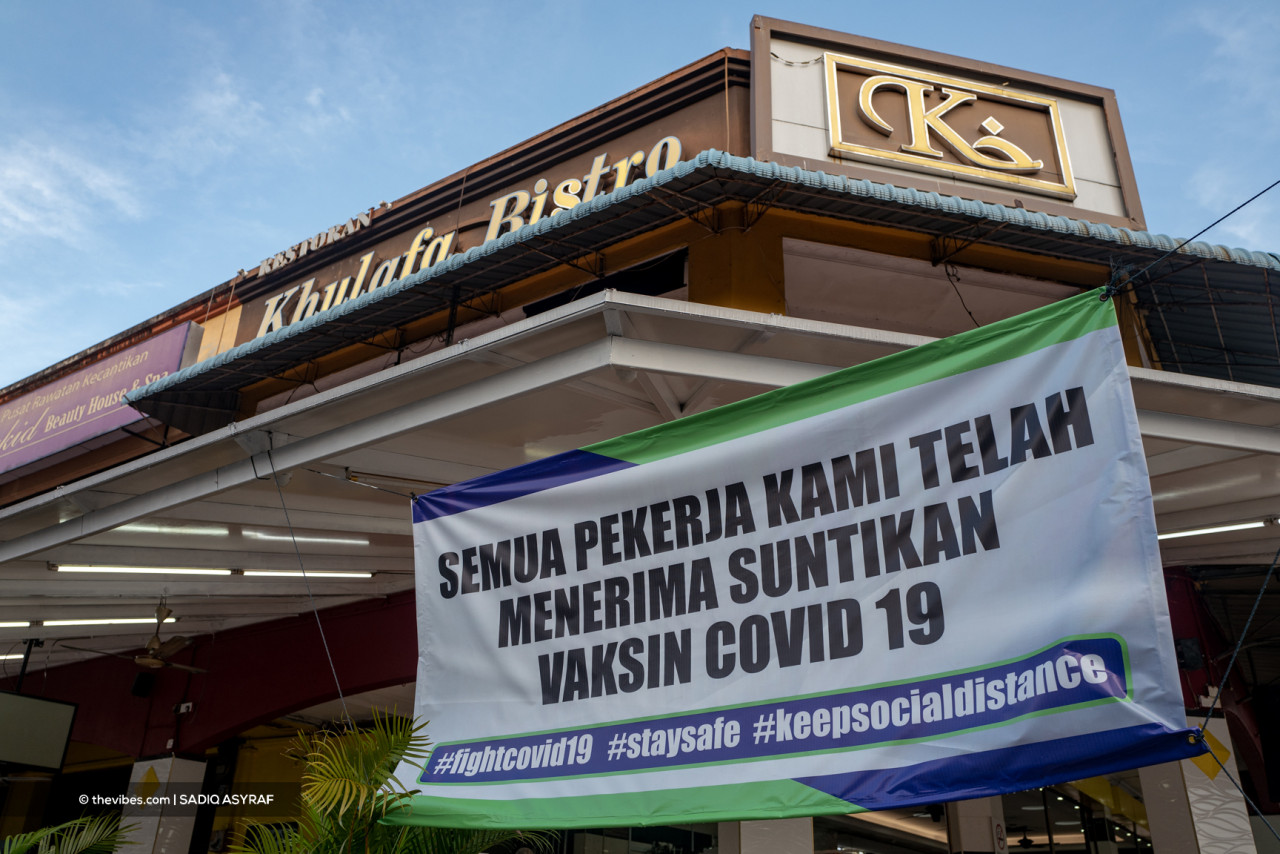
Suresh said the decision to ease restrictions will worsen the situation faced by many eateries struggling with a lack of employees, as many migrant workers have returned to their home countries.
“If restaurants reopen for dine-ins, they need to worry about paying a very high salary, and this will affect customers.
“This relaxation has come too suddenly. It is not easy for owners to cater to dine-in now as they need to hire new employees. They need workers to be on standby at the door to check patrons’ vaccination certificates.”
Matter of survival, not profit
The Malaysian F&B Operators’ Alliance, meanwhile, expressed delight that dine-in has been given the green light, after having long lobbied for it.
Spokesman Joshua Liew said the loosening of restrictions is a lifeline for outlets on the brink of closing for good.
“Life has to go on. We know that cases have gone up, but it is not because people are dining in at restaurants.
“We have, over the past 18 months, seen that cases involving F&B joints are very low – in fact, among the lowest. The clusters are happening at workplaces. That has been shown according to official statistics.
At least with dine-in allowed, we will have more opportunities to start paying rent and salaries, the biggest chunks (of expenditure for) F&B establishments. I don’t think we will make a profit until the end of the year.
“Hopefully, we will be able to slowly climb out of this situation. We are truly stuck between a rock and a hard place these days.”
However, he said, the alliance of more than 800 operators nationwide is apprehensive as they have to shoulder more responsibilities to ensure customers comply with the SOPs.
“As proper, licensed F&B operators, we have had SOPs in place with regard to cleanliness and safety even before the pandemic. It is something we are used to, just with extra precautions (now) to ensure customers abide by the strict SOPs,” said the co-founder of Espressolab Asia Pacific Sdn Bhd.
This could be an ‘open door’ for enforcement officers to have their own interpretation of the SOPs. These officers could pick on the smallest things possible, and that’s dangerous for us.”
‘Lepak’ no more?
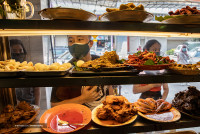
Although fully vaccinated folk can once again enjoy dine-ins, Malaysian Indian Muslim Restaurant Owners’ Association (Presma) president Datuk Jawahar Ali Taib Khan said “lepak”, or hanging out at mamak eateries, will likely no longer be a culture among Malaysians.
“People are already used to takeaway. Even if they were to dine in, they would come in just for their teh tarik and roti canai. They won’t spend more than 20 minutes.
No more ‘lepak’ culture like those days, when they would bring their laptops and spend four to five hours at the mamak. Everyone is afraid these days. No one will bring their family to ‘lepak’ any more.”
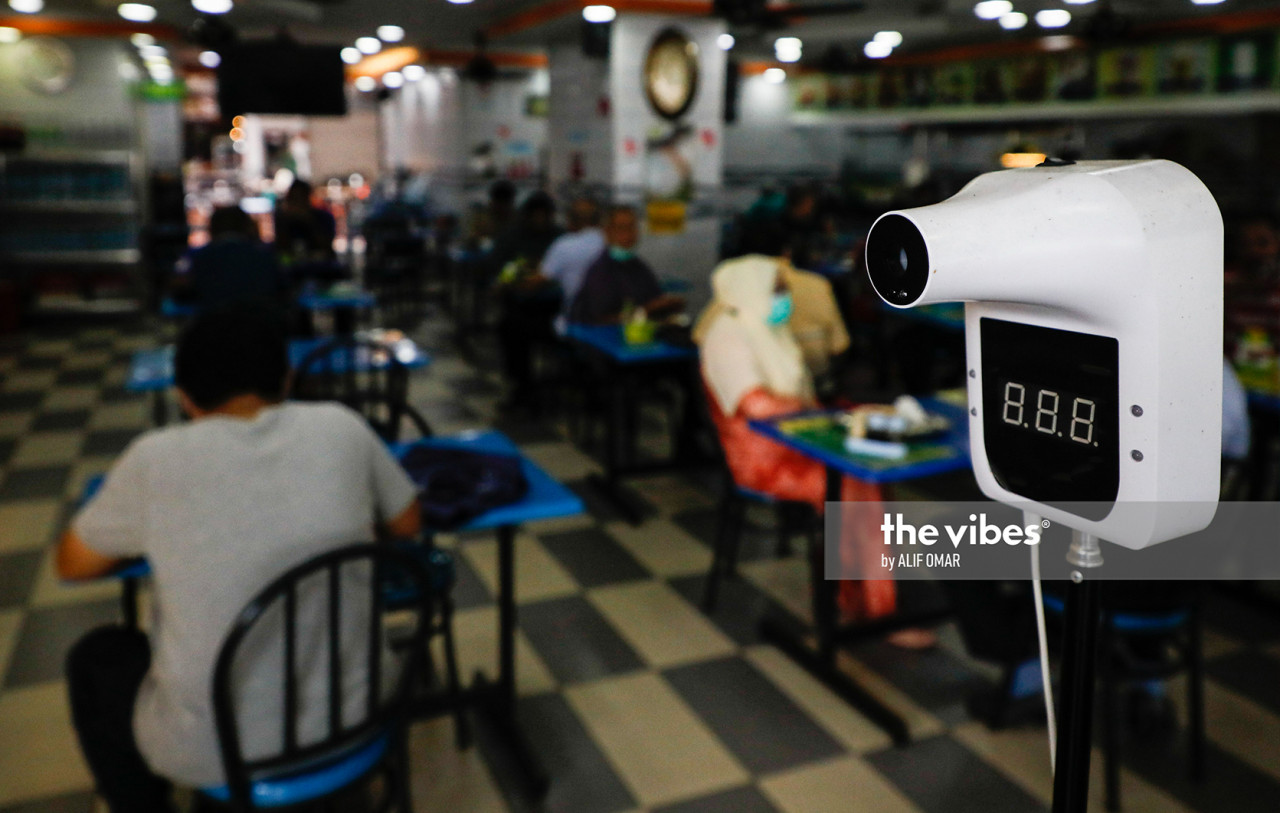
He said association members located in Phases 2 and 3 states are opting to “wait and see” until more of their workers are fully inoculated.
“We are also concerned about the well-being and safety of our workers. Most of our employees in Phases 2 and 3 states have received only their first dose of the Covid-19 vaccine.
“Presma has 4,500 members and 12,500 restaurants all over Malaysia.
“Vaccination must be sped up for restaurant workers. All staff must be fully vaccinated; they are also frontliners.” – The Vibes, August 12, 2021