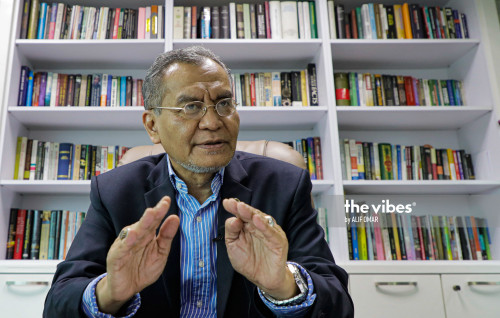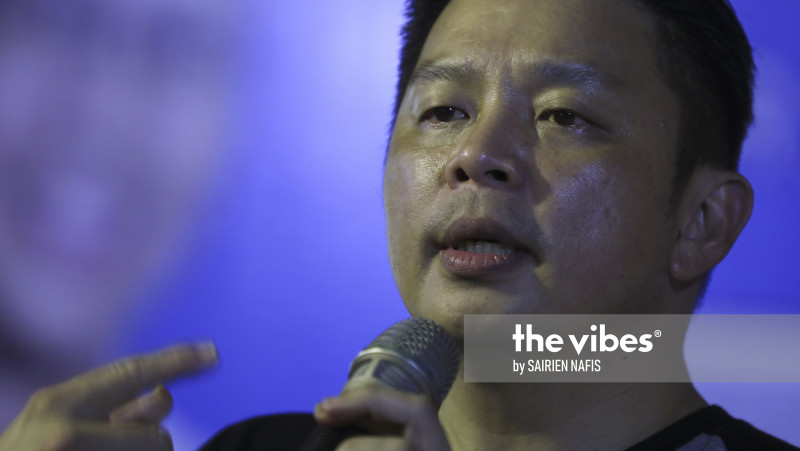

KOTA KINABALU – The revised Malaysia My Second Home (MM2H) programme will put Sabah at a further disadvantage to woo foreign investments and create jobs, said Warisan deputy president Datuk Darell Leiking.
The former international trade and industry minister said the state was already at a disadvantage due to the lack of investment enablers such as poor logistics, high tariffs for electricity, energy and an unstable water supply.
The higher requirements under the revised MM2H plus the infrastructure issues in the state will pose more challenges for Kota Kinabalu to resuscitate an ailing economy while creating job opportunities.
“If the state government’s priority or ‘halatuju’ for the post-Covid-19 era is to provide employment through investments by foreign investors and multinational companies (MNCs), then we will need these skilled expatriates, especially, in the mid and high-tech manufacturing sector.
“For instance, local graduates do not possess the experience acceptable to these investors especially in terms of operation and thus, skilled expatriates are needed to show our local graduates how to do things,” he said in a statement today.
Furthermore, Leiking said that it is the norm for expatriates to bring their families along while they work here and will require homes.
Unfortunately, the RM40,000 monthly income cap under the new MM2H criteria will make it difficult for Sabah to promote the state as an investment haven.
Previously, the requirement for monthly income was RM10,000. The revised amount is an increment of 300%,” he said.
He also disagreed with the Home Ministry’s reasoning that the revision is necessary to reduce the influx of migrants working in the country as reported by an online portal news.
“The MM2H itself tells us that it relates to expatriates and not the millions of illegal immigrants or unskilled Bangladeshi, Myanmar or Indonesian workers coming in throngs to Malaysia.
“I don’t know if the presence of skilled expatriates has caused competition for the local graduates in terms of job security in health and education sectors but my opinion is they are not in the industry or manufacturing sectors,” he said.
Leiking also said that the GRS-led state government must show its assertiveness over the MM2H review which he believes will potentially cause Sabah great economic loss in the long run.
He pointed out that as one of the top tourism destinations in Malaysia, Sabah is poised to become the “perfect tropical paradise” for expatriates, especially those from colder climates who want to enjoy their golden retirement years.
The former minister stressed that Putrajaya must realise the importance of MM2H residents, describing them as “unofficial tourism ambassadors” who can help promote Sabah to their family and friends abroad, which in turn will boost its tourism industry.
“The same will be for future investors who can bring in industries and new technological investments into Sabah especially when we have a conducive and safe business environment and therefore, can future-proof our industries and start-ups,” he said.
Leiking said Malaysia must offer a good package to these expatriates to entice them to come and stay here, which was the original intention of MM2H.
He pointed out that the biggest losers from the reviewed MM2H will be local developers who are already facing a hard time during the Covid-19 pandemic.
“We need to realise that they need to continue building and selling mid and high-rise properties for a meagre profit while at the same time, continue providing employment to those either directly or indirectly related to the construction sector,” he said.
In order to address the adverse impact of Putrajaya’s decision regarding MM2H, Leiking proposed that the Sabah state government come up with its own “second home” programme.
Coined as “SabahMy2ndHome”, the Penampang MP said that this state-level initiative should not be dictated by the federal administration. – The Vibes, August 26, 2021