KOTA KINABALU – Sabah and Sarawak could have ended up in someone else’s hands and not the Federation of Malaysia – twice.
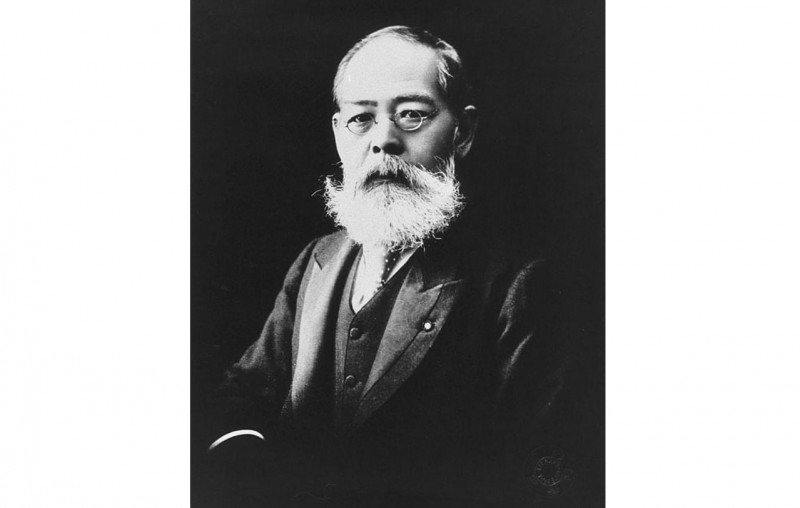
Sabah – then known as North Borneo – had its first opportunity during the proposed acquisition by Viscount Aoki Shuzo between 1879 and 1893.
Shuzo was a diplomat and foreign minister in the Meiji period, who studied Western science and medicine in the Japanese city of Hagi. He was born to a Samurai clan, and was the son of a physician in the Yamaguchi prefecture.
After medical training in Nagasaki, he was sent by the clan to study in Germany in 1868 and entered the Foreign Affairs Ministry in 1873. He served as first secretary at the ministry, and was then appointed minister in Germany. Subsequently, he held various offices, including being a minister to Austria and Holland.
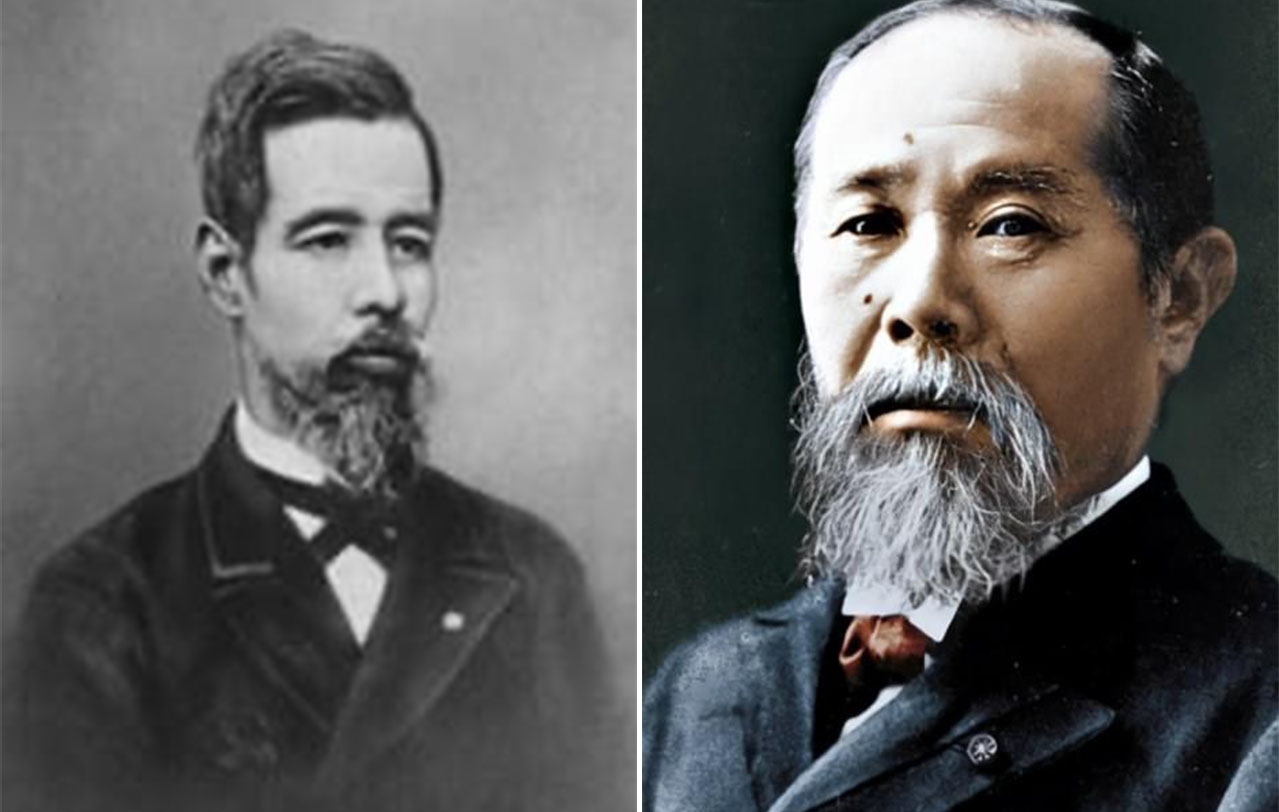
In a letter dated December 5, 1893, Shuzo wrote to the then Japanese foreign minister Munemitsu Mutsu, proposing in 1879 to Hirobumi Itoh (home minister) and Count Kaoru Inoue (foreign minister) to purchase North Borneo from Austrian Baron Von Overbeck for the sum of one million silver yen.
But Itoh and Inoue declined, and thus, North Borneo came under British rule and the British North Borneo Chartered Company (BNBCC) was established to administer the territory in 1881.
But that did not stop Shuzo.
When the BNBCC was in charge, it incurred heavy losses and Rajah of Sarawak Charles Brooke made a bid to take over the territory.
Brooke had proposed the payment of 1% as dividend to shareholders and the handing over of a third of the revenue collected from North Borneo, which was to the tune of £210,000 a year.
BNBCC shareholders rejected the offer in February 1894. It was during negotiations between Brooke and the BNBCC that Shuzo made a second attempt to acquire North Borneo.
Shuzo then visited London to look into the feasibility of acquiring North Borneo.
North Borneo’s geographical position contributed to Japan’s commercial and military purposes.
Shuzo also believed that the British government was unlikely to present any obstacles to the purchase of North Borneo as the sale would not be a great loss for it.
Besides, Japan, unlike other European countries, was not in competition with Britain.
In 1893, the BNBCC unofficially offered North Borneo to Japan for £500,000 and Shuzo, who was in Berlin at the time, sent a telegram to diplomat Count Mutsu Munemitsu, stating:
Are Imperial Government inclined to buy Territory of North Borneo Company for value within £500,000 in order to make a Japanese colony thereof. If so I will negotiate with the British Government regarding cession of its sovereign right. Area thereof is about 1/3 of Japan. An early decision is required.”
Munemitsu then brought this to then Japanese prime minister Hirobumu Itoh. Itoh instructed Munemitsu to file a report on sovereignty, area, vegetation, suitable crops and others.
Munemitsu submitted the report on December 9, 1893.
At the same time, then Japanese consulate-general Ohgoshi in Shanghai, China, who was in the know about the arrangement, noted that the BNBCC would sell North Borneo if the Japanese government could guarantee a 5% annual dividend or agree to make a full payment of £500,000.
The Japanese government later backed out of the deal due to its financial problems.
The second attempt
Sabah and Sarawak could have gained independence as early as 1957.
At the time, Sabah came under British rule after World War II and the colonists had other plans for the East Malaysian territories.
The governors of North Borneo and Sarawak proposed over the radio the formation of the Northern Borneo federation in 1957.
Governor of Sarawak Sir Anthony Abell in July 1957 said it was better for the three Borneo territories – Brunei, North Borneo and Sarawak – to be unified.
Abell said it was better for the three Borneo territories to “work out their own salvation”.
Meanwhile, North Borneo Governor Sir Roland Turnbull said: “For five years, an inter-territorial committee has met at regular intervals to consider the application in practice of policy that has always been assumed, that the three countries (Brunei, North Borneo and Sarawak) should work together.”
“Three inter-territorial departments or ventures had been successfully established, namely common currency, judiciary, geographical survey and the civil aviation organisation.”
On July, 7, 1958, Turnbull and Abell, via the Radio Sabah and Radio Sarawak broadcast, came out with a basic outline of the unification of Sarawak, Brunei and North Borneo as a federation.
The outline was the formation of a loose federation where the three states would continue to exist, retaining their autonomy, revenue and expenditure powers.
The central government would control defence, external relations, communications and internal securities.
However, the outline was mostly expressed for Sarawak and North Borneo, the status of the two territories being British colonies, while Brunei was a British protectorate.
State control over the budget was clearly a concession to Brunei but the federation would not mean that Brunei money would be shared with North Borneo and Sarawak.
The head of the proposed federation structure would be a governor-general or a governor, who would be the high commissioner for Brunei with the aim to create a viable political unit that would be able to stand on its own feet once independence was ultimately granted.
The proposed Northern Borneo federation has several interesting features, including revenue and expenditure being state matters, how the central government would function, that the head of central government was still to be colonial officials rather than local, and that it would have been appropriate to have offered the sultan of Brunei the position of paramount ruler.
Political groups in Sarawak, Brunei and British North Borneo supported the federation, but the Brunei government rejected it and maintained its silence later.
In 1958, during the 9th Inter-Territorial Conference held in Brunei, the sultan of Brunei said that its participation in the conference between the three countries did not mean the federation would be realised.
He had said it was important for Brunei not to be a colony and vital to preserve the country’s position as a British protectorate.
The announcement killed all hopes for the proposed Northern Borneo federation. – The Vibes, September 16, 2021
From the collection and resources of Shari Jeffri