
KUALA LUMPUR – For the country’s economy to return to full employment with an unemployment rate of 4% by 2025, the government needs to shift its current capital and labour-intensive economic model to one that is tech-driven, said an economist.
Meanwhile, another economic expert is of the view that the unemployment rate should be about 3% to 3.3% for the country to be in full employment status.
Speaking to The Vibes, Universiti Malaysia Sarawak’s Datuk Madeline Berma said that it will not be a walk in the park for the government to tackle this matter as unemployment is a systemic issue.
“Unemployment is an existing problem and it is largely due to the current economic model, which is more focused on production rather than productivity.
“The economic growth has to be very rapid. Projected economic growth, which is about 5% to 6% in the next five years, may be able to reduce our unemployment issue to 4% and sustain it at that level.
“However, the issue here is not just about unemployment, but also about creating decent employment.
“Decent employment is where our graduates find that they are willing to work in such environments and not the 3Ds – dirty, dangerous, difficult.
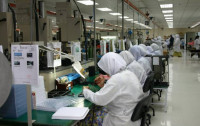
“What the government needs to do now is shift to a technology-based economic model to create better jobs that can create decent employment and a decent income,” said Berma.

She said the problem faced by the nation is that occupations created in the plantation and labour industry in the country are meant for foreigners.
Meanwhile, Bank Islam chief economist Mohd Afzanizam Abdul Rashid believes that technology can pave the way in achieving the five-year 12th Malaysia Plan (12MP).
“There’s a need for quality education where technology is at the forefront. This would also mean relooking teaching methods and syllabus.
“Basically, we want to mould youth into what they want to be and align them with what skill sets the country needs to reach a better state.
“As for adults, entrepreneurship is the key. This is given the fact that large corporations are not expected to be on ‘hiring spree’ mode. I think focusing on micro SMEs (small and medium enterprises) is the right thing to do,” Afzanizam told The Vibes.
Impossible to eradicate hardcore poverty
On Putrajaya’s aims to end hardcore poverty by 2025, Berma said that the government should focus on alleviating it instead.

“The most important thing is that there is political will to alleviate poverty rather than eradicating it because poverty has been in Malaysia for a long time.
“From the 1970s to the 1990s, we succeeded in reducing poverty.
“However, it takes some time and a lot of commitment, and the government needs to allocate a lot of money to make it happen.
“There needs to be a lot of commitment from the government, it’s not just lip service,” she said.
The government will need to engage with both government and semi-government officers to help with this plan, she added.
“The government should engage non-governmental organisations (NGOs) to participate in this effort, as well as the community.
“The community needs to work with the private sector, and government-linked companies should be encouraged to contribute a certain amount or allocation to help the plan.”
Do hardcore poor individuals know the existence of financial assistance?
On the other hand, Afzanizam said one of the main challenges is the flow of information, especially regarding the government’s financial assistance programmes.
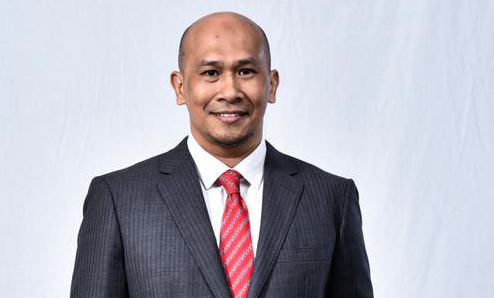
“How much do hardcore poor individuals or households know of the existence of such aid?
“If they do, what is their appetite to advance themselves? What are the skill sets we should equip them with?
“So, there is a nitty-gritty that needs to be addressed to ensure that low-income groups are able to enjoy higher income by 2025,” he said.
He added that ministries and agencies responsible for such aid need to be streamlined and, ideally, a one-stop centre for low-income groups should be established.
“We also need to keep track of the utilisation of the aid. By doing so, we will know the direction and whether it is an effective instrument. This will help if there is a need to make adjustments.”
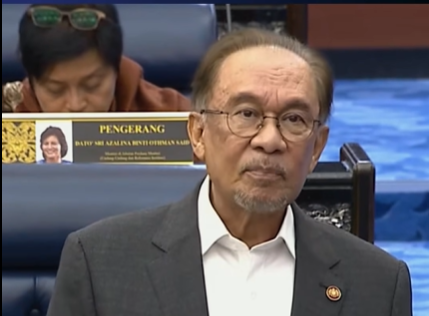
The 12MP was tabled by Prime Minister Datuk Seri Ismail Sabri Yaakob in the Dewan Rakyat on Monday.
With a development expenditure allocation of RM400 billion, four catalytic policy enablers and several bold innovative actions, the five-year plan is crafted to restore economic growth, address socio-economic challenges and enhance national competitiveness to be a more resilient and sustainable player on the world stage. – The Vibes, September 30, 2021