.jpg)
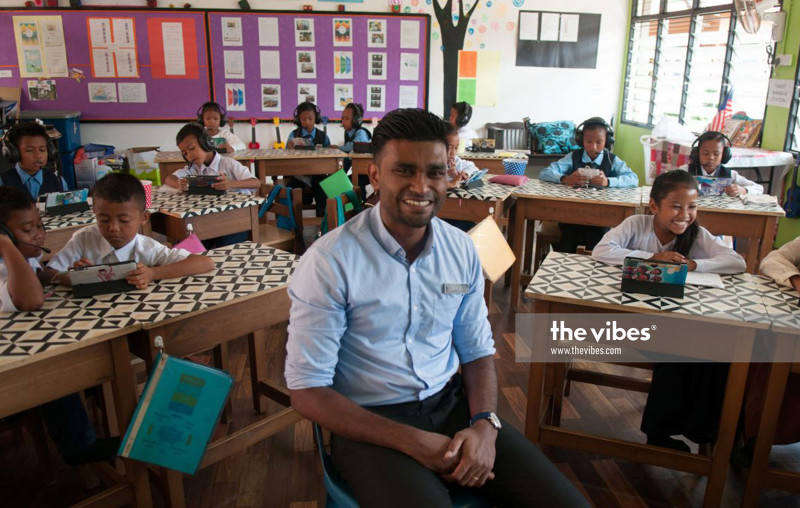
THE Global Teacher Award by the Varkey Foundation is presented annually to an exceptional teacher who has made an outstanding contribution to students and their community. And one of our very own, Samuel Isaiah, from Kuantan has become Malaysia’s hot topic when UK comedian and author Stephen Fry disclosed that the rural primary school teacher has been shortlisted into the top 10 out of 12,000 candidates.
Teachers do not take up the profession for the money or to be in the public eye. It is also safe to say that no one goes into teaching with the hopes of becoming the next international star.
Everything from beginning to end is centred on the students – or in school jargon, it's all "student-centred". But what about educators who apply for the Global Teacher Prize, such as Samuel? Wouldn’t he be one of the many applicants who romanticises the vocation as mentioned?
It is easy at this stage of the nomination to see the prize money of RM4.3 million, the hype around Samuel and think that he did it for the fame and money; but the real challenge was during the application process.
On top of his day job and personal studies, Samuel logged several hours to write 10 additional essays in order to be nominated over thousands of applicants from across the world. He could have given up during the tedious process, but he pulled through because of his convinction that he was doing it all for the benefit of his beloved students.
“I am humbled by the recognition and the accolades, but overall, I go back to why I do this – it’s for the children.” Samuel shared with The Vibes.
As someone who could be sitting in the comforts of his home to complete his fellowship in the United States, Samuel instead decided to use his time to return to his Orang Asli (OA) students in Pahang; travelling 200km daily to enter their village to teach them English.
On his plans with the cash prize if he wins, Samuel shared with The Vibes that he wants to start an OA foundation that caters to their needs in education, with focus on collaboration with the government and non-governmental organisations.
“I've had ideas but with no framework on how to go about implementing it. My recent experience in the US has given me a whole new perspective on how I can implement them.
“The OA have to be central in the decision-making. A lot of times, the policies have been top-down, but we don't put up their views, their identity and their culture in whatever policies we plan for them.”
“The purpose of the collaboration is that most times we are focused on one solution, but there are so many issues that the Orang Asli face. We can make sustainable changes to address all those issues. We need to collaborate, share expertise, and be open and honest with each other.”
For Samuel, the money would not only emphasise the voice of the OA, but also create sustainability where we’re not doing something for them, but with them. – The Vibes, October 30, 2020