KOTA KINABALU – The downgrading of Sabah and Sarawak to mere states under the Federation of Malaysia, when it was originally the union of three entities, was a move that undermined the sovereignty of Malaysia, said a Malaysia Agreement 1963 (MA63) expert.
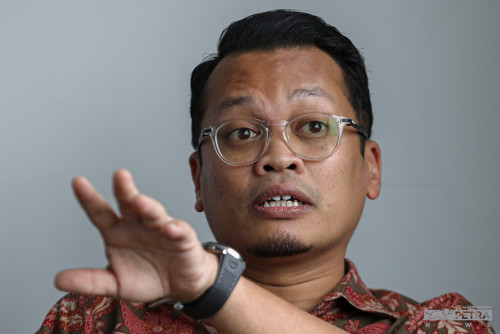
Mick Goviind, a close associate of the late MA63 activist Zainnal Ajamain, said that constitutional expert Datuk Wan Ahmad Fauzi is in the wrong when stating that Sabah and Sarawak joined the Federation to form Malaysia when the invitation came from Malaya itself.
“The fact that Parliament changed the status of Sabah and Sarawak to mere states in 1976 affects the MA63 agreement and inter-government report, two United Nations resolutions and the state constitution.
“In short, it affects the basis of the formation of Malaysia itself, which threatens Malaysia’s sovereignty.
“The real threat to Malaysia’s sovereignty is not restoring the original positions of Sabah and Sarawak, as stated in the MA63, as it is a clear violation of the deal itself,” he said, adding that Sabah and Sarawak did not join Malaysia, but formed Malaysia together in 1963.
Goviind said regardless of the text and historical context, proper linguistic and legal framework on the matter, moves to restore Sabah and Sarawak’s equal status should not to be misconstrued as an effort to undermine the federal constitution.
Towards this end, Goviind said it was the late Tunku Abdul Rahman who mooted the idea of forming the Federation of Malaysia in May 1961 and Malaysia was formed with safeguards to protect the interest of the people in Sabah and Sarawak.
The official invitation, however, came on December 26, 1955, during an Umno General Assembly, a fact Tunku revealed in 1958.
It was from that point onwards that the safeguards slowly eroded, leaving both Sabah and Sarawak as merely two of 13 states in Malaysia, when they are not, he said.
Goviind said Sabah and Sarawak are joint signatories of the MA63 alongside the Federation of Malaya, not with any peninsula states, he said.
He added that Wan Ahmad should also fully understand both the UN resolutions, namely, UN1514 and UN1541, dated December 12, 1960.
He said UN1541(XV) states that a territory can achieve self-government through independence, free association and integration.
UN1514(XV) involves the declaration on the granting of independence to colonial countries and peoples.
Further, Goviind said under UN1514, the principle of equal status is derived from Principle VIII, which states “integration with an independent state should be on the basis of complete equality between the peoples of the erstwhile non-self-governing territory and those of the independent country with which it is integrated”. – The Vibes, October 19, 2021









.jpeg)