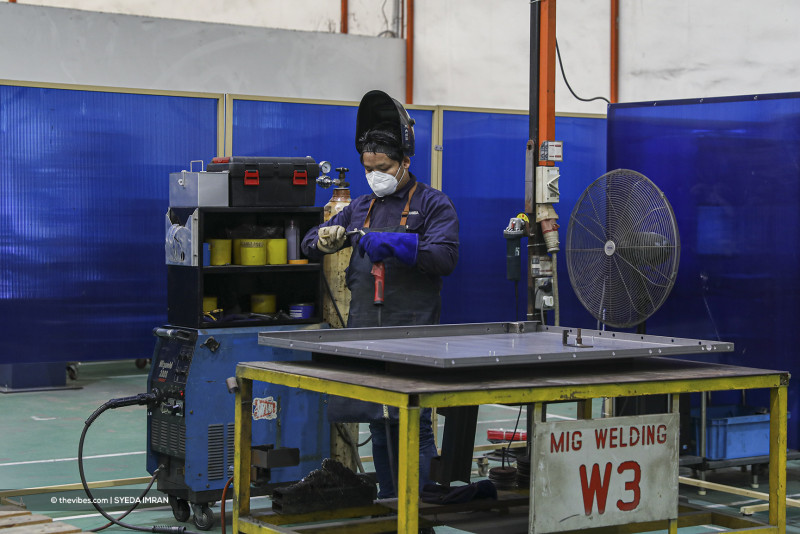

KUALA LUMPUR – The Federation of Malaysian Manufacturers (FMM) has suggested to the government to introduce in Budget 2022 a gradual reduction of corporate and personal tax rates for businesses and individuals affected by the pandemic.
Its president Tan Sri Soh Thian Lai suggested that the government execute a gradual reduction of tax rates for small and medium enterprises to 13% or 15%, or impose a flat rate of 17% on full chargeable income.
Currently, corporate tax rates for resident companies are at 24%, with 17% on the first RM600,000 chargeable income and 24% on the remaining chargeable income.

Speaking to The Vibes, Soh said he hopes a special tax exemption or rebate can be given to companies impacted by the National Recovery Plan’s Phases 1 and 2 due to prolonged business closure, including those in idle mode.
“The economy, and in particular, the manufacturing sector, must continue to be supported as it restarts its recovery journey following recent lockdowns that have had an immense impact on the sector.
“Budget 2022 initiatives will be instrumental in the recovery process of the industry and the economy moving forward.
Manufacturing must continue to be supported as the catalyst of growth, main contributor to exports and main source of demand for output from the other economic sectors.”
Soh said FMM had the opportunity to highlight its recommendations to Finance Minister Datuk Seri Tengku Zafrul Tengku Abdul Aziz at several engagement sessions relating to the Budget, which will be tabled today.
Other suggestions listed included a tax deduction of up to RM100,000 per company for expenses on Industry 4.0 project implementation, aside from increasing the allocation of Industry4WRD Intervention Fund (IF) to RM150 million a year.
“The government should also remove the RM50,000 threshold and the time bar for research and development (R&D) and extend the automatic double tax deduction to all companies, including mid-tier and larger companies, given their potential to spur innovation and creativity.
“Allocate RM100 million to RM200 million to set up a future manufacturing fund to support R&D work and the implementation of R&D by universities and key engineering research centres to support Industry 4.0 adoption and implementation by the manufacturing sector,” he added.
Lift foreign hiring freeze
Apart from that, he said a survey conducted by FMM on the manpower needs found that a total of 252 member companies indicate an overall shortage of close to 22,000 workers.
The top five manufacturing sub-sectors facing manpower shortages are electrical and electronics, food and beverage, chemicals and chemical products, fabricated metal, and rubber products.”
Meanwhile, a separate survey by National Chamber of Commerce and Industry Malaysia on 835 companies revealed that there is a shortage of 77,721 workers in the manufacturing sector.
The data compiled from industry associations, he said, revealed that plantations require 70,000 foreign workers, followed by the rubber glove industry (25,000), furniture (30,000), construction (200,000), manufacturing (25,000), services (45,000) and plastics (6,293).
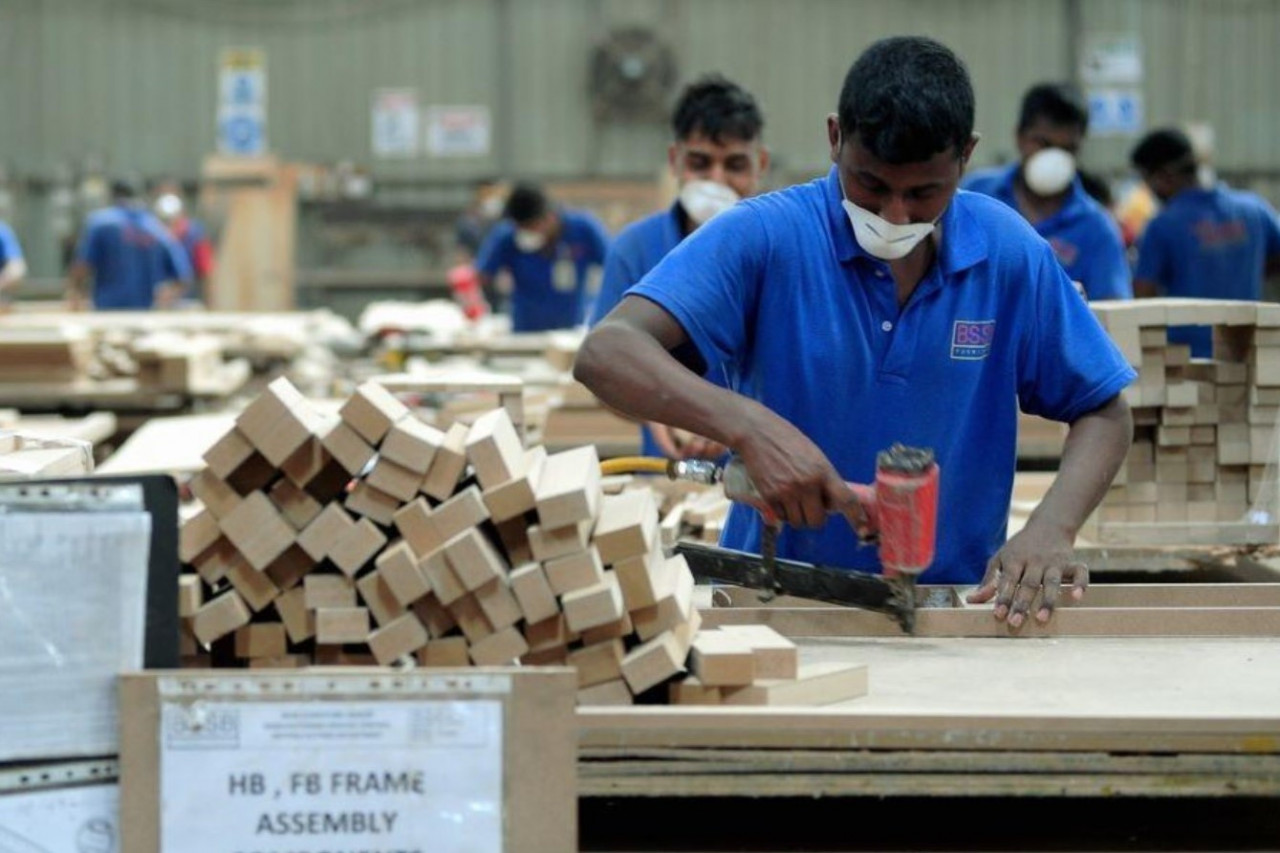
“More often than not, industries have no choice but to rely on foreign workers as locals are not keen on certain jobs, especially in the 3D (dangerous, dirty, difficult) sectors.”
He said the shortage of foreign workers will also impact the ability to fulfil supply obligations as part of global supply chains, given that Malaysia is a key manufacturing and supply chain hub in the region.
“As it is, many of our industries have had their second half of 2021 contracts reviewed during the lockdown period due to their inability to fulfil their order obligations, severely impacting global supply chains.”
Therefore, he called for Putrajaya to lift the hiring freeze on foreign workers as the industries are in dire need of manpower to support their recovery.
“FMM urges the government to act on the plight of manufacturers by lifting the freeze on foreign workers to fill the gaps in the unskilled general worker category as a short-term measure to assist the industries with their business revival, so as to support economic growth for the country.
“The industry is cognisant that in the long-term, concerted efforts have to be taken to reduce the dependence on foreign workers, including structural policy changes that could otherwise impact the competitiveness of Malaysia as it becomes a high-income nation focusing on high technology and high value-added products and services.” – The Vibes, October 29, 2021