KOTA KINABALU – A law currently formulated at the federal level on carbon credit trading could see Sabah lose the opportunity to reap better revenue if the Nature Conservation Agreement (NCA) is not implemented soon.
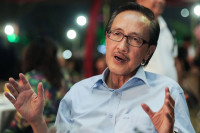
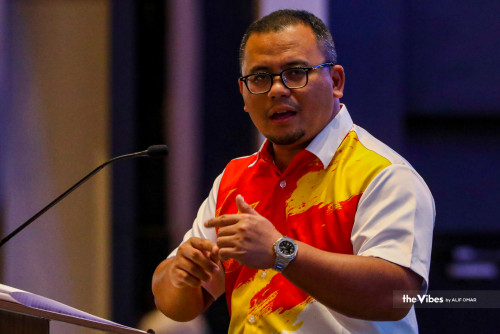
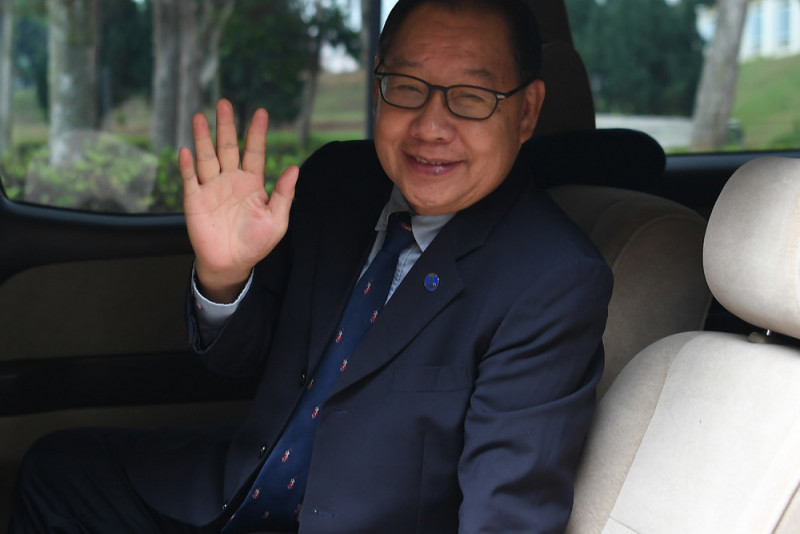
Sabah Deputy Chief Minister Datuk Seri Jeffrey Kitingan said this in issuing a plea for the immediate implementation of the NCA before the new law comes into force.
“Although land and forests come under the state’s purview, if we can lose our oil and gas revenues, then we can lose this one as well.
“There are now moves being devised at the federal level to enact a law to control carbon credits.
“So this is why we need to act fast, do it before the federal government has the overall control,” Jeffrey told The Vibes.
According to Jeffrey, he became aware of the new law during a federal-state governments’ climate meeting, with the federal government planning to establish a central green house body to oversee the carbon trade.
Opposing the federal government’s move during the meeting, he proposed the creation of separate bodies to oversee carbon trading, one each for Peninsular Malaysia, Sabah and Sarawak.
“We want to trade our own carbon.
“I am sure the other states also want to do as well because this is the chance for them to also raise their revenues,” said Jeffrey, adding that data collection can be done nationally because dates can be amalgamated.
Sabah rights not entertained for 58 years
Jeffrey said the NCA is an opportunity for Sabah to raise its own revenue and reduce the state’s dependency on the federal government for development.
“We have to look at this NCA as an opportunity… Our claim for the state rights to be fulfilled for the last 58 years has not been entertained by the federal government.
“As long as we remain dependent, we cannot do anything,” said Jeffrey.
With billions of ringgit in potential revenue coming from the NCA, he said Sabah can raise its own revenue and possibly attain financial independence first before focusing on political unity later.
Jeffrey likened the financial strength and political unity that Sarawak currently enjoys as something Sabah should strive to achieve.
With better financial capacity, we can talk to the federal government on a more equitable basis.
“We now have strength to tell the federal government to bear our rights.
“Then they cannot play around and hold up our funds. Just like it was done 58 years ago,” he said.
NCA debacle a perception game?
Jeffrey admits the NCA controversy is a matter of perception and has a lot to do with politics.
While he is aware that there are parties who want to take over the NCA, Jeffrey reiterated that the state government had given him the responsibility to see through the implementation of the said agreement.
“I think they see there’s a lot of money and want to put their hands on this deal. I am sure this is going on in their heads. A lot of people want to take over.
“Despite all these obstacles, even the government and chief minister have so many people advising and influencing him. I am sure, for the sake of Sabah, I cannot let the people down.
Never mind if they want to sacrifice me politically,” he said.
Admitting that he is no stranger to controversy, Jeffrey admitted he needed to face it, saying this was the only way to arrive at new decisions and policies.
“If you don’t (face the controversies), we would always be afraid to move forward.
“But I cannot let the people down if the opportunity is there,” he said.
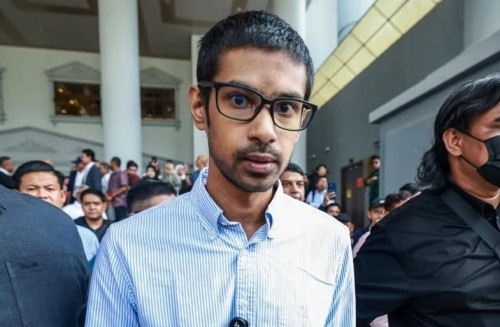
Responding to criticism from former senator Adrian Lasimbang, Jeffrey said he was probably trying to score political points.
“Maybe after he lost his political position, he wants to create an issue to gain political points.
“I can understand that. But this should not be derailed because of him because of his own political ambition,” he said.
NCA a chance for Sabah to set carbon trading benchmark
Jeffrey said that global markets are moving quickly towards this kind of carbon trading and Sabah should not be left behind.
“Don’t move backward. Business as usual is bad for us from feeling timber. There’s always risk of being in trading, I know, but we have to take the risk.”
He said the NCA is an opportunity for Sabah to become the first to embrace these changes and set the benchmark in carbon trading for the world to follow.
When I proposed this to the government, initially they were unable to understand, forcing me to explain further until they understood.
“We then proposed to the federal government and the cabinet to give authorisation to the chief minister.
“Then I look at it. For the last two years, they were already doing it. But they did not complete the job because there was a change of governments.
“We only need to commit to this plan. So we can monetise the carbon. It is simple. So we preserve the forest for our future generations and at the same time attract investments and create opportunities,” he said.
Why not select a local firm?
Jeffrey also defended the rationale for involving Singapore-based Hoch Standard in the carbon trading deal as opposed to entering a deal with local companies.
He said companies such as Petronas also plan to invest in carbon trading, but fears that local companies will give a fixed price to the state, as opposed to the potential of reaping more benefits from international trading.
“They will set the price and they will ask for them to be given priority in terms of carbon pricing. No one can argue if we already signed an agreement with them.
“With Hoch Standard, we follow the trend of the market. The price is not static,” he said.
“As for the state, there is no risk for the government. We are making an agreement with Hoch Standard.
“We have done our due diligence. This is a SPV with a multimillion-dollar connection.
This is Hoch Standard. Why Singapore? Because Singapore is a triple-A rated nation, with triple AAA connection given for its financial institution status.
“So we must take advantage of this,” he said.
Sabah has the right to end deal if firm doesn’t perform
Jeffrey reiterated Sabah’s standing order on deals, saying that cancellation of any agreement can be done if the project does not materialise over a two-year period.
“We don’t have to worry about termination because the Sabah government has the right to terminate if Hoch Standard does not perform.
“While taking the matters to the court will be a last resort, and if we do decide to exit while the project has taken off, there will be discussions and arbitration before it can be brought to the courts,” he said.
As for Sabah attorney-general Datuk Nor Asiah Mohd Yusof disabling the NCA, he said the AG can only advise but the government will decide.
“It is because the Sabah leaders are answerable to the people.
“Anyway, she (Nor Asiah) cooperated with the NCA. She was also there during the signing of the NCA on October 28, last year.
“So the news report that she was disabling it was incorrect,” he said. – The Vibes, February 7, 2022