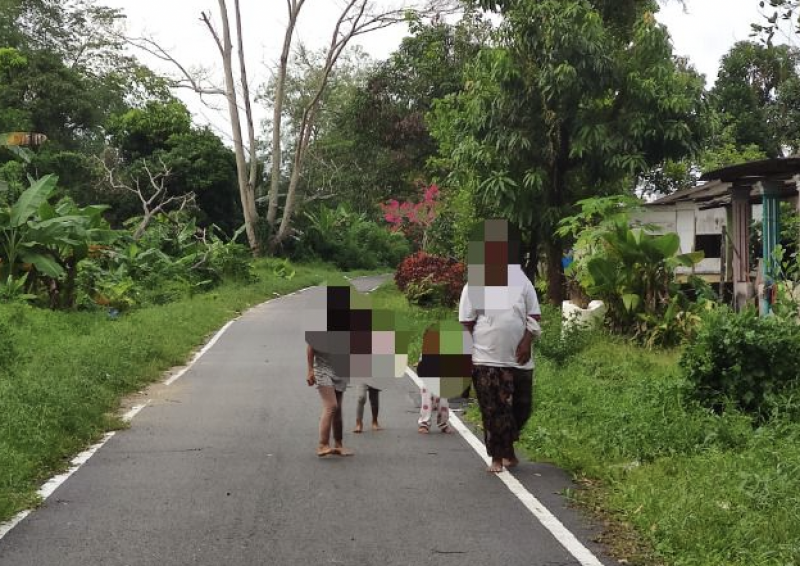

JOHOR BARU – In the heart of Johor’s capital city lies Kg Orang Asli Bakar Batu, where its residents live in less than favourable conditions.
The residents are mostly from the seafaring Seletar community, who are wary of outsiders entering the area. Outsiders who do visit the village usually purchase fishing bait and leave.
But despite their poor living environment, the villagers remain tentative when asked for their opinion on the federal and state governments.
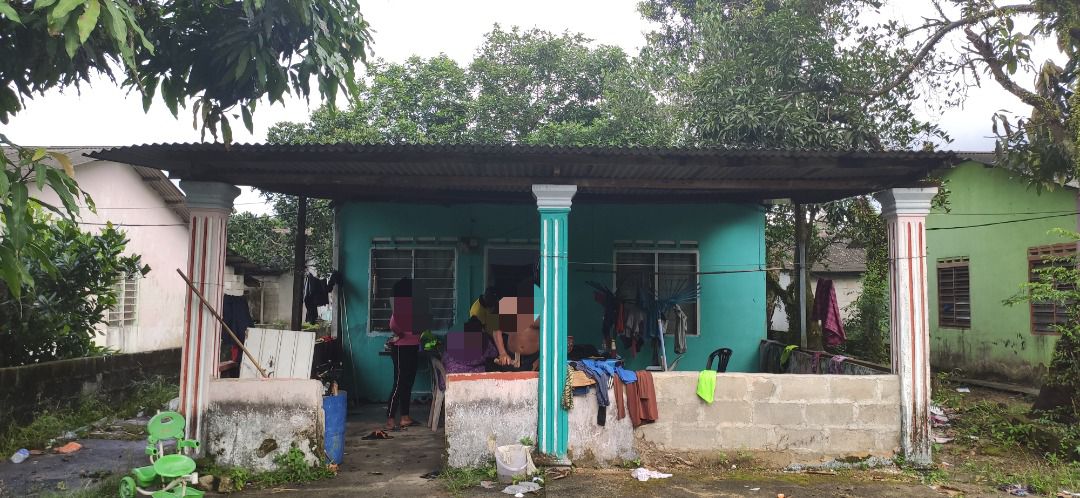
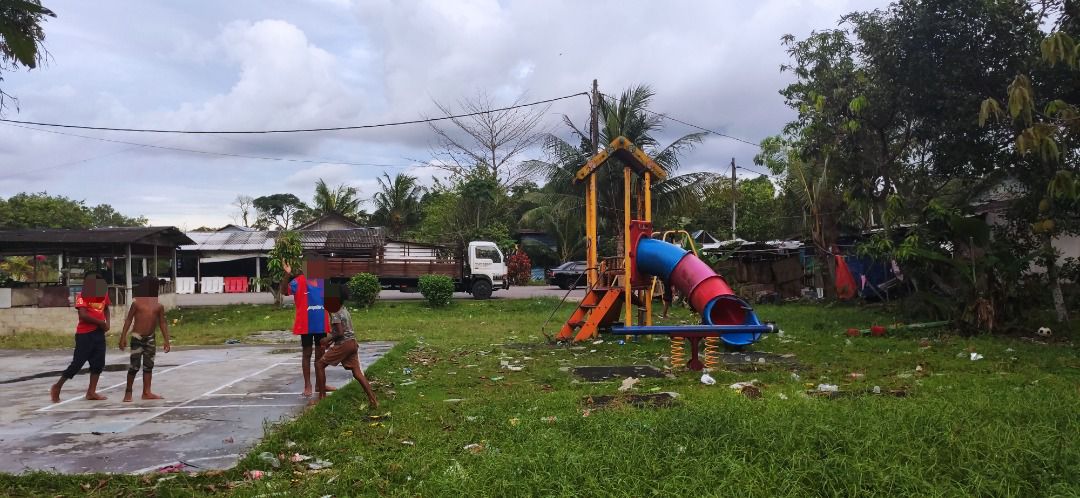
A walk through this small village would reveal the almost widespread presence of rubbish, including on the inside of homes and at the playground frequented by local children.
The one kindergarten in the village has a collapsed gate which is yet to be fixed. And the football field, where teens play in the evenings, is in a dilapidated condition, with its fence broken, allowing footballs to pose a safety hazard for nearby homes.
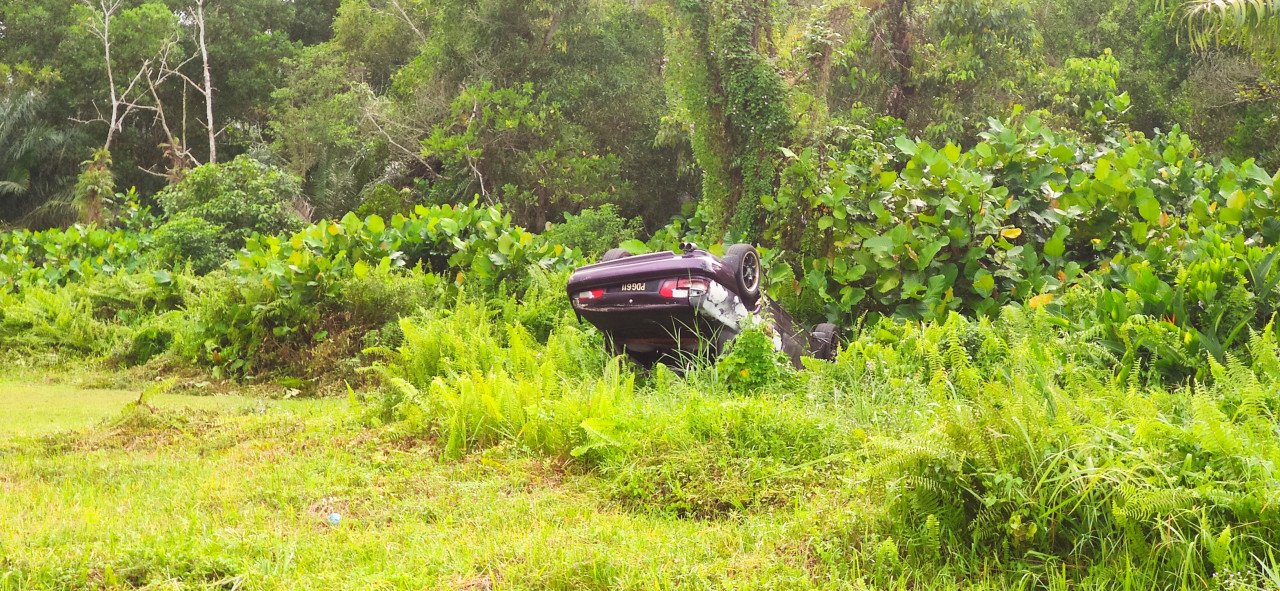
A strange item at the edge of the football field is an overturned Proton Wira. When asked, the children playing there were unaware of how the vehicle had ended up there in the first place.
Plenty of fish in the sea? Not anymore, thanks to coastal projects, says elder
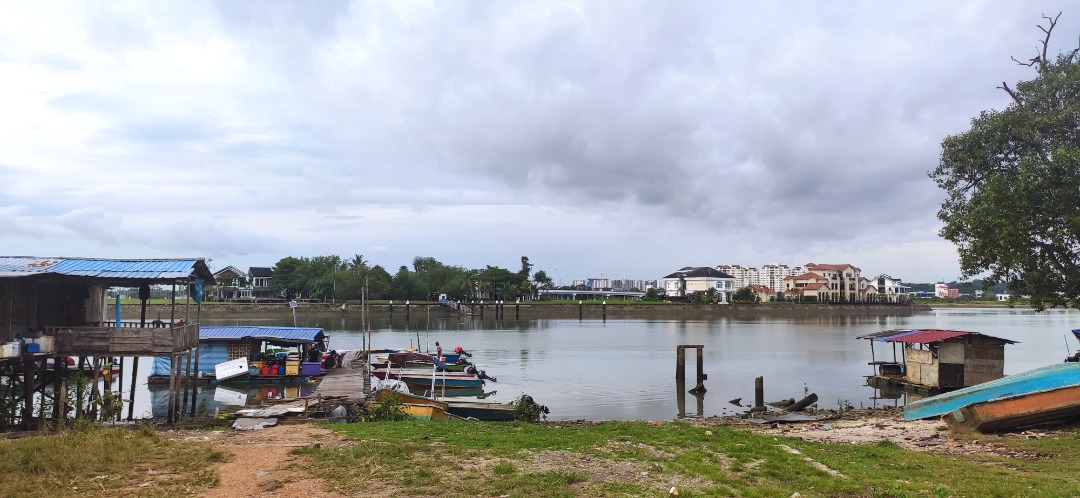
Maryam Tom, a village elder, told The Vibes that the village has been around for seven generations.
Back then, in addition to fishing, the community foraged in the mangrove forests and sold mangrove wood.
But coastal projects pursued under the Iskandar Development Region saw their sources of income dwindling.
There are fewer fish in the sea because of the coastal projects. Also, if it is raining, we cannot go to sea. So, what are we going to eat?”
However, Maryam said the state government has been helpful.
Although she is aware that the state election is close, she said the people do not talk about which parties they support.
“Our people don’t talk about that. Here, we make our own choices and decisions.
“We cannot say who is good or bad. Whatever they give us, we are grateful.”
Community forced to fend off outsiders seeking ‘to tread on our rights’
After returning from the ocean, Belin Lin sits in front of his house to watch teenagers play football.
He said he had to cover one of his windows with plywood after a ball had broken it.
During a brief conversation, he said prior to the rise of coastal projects, he used to make between RM300 and RM400 a month.
“Before the coastal projects, we can make RM300 to RM400 a month and cover food expenses. Now our income has reduced by RM100, and we don’t have savings.”
When asked about the community’s apprehension towards outsiders, he said the villagers have had problems with others in the past.
The people here have fought against outsiders who wanted to tread on our rights. While some of the children here go to school, some do not, because they are embarrassed to mix with outsiders.”
Another villager, Iskandar Suni, did take the opportunity to be slightly more critical, saying residents now receive less welfare from the government.
“The government rarely gives us any assistance, not like before. Right now, we really need boats and engines.”
He added that the authorities should supply food aid to the community.
While conditions in nearby residential areas are better, he said the community does not use them as a yardstick for what their own should look like.
“We don’t want to trouble outsiders. We also don’t like to compare. What’s important is that the government takes care of us.” – The Vibes, February 11, 2022